


Using creep gates to boost animal performance
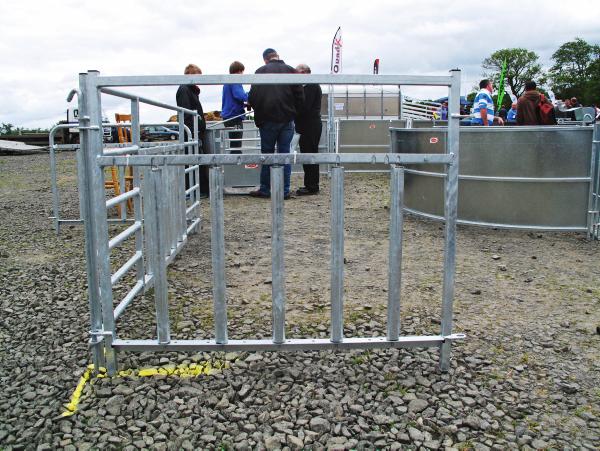
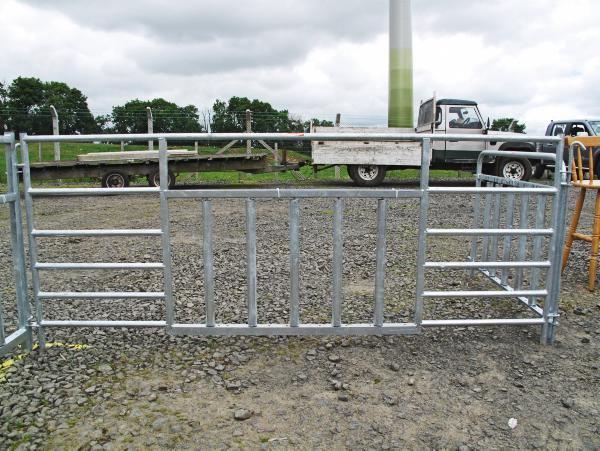
A combined stand from Ritchie sheep handling manufacturers and George Hamilton Machinery, Randalstown, Co Antrim, exhibited new creep hurdles.
George said that the hurdles are attracting increased interest as farmers look to boost lamb performance in a difficult year.
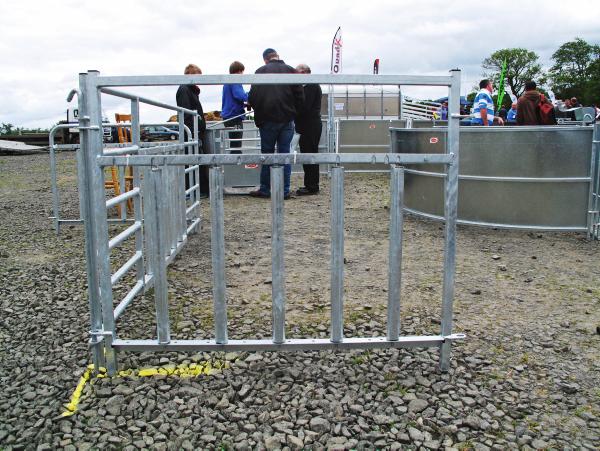
There are two options: an 8ft sheep hurdle that incorporates a 4ft creep gate in its centre and a 4ft lamb creep hurdle. Both gates are manufactured as sheep hurdles, meaning they can be attached quickly to other hurdles to suit different sized field openings or to make a penned area in the corner of a field. Creep gate openings can be altered in width from six inches to nine and 11 inches to suit lambs of different ages. The hurdles are galvanised and Bob Ritchie said they have improved on the previous model by increasing hurdle height to 1m and adding strength to the joinings of the hurdle.
price
The 8ft gate is trading at £120, excluding VAT (€140), while the 4ft lamb creep hurdle is trading for £90, excluding VAT (€105).
Guessing weight leads to flawed health treatments
A central theme in the seminars organised by CAFRE was that correct health treatments are vital to improving flock performance. In their presentations on fluke and worm control, Dr Jason Barley, AFBI, and Lesley Stubbings, SCOPS independent sheep consultant, said that anthelmintic resistance was becoming a significant problem in the treatment of fluke and worms. Both speakers highlighted guessing the weight of animals and the resultant risk of administering inadequate volumes for the weight of the animal treated as significant contributors to the development of anthelmintic resistance.
The threat is frequently talked about in the context of worm treatment of lambs. But Jason barley said that it is also a worrying aspect in treating ewes for fluke, especially given that ewe weight fluctuates at different times throughout the year. The advice is to weigh animals regularly so that treatment volume can be tailored to animal weight.
Lesley Stubbings also demonstrated correct dosing techniques in a drenching demonstration. She said that it was important to look after the dosing gun post treatment as failing to wash equipment can result in seals being damaged and dosing guns delivering incorrect volumes.
She advised farmers to wash dosing equipment with soapy water post drenching and to calibrate the equipment before use and at regular intervals thereafter. When dosing animals, she said that it was critical that the liquid is delivered to the back of the animal’s tongue to ensure that it goes straight into the rumen and achieves maximum contact with target parasites.
Cautious optimism for wool trade
There are signs that wool markets will strengthen in 2013 following a difficult season’s trading for the 2012 wool clip. This was the view of British Wool Marketing Board CEO Ian Hartley and Northern Ireland representative Ian Buchanan.
Both point to rising wool demand, with China returning to the market. Chinese wool traders have been largely absent from wool markets since late last year and Ian Hartley said that part of their lower activity stemmed from their market reacting to the higher prices witnessed 18 months ago.
Their activity in Wednesday’s (3 July) first sale of the season and how the market responds will be watched closely, which is not surprising considering the market purchases in the region of 30% of wool traded in the Bradford auctions. Ian Buchanan said another contributing factor to the improved forecast is the year starting off from a clean slate. He said that an overhang of five million kilos of wool, unsold from the 2011 wool clip and brought forward into 2012, created a surplus at a time when markets were already under pressure. Getting this excess traded, along with the 32m kgs produced in 2012, should lead to higher levels of trading from the start of the new season.
The wool marketing board is predicting a 10% to 15% increase on the average return of 77p/kg (93c/kg) for 2012.
Forecast prices for Blackface wool remain static at 60p/kg (72c/kg) while Suffolk, Texel and Lleyn wool prices are predicted to rise to £1 to £1.03/kg (€1.20 to €1.24/kg).


SHARING OPTIONS