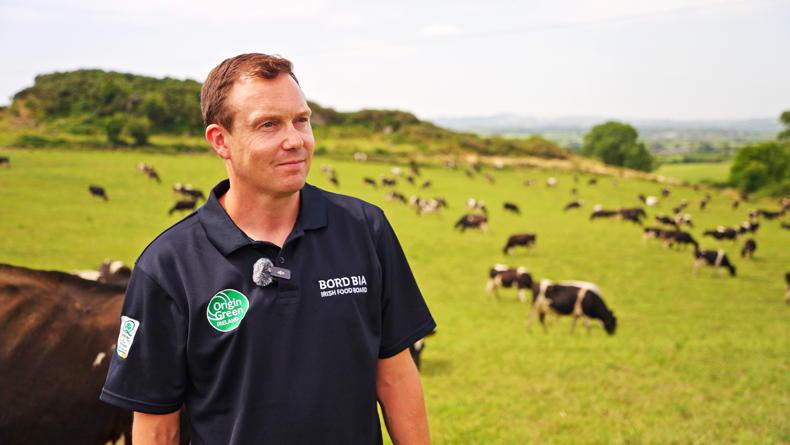
How did you get from a Tipperary farm to representing Irish food and drink in Scandinavia?
Coming from a farm, choosing the agricultural science degree at University College Dublin was a natural college choice. After graduation I joined the Bord Bia graduate programme which brought me to Stockholm in Sweden. When the opportunity came along to lead the Bord Bia office for the region, I was delighted to take it.
Where is what is referred to as Scandinavia?
Sweden, where I am based, plus neighbouring countries of Norway, Finland and Denmark and are also known as the Nordic countries. They are all members of the EU apart from Norway which is part of the EU single market.
Where do they rank for Irish exports?
The four countries combined is the fifth largest export market in the EU for Irish food and drink. Individually, Sweden is the largest market, worth €209m in 2024, followed by Denmark at €134m, then Finland at €21m and Norway at €12m
What are our main exports to the region?
The main category is beef to the Swedish market. In 2024, Ireland exported 27,543 tonnes (t) of beef to Sweden, the second-highest volume in the last 10 years at a value of €117.6m.
This makes Sweden Ireland’s fifth-largest market for beef exports and Denmark is also a substantial market taking 5,461t last year.
Sweden is also a major export market for Irish sheepmeat, taking 4,559t, worth €28.9m, making it our fourth-largest market after France, UK and Germany. Denmark took 1.213t of Irish sheepmeat in 2024 worth €9.3m.
Are there prospects for growth or is it hold what we have?
The answer is both. Beef exports to Sweden have remained relatively stable around 25,000t annually. Sheepmeat volumes declined sharply last year compared with previous years, but this reflects scarcity of supply and the large drop overall in Irish sheepmeat supplies for export as opposed to a problem in the market.
The most noticeable change has been the higher price being commanded in the market. Historically Irish beef was a cheaper-value offering and most typically used for mince production.
However, we are increasing our presence in higher-value cuts and Irish prices are often higher in the retail sector than their domestic competitors. They are also happy to carry Irish branding, which isn’t always the case with European retailers.
How attractive is Ireland as a food and drink trading partner?
Ireland has a long-established reputation in beef and lamb markets for being a reliable supplier of consistent high-quality product. It also helps that Sweden in particular is only around 60% self-sufficient for beef and with Ireland exporting 90% of production, there is a natural fit.
Norway has high-import tariffs and is not commercially viable for most products and while the Finnish market is small, it does benefit from being part of the EU and therefore no tariffs.
Denmark is a huge dairy producer and therefore a major producer of cow-beef whereas Ireland can offer them a steer-based alternative.
Opportunities for dairy in the region are limited to innovative offerings that aren’t produced locally. There is some growth potential for prepared consumer foods and drinks.
Why Ireland?
In Scandinavia consumers are very conscious about quality and environmental protection, and Origin Green has been an invaluable tool in promoting Irish produce.
It is important that we are able to back up the claims we make about our safe, sustainable production systems, which Origin Green has helped to protect and grow.