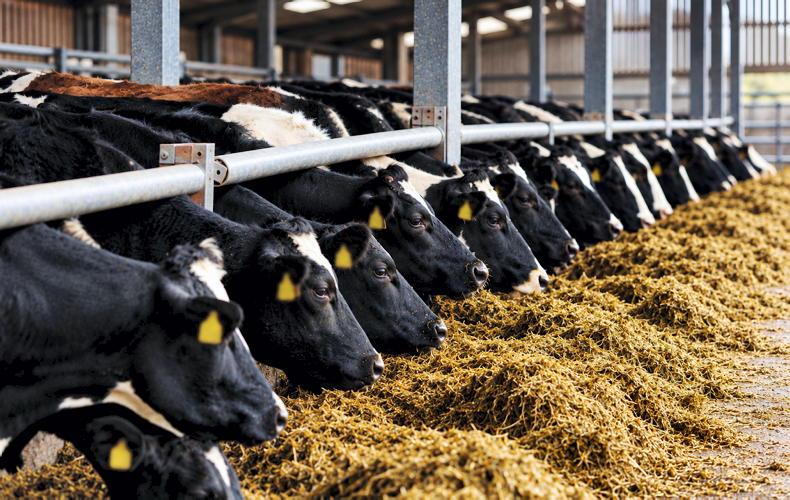
Leptospirosis can affect man and beast
Bovine leptospirosis is widespread in Ireland. Irish studies have reported evidence of Leptospira Hardjo in approximately 80% of cattle herds1,2.
Leptospires can persist in cattle kidneys, with carrier animals shedding them intermittently or for long periods in their urine. Infected cattle urine is a key source of exposure for other animals.
Wet ground and shared watercourses can also contribute and other mammals may play a part. Infection may be present without obvious signs, so farmers may not detect it until fertility or abortion problems prompt an investigation.
The effects can range from sudden to subtle. Acute outbreaks may involve abortion storms and milk-drop syndrome. In herds where infection is established, farmers may instead notice poorer conception, repeat breeding, weak calves at birth and more sporadic abortions.
Leptospirosis is also a zoonosis. People can be exposed through contact with infected urine, contaminated water or soil and reproductive material. Infection can enter the body through broken skin or via the eyes, nose or mouth.
Approximately one quarter of the cases of leptospirosis in Ireland were caused by Leptospira Hardjo. Symptoms of leptospirosis in humans can range from mild to severe.
Mild symptoms include fever and headache, while rare but severe manifestations can include jaundice, organ failure and even death3.
Farmers should cover cuts, use suitable gloves and waterproof protective clothing when handling urine, placentas, uterine discharges or aborted material. Vaccinating the herd can also help reduce the risk of human exposure.
The challenge of spring vaccination
CSO June figures show that Ireland’s dairy cow population has risen by 16% to 1.6 million over the last decade, making labour shortages in spring a bigger issue year on year4.
Moving lepto vaccination forward to winter makes sense. For Ireland’s spring-calving herds, vaccinating during winter can help protect cattle and free up time before the busiest part of the year.
Traditionally, many vaccination protocols for breeding animals are concentrated in February and March, the busiest months for farmers with cows to calve, calves to feed and a milking routine that is still not completely bedded in because newly calved cows and heifers are being introduced every day.
Vaccinations can be difficult to fit around those jobs, particularly once cows have calved and breeding is approaching.
Spring vaccination is not only inconvenient for farmers, but may also be less than ideal for cows, as vaccination in early lactation is unlikely to produce an optimal immune response due to metabolic stress5.
Making the change to winter vaccination
Moving vaccination protocols to winter can be done simply and efficiently, without requiring additional injections.
For example, a farmer who traditionally vaccinates heifers for lepto in February or March could start the process a little earlier, in December, with Spirovac.
Spirovac can be given from four weeks of age and at any time of year, without the need for a booster in the spring. The primary course consists of two 2ml subcutaneous injections, given four to six weeks apart, followed by a single 2ml annual booster.
The booster can therefore be given the following December, when both cows and farmers are under much less pressure.
December is a quieter time on the farm. Although cows still need to be fed, milking has stopped and there are no newborn calves or freshly calved cows to worry about.
For farmers, the practical gain is that a job is moved out of the busiest period, when all the cattle are housed and close at hand. At this time, cows are also healthy and metabolically stable and their body condition is often improving, so an optimal vaccination response can be expected.
To find out more about winter vaccinations and saving labour in spring, register here for a free farmers’ webinar on 5 November at 8pm.
References
1. Leonard N, et al. (2004). “Prevalence of antibodies to Leptospira interrogans serovar Hardjo in bulk tank milk from unvaccinated Irish dairy herds.” Irish Veterinary Journal, 57:226–231.
2. Ryan EG, et al. (2012). “Seroprevalence of Leptospira Hardjo in the Irish suckler cattle population.” Irish Veterinary Journal, 65:8.
3. P. Garvey, et al. (2014). Leptospirosis in Ireland: annual incidence and exposures associated with infection. Epidemiol. Infect., 142: 847–855.
4. www.cso.ie
5. Corbett R (2013) Preserve and protect transition cow immunity. Dairy Cattle Reproduction Council Newsletter July 1, 2013, vol 8 issue 3
Spirovac® contains inactivated Leptospira borgpetersenii serovar Hardjo. Legal category: ROI: LR; NI: POM-VPS. For further information, please see the SPC or contact Zoetis (www.zoetis.ie). Prescription decisions are for the person issuing the prescription alone. Use medicine responsibly (www.apha.ie; www.noah.co.uk). MM-52852 (Oct. 2026)