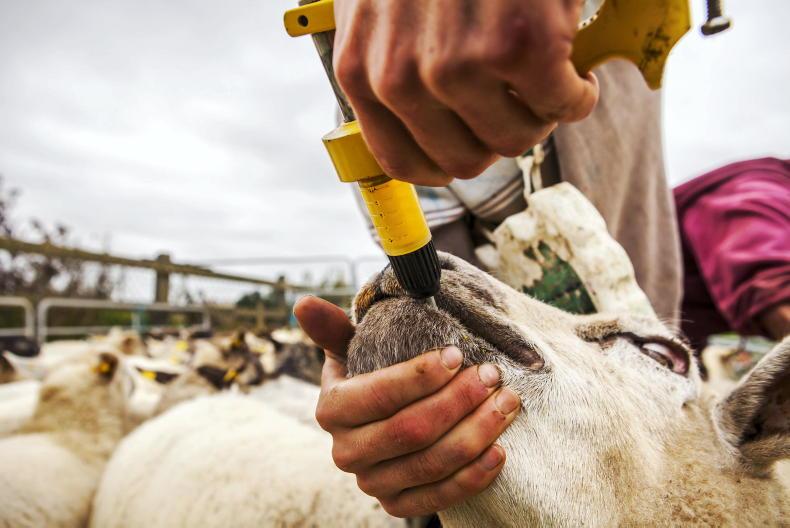
The seasonal pattern of liver fluke in livestock during the autumn and winter months is changing, a parasite expert said during an online event.
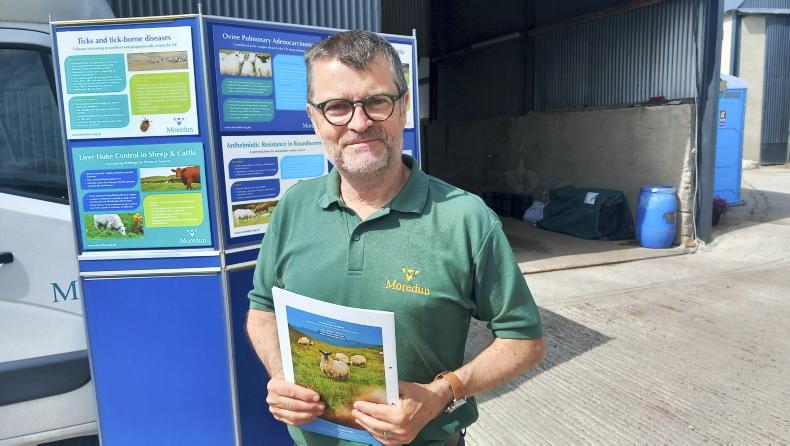
Professor Philip Skuce from Moredun Research Institute explained the lifecycle of the parasite where liver fluke cysts tend to build up in grassland during the summer.
“The seasonality has really started to break down. We noticed that it is not as strongly seasonal as it used to be and that makes it unpredictable,” he told the Nature Friendly Farming Network.
The advice to sheep and cattle farmers is to avoid blanket treatments with flukicides based on calendar dates only.
Instead, farmers are being urged to actively monitor the risk of liver fluke on their farms.
This can be done by assessing regional liver fluke forecasts which consider recent weather patterns, and by making use of diagnostic tests on individual farms.
Tests and treatments
However, Skuce made clear that all available tests for liver fluke have “pros and cons”.
For example, fluke egg counts from dung samples are cheap and easy to carry out, but the drawback is that it only detects adult fluke.
This means dung sample analysis will not diagnose immature fluke, which tends to be an issue in the autumn and early winter.
A blood test is also available which detects the antibodies that an animal produces when a liver fluke infestation occurs.
This test can pick up immature fluke, but antibodies can remain high in animals that have had a successful treatment or previous exposure to fluke.
Similarly, a test known as “coproantigen ELISA” can pick up mid to late-stage infections from individual dung samples, but it has a low sensitivity in cattle and group samples from sheep.
“None of the tests are perfect, but they all tell us something useful about the fluke lifecycle and what might be happening,” Skuce said.
The different fluke treatments on the market also target different ages of fluke. For example, triclabendazole-based products can kill all stages of fluke, whereas closantel-based flukicides only target adult fluke.
Skuce said using the correct flukicide for the stage of fluke that is present in livestock is essential for an effective treatment. He also warned against overuse of any particular flukicide, as resistance issues can develop.
“Most people assume they have a resistance problem without having any evidence of it, although anywhere where we have gone looking for resistance, we have found it,” he said.