



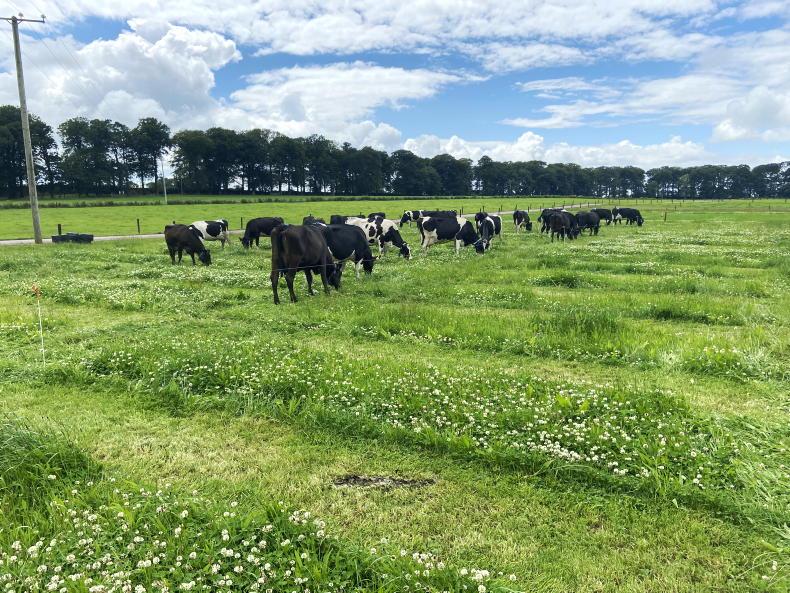
Average grass growth rate this week is 56kg per day, which is back a shade on last week. Within that there are some farms that are continuing to grow very well, with growth rates that would be more common in late May than late August.
It’s a good time to have high growth rates because it means that it’s easy to build up covers. As we approach the end of August, the target average farm cover for 1 September will vary between 750kg/ha and 980kg/ha, depending on stocking rate.
Those that are higher stocked will need to have more grass built up, because they have more mouths to feed. Having said that, this can pose a challenge, particularly on heavier soils because it can be difficult to clean out higher covers in wet weather.
Looking at data from PastureBase, dairy farmers have an average farm cover of 82kg/ha, so are well on target for grass at this time of year.
This will allow less meal to be fed – something farmers got very little chance to do this year after a wet spring followed by a mini drought in May and June and an exceptionally wet July.
If farmers are growing well in excess of demand and are at risk of developing surplus grass, just the minimum amount of meal should be fed.
Generating surplus grass at this time of year is a real nuisance, but if a surplus is to be taken because there is too much grass on the farm then it should be done so as soon as possible.
This is to ensure that the field is back growing again quickly.
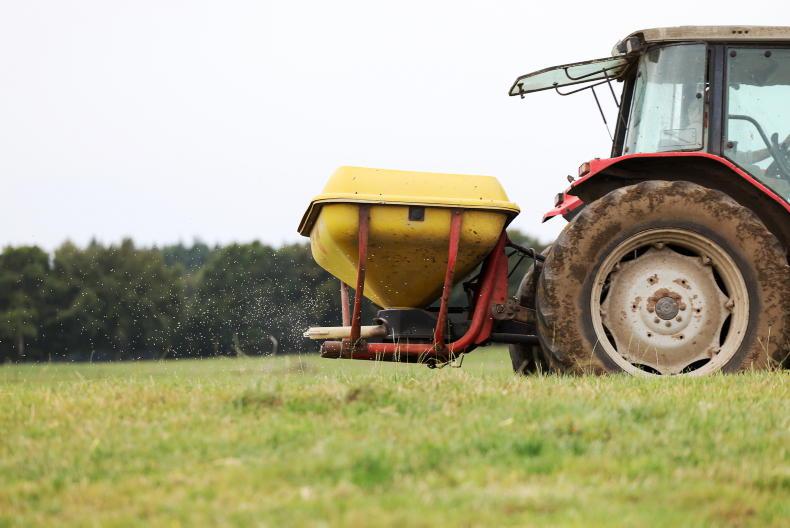
Many farmers are now considering going with the last round of fertiliser. It’s an important application because we need good grass growth into the autumn. However, we also need to be conscious that the autumn is the highest risk time for nitrate leaching.
How much to spread should depend on how much grass is on the farm currently, growth rates and demand. Lower stocked farms can get away with 15 to 20 units/acre while higher stocked farms who need to grow more grass will need up to 30 units/acre.
Fields with good clover contents will need about half of that amount. Some farmers will skip nitrogen on these high clover fields altogether.
Caroline – O’Sullivan Teagasc Curtins, Co Cork
The grass and clover treatments are growing 66kg per day, which is probably as good as the farm has been growing all year. It really wasn’t until the end of July that growth started to take off again.
It wasn’t a lack of nitrogen because the grass only treatment was getting 20 units of N/acre after each grazing and growth rates were the same between it and the grass and clover treatment getting zero N since May.
So far the grass and clover treatment has got 100kg N/ha and we plan to spread 20 units/acre next week. Thankfully we have had no bloat issues but we have been putting bloat oil in the water for the last week or so.
Stocking Rate (cows/ha) 2.62
Growth Rate (kg/day) 66
Average Farm Cover (kg/ha) 655
Yield (l/cow/day) 16.6
Fat % 5.00
Protein % 4.00
Milk Solids (kg/cow) 1.53
Supplement Fed (kg/cow/day) 1
Joe Breen – Ferns, Co Wexford
Our demand is 45kg per day because we’re feeding extra meal and some silage in order to build up grass.
We’re feeding 3kg of a four way mix and then 4kg of silage after milking.
Cows are on 24 hour allocations but we’ll be going back to 12 hour breaks in the next rotation.
We scanned the cows this week and we had 7% empty in the cows and 5% in the heifers.
That’s from all sexed semen with no conventional dairy semen used, so we’re happy enough with that. I will spread 30 units/acre of protected urea at the end of this month and then that will be it for the year.
Stocking Rate (cows/ha) 4.08
Growth Rate (kg/day) 57
Average Farm Cover (kg/ha) 955
Yield (l/cow/day) 19.1
Fat % 5.00
Protein % 3.98
Milk Solids (kg/cow) 1.77
Supplement Fed (kg/cow/day) 7
Niall Moloney – Crecora, Co Limerick
I’m a little bit behind target for grass but I’m not too worried. I am waiting on some fine weather to cut 30 acres of red clover silage from the outside farm and that will give me good silage to feed if needs be next month.
Cows are on 2kg of meal and will probably stay on that for the next while. I’m following the cows with a half bag per acre of protected urea. I will keep following the cows with this and may decide to blanket spread some of the farm as we come close to the closing date.
The farm is definitely feeling the effects of the wet weather with the wetter parts more damaged than normal. Good infrastructure was a big help in avoiding damage.
Stocking Rate (cows/ha) 3.3
Growth Rate (kg/day) 70
Average Farm Cover (kg/ha) 800
Yield (l/cow/day) 20.5
Fat % 4.27
Protein % 3.74
Milk Solids (kg/cow) 1.69
Supplement Fed (kg/cow/day) 2
Aidan Maguire – Navan, Co Meath
The average farm cover is 821kg/ha and I’m very happy with that because there is a big enough demand for grass. This is the first time this year that I’m not under pressure for grass.
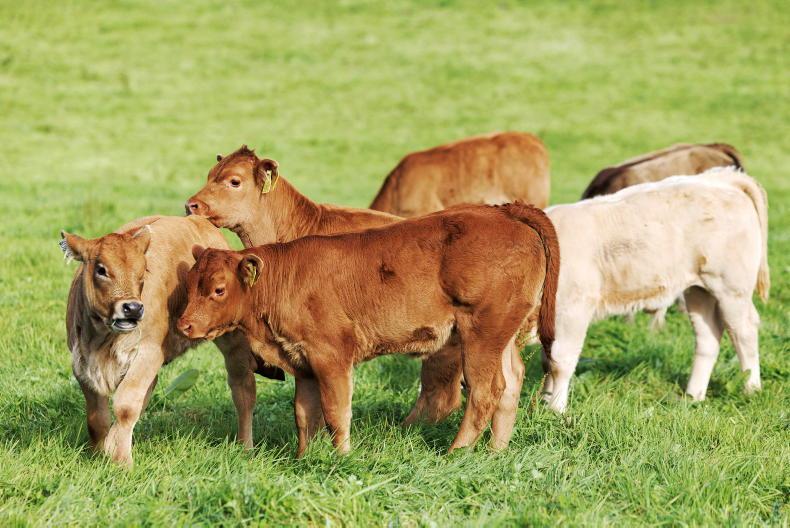
Up to now it was either not growing enough or too wet with poor utilisation. The dairy beef calves are starting to eat a lot of grass now, at about one paddock per day.
They have been on 1kg of meal per day since they arrived. I put the older bullocks into the shed at 460kg to 480kg and will finish them over the next six weeks.
The first lot have been killed at 280kg at 18 to 20 months of age. I spread 18 units/acre of nitrogen across the farm on 4 August and I plan to go with the same again on 1 September.
System Dairy calf to beef
Soil type Free draining
Average Farm Cover (kg/ha) 821
Growth (kg/ha/day) 81
Demand (kg/ha/day) 50
Pat Collins – Castlemartyr, Co Cork
The figures are based on an outside block of multispecies that was sown last year. The big advantage of the multispecies is how low maintenance it is.
We spread 1.5 bags/acre of 10:10:20 in spring and it got some slurry then too but it got no more fertiliser for the rest of the year, except some slurry on the area that was cut for surplus silage.
There is also more flexibility around pre-grazing covers and it doesn’t have to be topped after grazing.
Having said that, it is only the first year of it so we need time to see how it performs.
I run Precision Pastures and we do a lot of grass measurement around Munster. Growth rates are some of the highest all year now.
System Dairy calf to beed
Soil type Free draining
Average Farm Cover (kg/ha) 940
Growth (kg/ha/day) 85
Demand (kg/ha/day) 43
Shaun Diver – Tullamore Farm, Co Offaly
Growth rates have been good and we’ve plenty of grass on the farm. Some of the high clover fields haven’t got nitrogen since mid-April but I topped them up with 29 units/acre of protected urea based 29:0:14+3.5 Sulphur last week.
All the silage ground is back in now, so demand has dropped to 33kg/day. The ewes have been restricted for grass but we will be letting them off soon in advance of breeding.
We sold 15 lambs last week and will draft another 23 or 24 this week.
The ram lambs are getting 350g of meal per day but the ewe lambs are on grass only. We weighed the calves last week and the bulls are doing 1.3kg per day while the heifers are doing 1.2kg per day so we’re happy enough.
System Suckler/sheep
Soil type Free draining
Average Farm Cover (kg/ha) 958
Growth (kg/ha/day) 60
Demand (kg/ha/day) 33




SHARING OPTIONS