



A sharp fall in dairy and tillage farm incomes is expected this year, while cattle and sheep farm incomes are set to increase slightly, a new Teagasc report shows.
Teagasc has said that a decrease in excess of 50% is on the cards for dairy farmers compared with last year. This decrease would bring the average dairy farm income back to €70,000.
Average milk production costs in 2023 are likely to remain close to the 36c/l average figure recorded in 2022, leaving higher cost producers in particular with very low margins, according to Teagasc.
The sharp reduction in milk prices in 2023 and increased global milk supply are also a factor.
Tillage
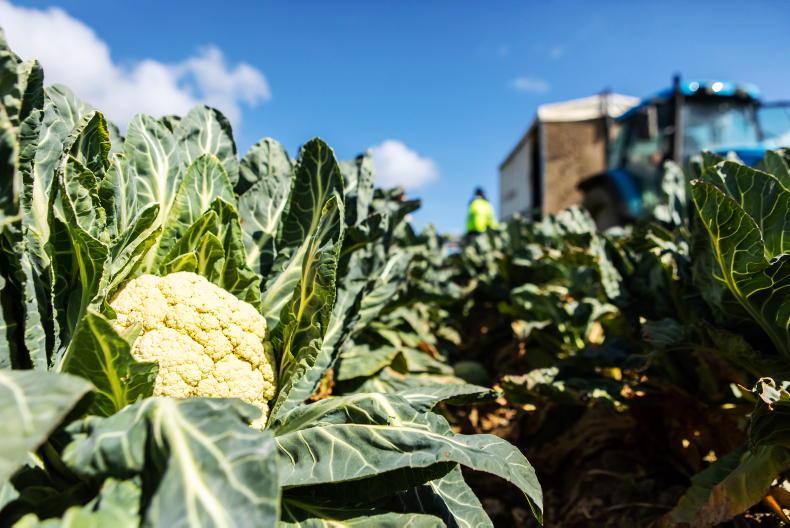
The average tillage farm income is also forecast to be over 50% lower in 2023 than in 2022. This would bring the average income in the system down to around €37,000.
Unfavourable weather during parts of the growing season in 2023 has meant that Irish cereal yields will be down significantly for many crops compared with 2022, with the spring barley crop particularly affected.
The weather woes have continued into harvest time, with persistent rain in many regions to date affecting progress on harvesting.
Cattle
Incomes on suckler and drystock farms are expected to increase slightly this year.
The average income for suckler farms is forecast to increase by 15%, while the average income on drystock farms is expected to see a rise of 5%.
This would bring the average suckler farm income up to about €10,800 and the average drystock farm income up to €19,800.
This forecast increase on suckler farms is partly due to the introduction of both the SCEP and ACRES schemes, while the increase in incomes for beef finishers is due to higher finished cattle prices.
The majority of farms in both cattle systems will also continue to benefit from the Fodder Support Scheme introduced in 2022.
Mart prices are also expected to be slightly higher in the autumn of 2023. However, Teagasc said that elevated feed prices and overhead costs mean that the average net margin (profit exclusive of direct payments) on suckler farms could remain negative in 2023.
Sheep
The average income on sheep farms is forecast to increase marginally, by about 5% in 2023, according to Teagasc.
Some of this increase in income is as a result of the ACRES scheme, with a further boost coming from increased output on sheep farms with a secondary cattle enterprise. This could bring the average sheep farm income to about €17,300 in 2023.
Sheep farmers have experienced a 5% fall in lamb prices so far in 2023 and, as with other farm enterprises, production costs on sheep farms remain at elevated levels.
While EU sheepmeat supply is down in 2023, consumption is expected to remain similar to the 2022 level, resulting in positive movement in average EU prices, Teagasc has said.
Irish prices are forecast to stabilise over the second half of the year and for the year as a whole are estimated to remain modestly positive.
Pigs
Composite feed and electricity costs are gradually reducing as 2023 progresses, which has resulted in the pig sector returning to a profitable status from May 2023 onwards.
However, at current profitability levels, it is estimated that it may be April 2024 before the losses incurred in 2021 and 2022 are fully recouped.
These losses have amounted to €520,000 for the average pig unit in Ireland.
All of these income calculations are in nominal terms. This means that they do not factor in general inflation and the impact that this has on the purchasing power of incomes earned in agriculture.
While the rate of general inflation has fallen in Ireland in 2023, it remains well above the ECB target level of 2%.
While many farms, particularly dairy and tillage farms, will experience a decline in nominal income in 2023, even farms with stable nominal incomes in 2023 could still experience a decline in real income if consumer price inflation remains ahead of nominal income growth rates.
In December, a further assessment of farm incomes for 2023, along with income forecasts for 2024, will be produced by Teagasc economists.



SHARING OPTIONS