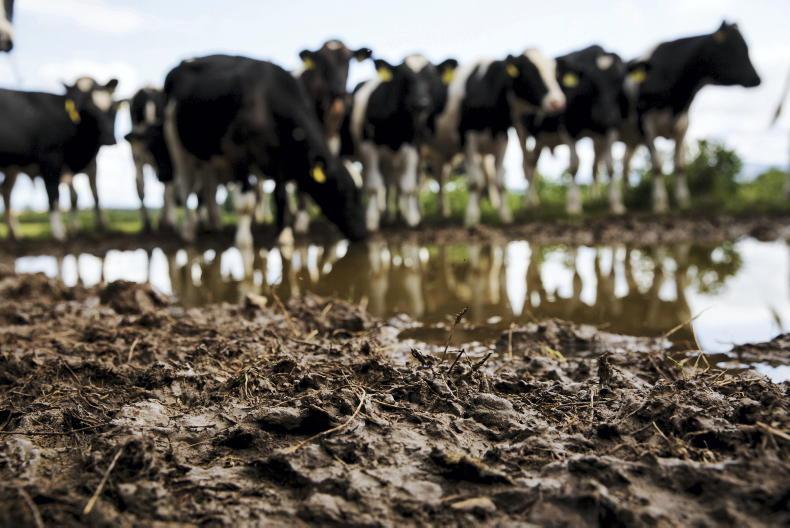
November has landed. It’s the first ‘official’ month of winter, and with it has come some typical Irish weather; heavy rain and bitter chilling winds. The grazing season is well and truly over for many operating on heavier farms, with the shorter days and lower temperatures doing nothing for drying out.
As it stands, getting this far is usually an achievement for a lot farming in the northwest or on heavier soils. Even in an ideal year, we should be looking at 70-80% of the grazing block for both dairy and beef farms closed up by now, which is true for many farms.
Some might feel that this is too high a number, but with the compactness of spring calving dairy herds, there is a high demand on grass growth in spring.
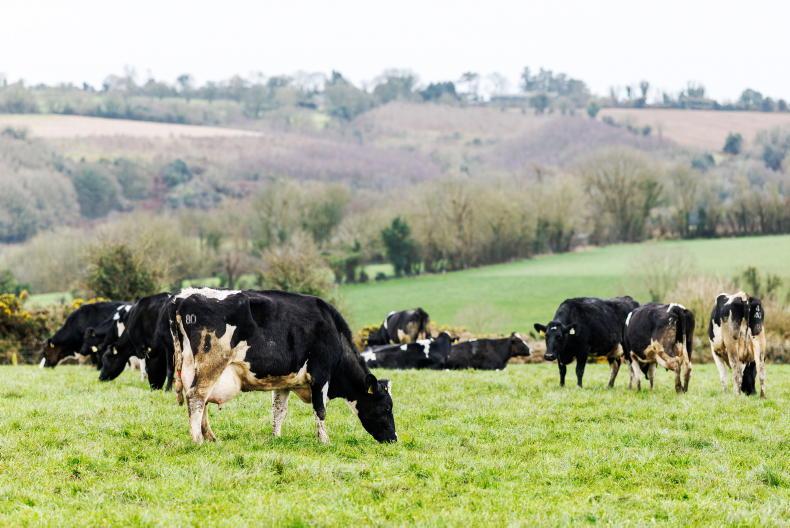
Where ground is still grazeable, farmers need to be cautious of eating in to covers for spring time as demand is now higher than growth for many, while predicted growth is set to fall even further. Soil temperatures are 9-10 degrees for many places, and with soils becoming more saturated, this is not set to improve. The one situation, whereby it would be advisable to eat into a low average farm cover is where there is a paddock or two where covers are extremely high (above 1,800kg DM/ha) as these will
1. Grow even more and likely begin to rot at the base.2. Be extremely hard to graze out next spring.3. Smoother out and clover in swards.Pasturebase Ireland figures show that 20% of farmers have a mean AFC of 1,013kg DM/ha. Many of these farms will have some of these heavier covers, which should be whipped off if at all possible, even with some lighter stock if grazing conditions are challenging.
November has landed. It’s the first ‘official’ month of winter, and with it has come some typical Irish weather; heavy rain and bitter chilling winds. The grazing season is well and truly over for many operating on heavier farms, with the shorter days and lower temperatures doing nothing for drying out.
As it stands, getting this far is usually an achievement for a lot farming in the northwest or on heavier soils. Even in an ideal year, we should be looking at 70-80% of the grazing block for both dairy and beef farms closed up by now, which is true for many farms.
Some might feel that this is too high a number, but with the compactness of spring calving dairy herds, there is a high demand on grass growth in spring.
Where ground is still grazeable, farmers need to be cautious of eating in to covers for spring time as demand is now higher than growth for many, while predicted growth is set to fall even further. Soil temperatures are 9-10 degrees for many places, and with soils becoming more saturated, this is not set to improve. The one situation, whereby it would be advisable to eat into a low average farm cover is where there is a paddock or two where covers are extremely high (above 1,800kg DM/ha) as these will
1. Grow even more and likely begin to rot at the base.2. Be extremely hard to graze out next spring.3. Smoother out and clover in swards.Pasturebase Ireland figures show that 20% of farmers have a mean AFC of 1,013kg DM/ha. Many of these farms will have some of these heavier covers, which should be whipped off if at all possible, even with some lighter stock if grazing conditions are challenging.






SHARING OPTIONS