Forest cover in Ireland is small – 11.5% of the land area compared with 38% in Europe – but the visual impact of forestry as a land use is more pronounced than conventional agriculture, just as new land uses such as wind and solar energy are now experiencing.
Although agricultural crops have changed dramatically since the middle of the last century, nobody but the keenest land-use observer would notice changing crop trends.
For example, the area under potatoes has fallen from 241,000ha to 9,000ha during this period.
Oats, once a dominant cereal crop, has decreased from 500,000ha to 30,000ha while the area under fruit and horticultural crops has been halved to 500,000ha.
Visual impact
The visual impact of shifting agricultural land uses is negligible because of its seasonality unlike forestry which is generational and permanent.
Much of the debate on forestry has been on scale and its visual impact on the landscape. Yet, the size of new forests is small – averaging 6.5ha over the past 10 years – compared with wind and solar farms.
For example, the average size of solar farms is 50ha based on the 2023 Renewable Electricity Support Scheme (RESS) auction when “20 solar farms, covering approximately 2,500 acres, along with three wind farms, successfully secured funding,” according to Barry Caslin of Teagasc.
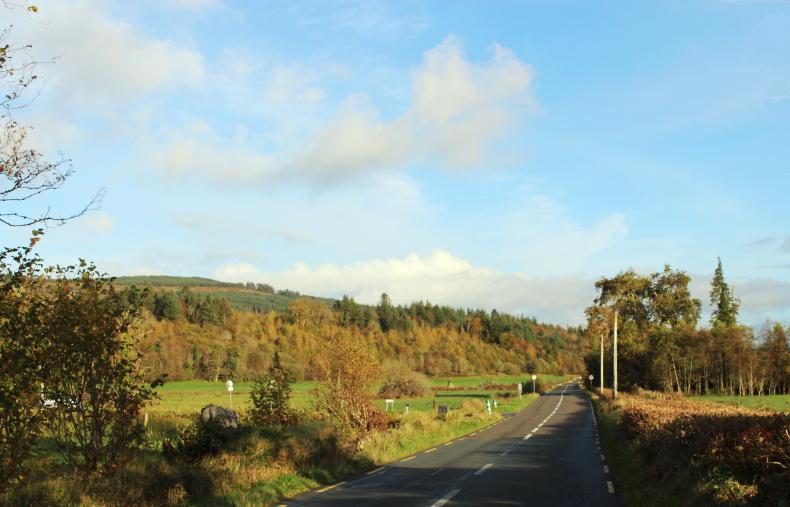
Shifting agricultural land use goes unnoticed because the field system or enclosed landscape remains largely intact. The spread of forests solely into the enclosed landscape is relatively new.
A high percentage of forestry development took place outside field enclosures, especially in the uplands and bogs for most of the last century.
This changed in the 1990s when afforestation on unenclosed land was actively discouraged by the Department even on productive mineral sites and shallow peats. Planting unenclosed land has been virtually banned since 2012.
Along with sterilising planting in large tracts of hen harrier-designated areas, this decision has led to the collapse of viable planting programmes in suitable sites especially in Munster and Donegal in the northwest since the early 2000s.
It has also dramatically reduced the opportunity to achieve a geographically balanced afforestation programme.
The visual impact of changing forest location confined afforestation to the field system and while it presented opportunities for greater species diversity on marginal agricultural site, it led to competition between forestry and agriculture and dramatically reduced land available for forestry.
It also artificially forced forestry out of good unenclosed sites and removed opportunities to establish forests – including native woodlands – in areas where primeval forests once existed.
Forest design
The decision also restricted forests to expand organically as happened in parts of Co Wicklow from the foundation of the State until the 1990s. It also inhibited the opportunity for unity in forest landscape design.
That said, it has to be acknowledged that foresters often failed to design forests that were compatible with the overall scale, unity and diversity of the existing landscape.
There are plenty examples of good planning where forests work well with landscape forms, but too often forest design consisted of a couple of rows of broadleaves along the forest boundary to mask rather than celebrate the coniferous productive forest.
The best forest design requires a more creative approach in tree species selection and basic design to achieve natural forest edges that transition to farmland.
In good design this is achieved by reducing tree density along with the retention of pockets of biodiverse and unplanted areas. This can be achieved without imposing a mandatory 65% cap on commercial species in afforestation sites.
A return of forest and woodland establishment on productive upland sites along with marginal agricultural land can provide a forest resource that is compatible with the objectives of Ireland’s Climate Action Plan (ICAP).
This approach will achieve a forestry programme that is compatible – but not in competition – with agriculture, which can be reflected in the design and location of our future forests.
Practical forestry publications
Practical forestry information is now available from a wide range of sources in Ireland including Teagasc (teagasc.ie/crops/forestry), Irish Agroforestry Forum (www.irishagroforestry.ie/ publications), COFORD (coford.ie) and the Society of Irish Foresters (www.societyofirishforesters.ie). In this issue, we feature three from the Forest Service, Pro Silva Ireland and the Irish Timber Growers Association (ITGA).
Farm forestry funding
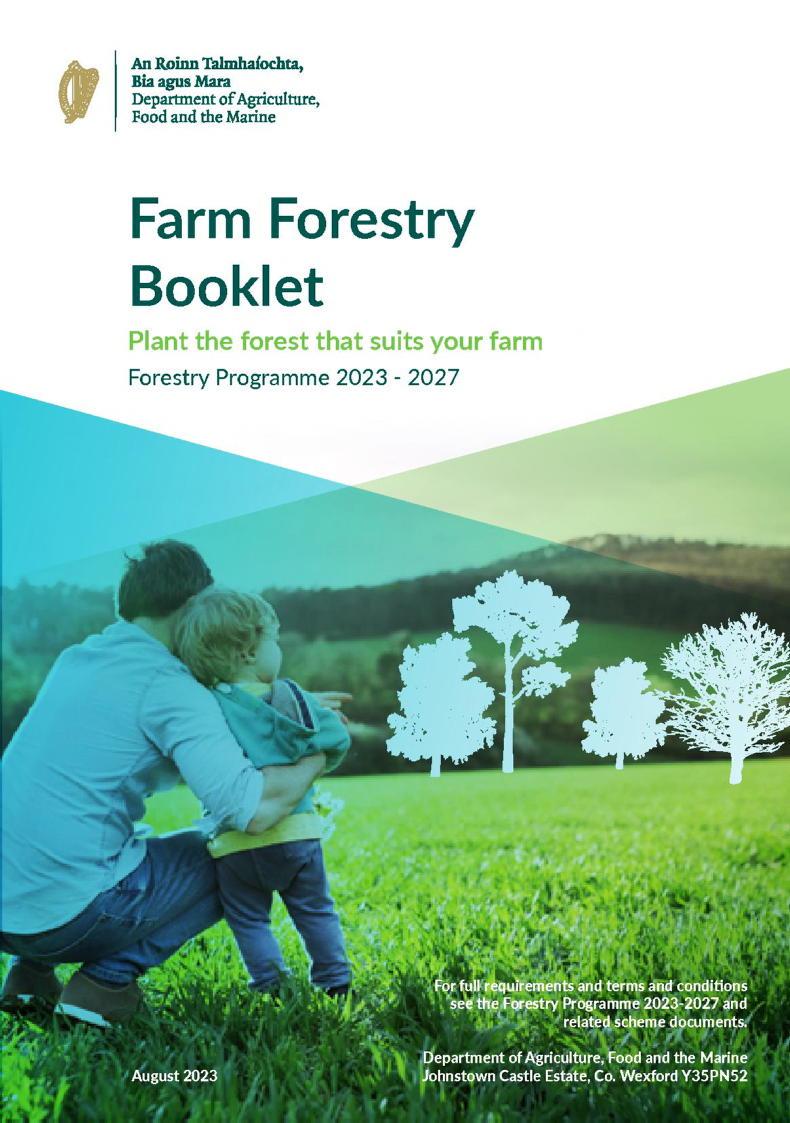
Although only 12 pages the Farm Forestry Booklet packs a lot of information on premium and grants available for a range of afforestation schemes, available to farmers.
For example, a farmer who plants 8ha (one-fifth of the size of the average family farm) receives almost a quarter of a million euro in supports for native woodland establishment including tax-free revenue of €176,480 over 20 years plus a once-off €8,000 woodland environment fund in addition to establishment grants (€54,000), environment report compilation (€1,450) and fencing (€7,000) and extra for deer fencing.
Although funding is heavily loaded in favour of native woodlands, the package is attractive for those prepared to innovate and still plant predominantly commercial conifers. For example a farmer who opts to plant 16ha (by mixing commercial forest types 11 and 12) receives €257,000 in tax-free premiums over 20 years, plus €82,410 in supports for establishment (€66,480), fencing €14,080) and production of an environment report (€1,850). Further grants are available for road construction as the crop matures.
The Farm Forestry Booklet can be downloaded (gov.ie/forestry) or contact the Forest Service directly by phone (053 916 3400) or email (forestryinfo@agriculture.gov.ie).
Guide to
Continuous Cover Forestry (CCF)
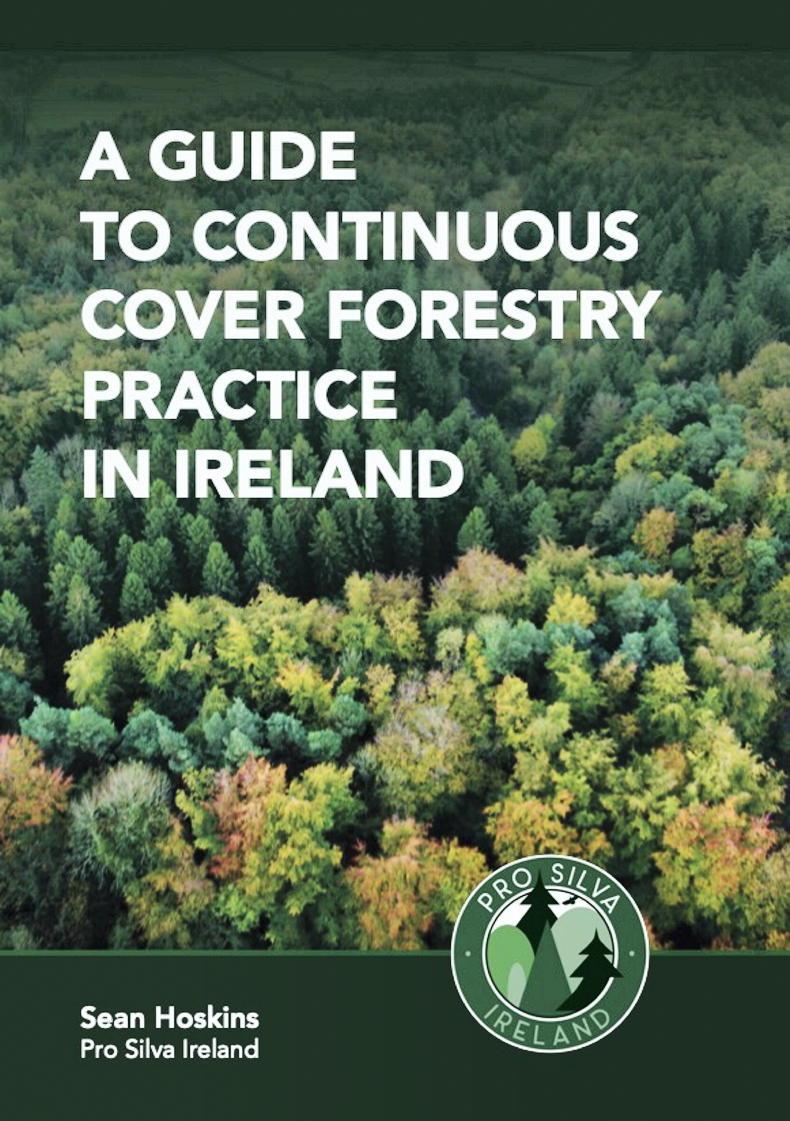
During the year, Pro Silva Ireland published A Guide to Continuous Cover Forestry Practice in Ireland to mark its 25th anniversary. Written by Manus Crowley and edited by Olive Leavy, it is a comprehensive guide for CCF practitioners but is also an excellent introduction for forest owners, foresters and other stakeholders with little or no knowledge of the subject.
Forest owners who wish to engage with CCF will be assured by the author’s claim that timber production has parity beside the other key objectives of ecosystem conservation, soil protection and recreation. There are chapters on CCF principles, management (tree selection, felling interventions, etc) and operations (felling, marketing issues and species enrichment) with advice for those planning to establish a CCF forest or transforming an existing crop to continuous cover.
The 102-page guide can be purchased from the Pro Silva Ireland website (prosilvaireland.com/product/a-guide-to-continuous-cover-forestry-practice-in-ireland) or Google Pro Silva Ireland.
Forestry
yearbook
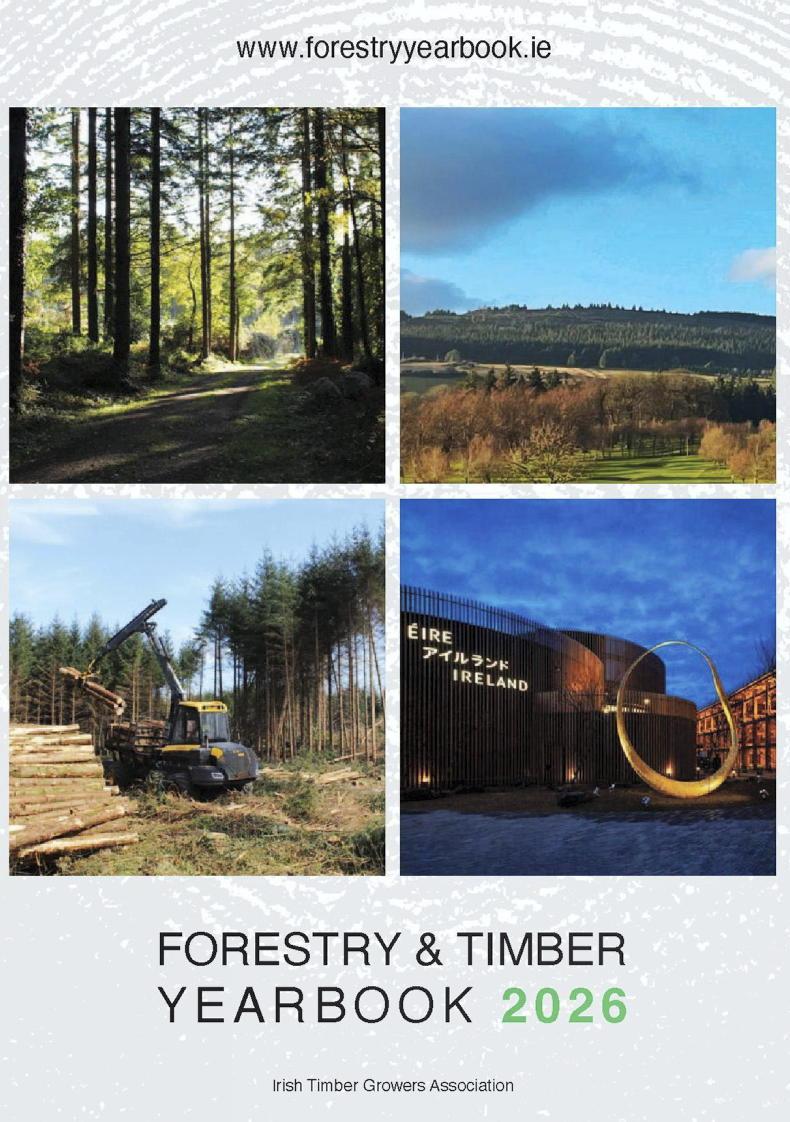
The ITGA Forestry and Timber Yearbook, is regarded as the definitive annual reference for the private and State forestry and forest products sector in Ireland. “This is a comprehensive publication because it is and an excellent source of information for forest contractors and forest owners who are mainly farmers,” said Minister of State, Michael Healy-Rae when launching the yearbook.
The main theme is certification, forest windblow and forestry supports. The certification section is a collaboration between the ITGA and the Irish Timber Council (ITC) which has been representing all the major sawmills on the island since 1918.
In addition to support from the ITC, the 208-page yearbook is also sponsored by Coillte and the Murray Timber Group. It can be ordered online at forestryyearbook.ie or by contacting ITGA at info@itga.ie.
Forest cover in Ireland is small – 11.5% of the land area compared with 38% in Europe – but the visual impact of forestry as a land use is more pronounced than conventional agriculture, just as new land uses such as wind and solar energy are now experiencing.
Although agricultural crops have changed dramatically since the middle of the last century, nobody but the keenest land-use observer would notice changing crop trends.
For example, the area under potatoes has fallen from 241,000ha to 9,000ha during this period.
Oats, once a dominant cereal crop, has decreased from 500,000ha to 30,000ha while the area under fruit and horticultural crops has been halved to 500,000ha.
Visual impact
The visual impact of shifting agricultural land uses is negligible because of its seasonality unlike forestry which is generational and permanent.
Much of the debate on forestry has been on scale and its visual impact on the landscape. Yet, the size of new forests is small – averaging 6.5ha over the past 10 years – compared with wind and solar farms.
For example, the average size of solar farms is 50ha based on the 2023 Renewable Electricity Support Scheme (RESS) auction when “20 solar farms, covering approximately 2,500 acres, along with three wind farms, successfully secured funding,” according to Barry Caslin of Teagasc.
Shifting agricultural land use goes unnoticed because the field system or enclosed landscape remains largely intact. The spread of forests solely into the enclosed landscape is relatively new.
A high percentage of forestry development took place outside field enclosures, especially in the uplands and bogs for most of the last century.
This changed in the 1990s when afforestation on unenclosed land was actively discouraged by the Department even on productive mineral sites and shallow peats. Planting unenclosed land has been virtually banned since 2012.
Along with sterilising planting in large tracts of hen harrier-designated areas, this decision has led to the collapse of viable planting programmes in suitable sites especially in Munster and Donegal in the northwest since the early 2000s.
It has also dramatically reduced the opportunity to achieve a geographically balanced afforestation programme.
The visual impact of changing forest location confined afforestation to the field system and while it presented opportunities for greater species diversity on marginal agricultural site, it led to competition between forestry and agriculture and dramatically reduced land available for forestry.
It also artificially forced forestry out of good unenclosed sites and removed opportunities to establish forests – including native woodlands – in areas where primeval forests once existed.
Forest design
The decision also restricted forests to expand organically as happened in parts of Co Wicklow from the foundation of the State until the 1990s. It also inhibited the opportunity for unity in forest landscape design.
That said, it has to be acknowledged that foresters often failed to design forests that were compatible with the overall scale, unity and diversity of the existing landscape.
There are plenty examples of good planning where forests work well with landscape forms, but too often forest design consisted of a couple of rows of broadleaves along the forest boundary to mask rather than celebrate the coniferous productive forest.
The best forest design requires a more creative approach in tree species selection and basic design to achieve natural forest edges that transition to farmland.
In good design this is achieved by reducing tree density along with the retention of pockets of biodiverse and unplanted areas. This can be achieved without imposing a mandatory 65% cap on commercial species in afforestation sites.
A return of forest and woodland establishment on productive upland sites along with marginal agricultural land can provide a forest resource that is compatible with the objectives of Ireland’s Climate Action Plan (ICAP).
This approach will achieve a forestry programme that is compatible – but not in competition – with agriculture, which can be reflected in the design and location of our future forests.
Practical forestry publications
Practical forestry information is now available from a wide range of sources in Ireland including Teagasc (teagasc.ie/crops/forestry), Irish Agroforestry Forum (www.irishagroforestry.ie/ publications), COFORD (coford.ie) and the Society of Irish Foresters (www.societyofirishforesters.ie). In this issue, we feature three from the Forest Service, Pro Silva Ireland and the Irish Timber Growers Association (ITGA).
Farm forestry funding
Although only 12 pages the Farm Forestry Booklet packs a lot of information on premium and grants available for a range of afforestation schemes, available to farmers.
For example, a farmer who plants 8ha (one-fifth of the size of the average family farm) receives almost a quarter of a million euro in supports for native woodland establishment including tax-free revenue of €176,480 over 20 years plus a once-off €8,000 woodland environment fund in addition to establishment grants (€54,000), environment report compilation (€1,450) and fencing (€7,000) and extra for deer fencing.
Although funding is heavily loaded in favour of native woodlands, the package is attractive for those prepared to innovate and still plant predominantly commercial conifers. For example a farmer who opts to plant 16ha (by mixing commercial forest types 11 and 12) receives €257,000 in tax-free premiums over 20 years, plus €82,410 in supports for establishment (€66,480), fencing €14,080) and production of an environment report (€1,850). Further grants are available for road construction as the crop matures.
The Farm Forestry Booklet can be downloaded (gov.ie/forestry) or contact the Forest Service directly by phone (053 916 3400) or email (forestryinfo@agriculture.gov.ie).
Guide to
Continuous Cover Forestry (CCF)
During the year, Pro Silva Ireland published A Guide to Continuous Cover Forestry Practice in Ireland to mark its 25th anniversary. Written by Manus Crowley and edited by Olive Leavy, it is a comprehensive guide for CCF practitioners but is also an excellent introduction for forest owners, foresters and other stakeholders with little or no knowledge of the subject.
Forest owners who wish to engage with CCF will be assured by the author’s claim that timber production has parity beside the other key objectives of ecosystem conservation, soil protection and recreation. There are chapters on CCF principles, management (tree selection, felling interventions, etc) and operations (felling, marketing issues and species enrichment) with advice for those planning to establish a CCF forest or transforming an existing crop to continuous cover.
The 102-page guide can be purchased from the Pro Silva Ireland website (prosilvaireland.com/product/a-guide-to-continuous-cover-forestry-practice-in-ireland) or Google Pro Silva Ireland.
Forestry
yearbook
The ITGA Forestry and Timber Yearbook, is regarded as the definitive annual reference for the private and State forestry and forest products sector in Ireland. “This is a comprehensive publication because it is and an excellent source of information for forest contractors and forest owners who are mainly farmers,” said Minister of State, Michael Healy-Rae when launching the yearbook.
The main theme is certification, forest windblow and forestry supports. The certification section is a collaboration between the ITGA and the Irish Timber Council (ITC) which has been representing all the major sawmills on the island since 1918.
In addition to support from the ITC, the 208-page yearbook is also sponsored by Coillte and the Murray Timber Group. It can be ordered online at forestryyearbook.ie or by contacting ITGA at info@itga.ie.






SHARING OPTIONS