We published the Crop Costs and Returns last September. Since then some things have changed. Markets have moved for certain commodities and prices have gone up for some input costs.
In this article, we detail the Teagasc crop cost and returns estimates, which were published at the end of January, in Tables 1 and 2. Some of the changes are only small, most likely coming from slight changes in prices reported by contractors. Teagasc also made some changes to herbicide programmes, to make them more up to date.
In Table 3 we focus on spring barley and examine the impact of yield, varieties and prices on returns, again through estimates – just to give people an idea how figures can vary significantly from the original Teagasc figures that have target yields and to show the need to use these tables to do up your own costs and returns.
It should be noted on winter barley the seed price is based on an average price for conventional, hybrid and barley yellow dwarf virus-tolerant varieties. Ploughing was one cost which saw a big increase in costs. It went up about €19/ha, most likely due to the cost of parts and fuel.
Looking at cereals, winter wheat was ahead of the pack, hitting €500/ha. All other crops were significantly behind. Spring wheat followed, but it is a crop that is not suited to many farms, due to an often-late harvest and the risk of sprouting. Malting barley followed in Table 1, but when put in at current price levels, with increased input costs and lower yield levels in Table 3, it is in negative margin.
Break crops
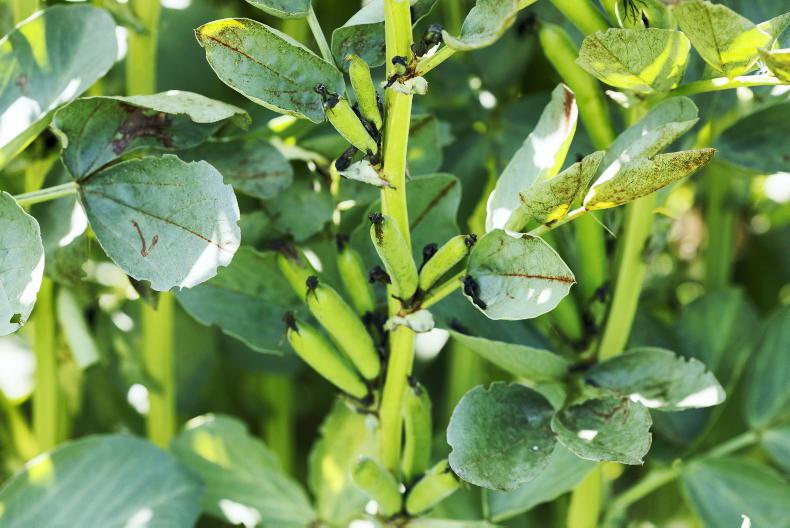
Back to the Teagasc figures, and all break crops out-performed cereals with the exception of winter rye, which is still returning more than winter barley. However, the thing about break crops is they are just that, so peas and beans are great and the Protein Aid payment is a big advantage, but growers are limited on acres. That said, growers should be maximising the area of these crops in a year like this, where price is not looking good. Protein Aid is guaranteed income.
Maize and beet are high-risk crops. They are high input, with good returns if the price is right. Since the costs and returns were published by Teagasc last September, they have reduced down the price per tonne for these crops. Beet has gone from €55/t to €50/t, while maize has gone from €70/t to 65/t.
Growers need to know their market. Have agreements in place with buyers and, if possible, have some down payments for the crop. You also need to pick your fields carefully. Grow early ripening maize varieties on drier ground.
Potatoes are the highest return of Table 2, but takes a lot of investment. Again, it is important to remember that land rental is not included in these costs and these specialised potato growers are growing on rented land across the country.
The price in for oilseed rape in Table 2 is €430/t. Offers so far for oilseed rape have been higher than this, at €445/t. If you are growing oilseed rape it might be no harm to consider taking up this offer. As can be seen in Table 2, it is giving a return. Work out your own figures and see if it makes sense on your farm.
Malting barley – holding on for better times
One thing that is clear is that at current prices malting barley is not stacking up, particularly where varieties are not as high-yielding and require increased inputs like growth regulator and more fungicide.
That said, while things are bad in malt markets at present, they will pick up eventually and you will want your contract when they do.
Most have smaller contracts this year and, in order to maximise yields, should look at growing more than one variety on farm. Often malting barley growers will grow all the one variety on farm in case some loads do not pass. This year, it might be best to grow a high-yielding variety which should return a higher yield and may require less inputs on the area not destined for malting, or the same inputs with a better yield and a higher return.
There are no plant growth regulator (PGR) costs included in the Teagasc table. In Table 3 the Irish Farmers Journal has made some estimates for feed and malting barley based on varieties and inputs. Many malting barley varieties will require a PGR due to poor straw strength. We have added costs of €15/ha and €18/ha to different varieties. Teagasc has allowed a higher spend of €5/ha on fungicides on malting barley. Depending on the variety this spend may be more, so take note of that. Fertiliser costs are also lower in the figures. This is not necessarily the case. It may not be wise to cut nitrogen rates this year when there is no demand for distilling barley. It will still be hard in some years to meet brewing specifications, but pushing yield can help keep proteins down. Ultimately, the growing season, not nitrogen rate, will be one of the biggest factors affecting protein specifications.
Is the price likely to go up?
All talk in malting markets points to a pickup in the next year or two. Demand for brewing barley remains strong. Distilling demand is the main issue. The recent EU-India trade deal could help with this. India is the biggest whiskey market in the world and EU tariffs are set to come down from 150% to 50% and then 40%.
There is always a possibility that a weather event could impact malting barley crops in some regions of the world. However, there also looks to be plenty of stock around the world, with malting barley being sold as feed in some regions.
Teagasc costs and returns are detailed in Tables 1 and 2. The Irish Farmers Journal has estimated feed and malting barley costs in Table 3 by altering to current prices, adding on some inputs costs and looking at different types of varieties. Land rental is not included in any of the figures. BISS, CRISS or Eco-Scheme payments are not included in the figures.
The total variable costs are the sum of the materials, hire of machinery and miscellaneous costs, which are detailed in three headings and individually throughout the table. The gross margin is calculated from the grain income minus the total variable costs. This does not include fixed costs on-farm like hedge-cutting, water, electricity, administration, etc.
Straw income is counted separately. Straw is an important one to focus on. If you are chopping straw under the Straw Incorporation Measure (SIM) you will be paid €250/ha or €100/ac, provided you are accepted into the scheme and are compliant. Some spring barley varieties in particular are not delivering good straw yields. You have to question if selling four to five bales per acre is going to give you a return. Have you customers for the straw and how much will they pay? Will it pay as much as the SIM?
The figures are based on target yields. You need to use your average yield figure for your farm. Growers should use these tables as a template. Examine their costs and replace the Teagasc figures with their own.
We published the Crop Costs and Returns last September. Since then some things have changed. Markets have moved for certain commodities and prices have gone up for some input costs.
In this article, we detail the Teagasc crop cost and returns estimates, which were published at the end of January, in Tables 1 and 2. Some of the changes are only small, most likely coming from slight changes in prices reported by contractors. Teagasc also made some changes to herbicide programmes, to make them more up to date.
In Table 3 we focus on spring barley and examine the impact of yield, varieties and prices on returns, again through estimates – just to give people an idea how figures can vary significantly from the original Teagasc figures that have target yields and to show the need to use these tables to do up your own costs and returns.
It should be noted on winter barley the seed price is based on an average price for conventional, hybrid and barley yellow dwarf virus-tolerant varieties. Ploughing was one cost which saw a big increase in costs. It went up about €19/ha, most likely due to the cost of parts and fuel.
Looking at cereals, winter wheat was ahead of the pack, hitting €500/ha. All other crops were significantly behind. Spring wheat followed, but it is a crop that is not suited to many farms, due to an often-late harvest and the risk of sprouting. Malting barley followed in Table 1, but when put in at current price levels, with increased input costs and lower yield levels in Table 3, it is in negative margin.
Break crops
Back to the Teagasc figures, and all break crops out-performed cereals with the exception of winter rye, which is still returning more than winter barley. However, the thing about break crops is they are just that, so peas and beans are great and the Protein Aid payment is a big advantage, but growers are limited on acres. That said, growers should be maximising the area of these crops in a year like this, where price is not looking good. Protein Aid is guaranteed income.
Maize and beet are high-risk crops. They are high input, with good returns if the price is right. Since the costs and returns were published by Teagasc last September, they have reduced down the price per tonne for these crops. Beet has gone from €55/t to €50/t, while maize has gone from €70/t to 65/t.
Growers need to know their market. Have agreements in place with buyers and, if possible, have some down payments for the crop. You also need to pick your fields carefully. Grow early ripening maize varieties on drier ground.
Potatoes are the highest return of Table 2, but takes a lot of investment. Again, it is important to remember that land rental is not included in these costs and these specialised potato growers are growing on rented land across the country.
The price in for oilseed rape in Table 2 is €430/t. Offers so far for oilseed rape have been higher than this, at €445/t. If you are growing oilseed rape it might be no harm to consider taking up this offer. As can be seen in Table 2, it is giving a return. Work out your own figures and see if it makes sense on your farm.
Malting barley – holding on for better times
One thing that is clear is that at current prices malting barley is not stacking up, particularly where varieties are not as high-yielding and require increased inputs like growth regulator and more fungicide.
That said, while things are bad in malt markets at present, they will pick up eventually and you will want your contract when they do.
Most have smaller contracts this year and, in order to maximise yields, should look at growing more than one variety on farm. Often malting barley growers will grow all the one variety on farm in case some loads do not pass. This year, it might be best to grow a high-yielding variety which should return a higher yield and may require less inputs on the area not destined for malting, or the same inputs with a better yield and a higher return.
There are no plant growth regulator (PGR) costs included in the Teagasc table. In Table 3 the Irish Farmers Journal has made some estimates for feed and malting barley based on varieties and inputs. Many malting barley varieties will require a PGR due to poor straw strength. We have added costs of €15/ha and €18/ha to different varieties. Teagasc has allowed a higher spend of €5/ha on fungicides on malting barley. Depending on the variety this spend may be more, so take note of that. Fertiliser costs are also lower in the figures. This is not necessarily the case. It may not be wise to cut nitrogen rates this year when there is no demand for distilling barley. It will still be hard in some years to meet brewing specifications, but pushing yield can help keep proteins down. Ultimately, the growing season, not nitrogen rate, will be one of the biggest factors affecting protein specifications.
Is the price likely to go up?
All talk in malting markets points to a pickup in the next year or two. Demand for brewing barley remains strong. Distilling demand is the main issue. The recent EU-India trade deal could help with this. India is the biggest whiskey market in the world and EU tariffs are set to come down from 150% to 50% and then 40%.
There is always a possibility that a weather event could impact malting barley crops in some regions of the world. However, there also looks to be plenty of stock around the world, with malting barley being sold as feed in some regions.
Teagasc costs and returns are detailed in Tables 1 and 2. The Irish Farmers Journal has estimated feed and malting barley costs in Table 3 by altering to current prices, adding on some inputs costs and looking at different types of varieties. Land rental is not included in any of the figures. BISS, CRISS or Eco-Scheme payments are not included in the figures.
The total variable costs are the sum of the materials, hire of machinery and miscellaneous costs, which are detailed in three headings and individually throughout the table. The gross margin is calculated from the grain income minus the total variable costs. This does not include fixed costs on-farm like hedge-cutting, water, electricity, administration, etc.
Straw income is counted separately. Straw is an important one to focus on. If you are chopping straw under the Straw Incorporation Measure (SIM) you will be paid €250/ha or €100/ac, provided you are accepted into the scheme and are compliant. Some spring barley varieties in particular are not delivering good straw yields. You have to question if selling four to five bales per acre is going to give you a return. Have you customers for the straw and how much will they pay? Will it pay as much as the SIM?
The figures are based on target yields. You need to use your average yield figure for your farm. Growers should use these tables as a template. Examine their costs and replace the Teagasc figures with their own.






SHARING OPTIONS