



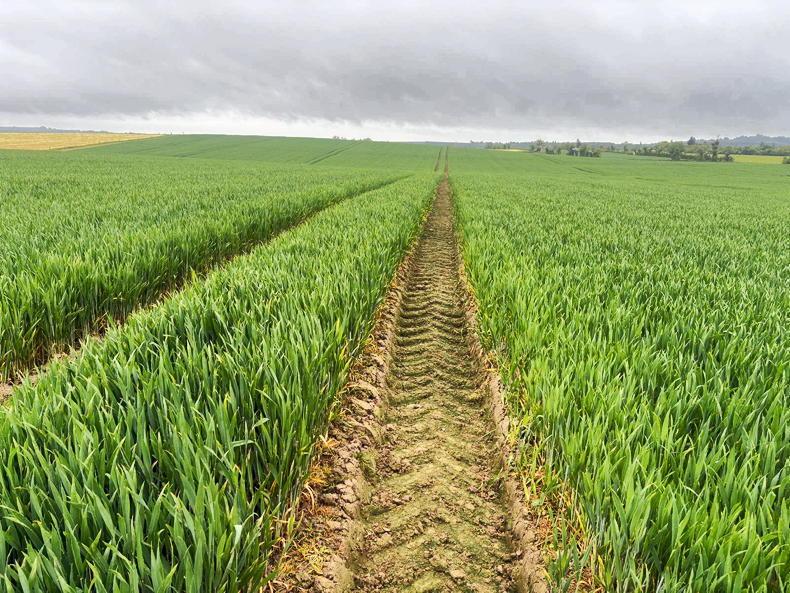
Ardee, Louth
Dry weather over recent months has helped field conditions in Louth, although the past week has brought a return to wetter and colder conditions.
Despite this, Conor says conditions have generally been favourable, with very dry ground and hard tramlines across crops.
Growth has been slower however due to cold night temperatures.
Winter barley on the farm is now approaching awns peeping stage, with T2 fungicides due to be applied by the end of the week. Fungicides are also planned for the winter wheat. Conor said his Graham winter wheat is looking well overall, although a few poorer patches remain following the difficult conditions experienced last year.
This season, workload pressures led to a change in nitrogen strategy on the wheat crop, with applications split in two rather than the usual three. Between 210kg and 220kg Nha were applied to the winter wheat, while the winter barley received around 200kg N/ha. He said that the barley was slower to respond and green up following application. Disease pressure has remained relatively low due to the colder weather, although some yellow rust was spotted in wheat earlier in the season.
Maize drilling has now been completed. All ground received slurry and dung before being ploughed, disced and power-harrowed ahead of sowing. The crop is grown under plastic and receives applications of Stomp and Wing P herbicides. A mix of maize varieties is being used depending on soil type and planting date. Conor previously trialled maize without plastic but found yields disappointing and believes it is not worthwhile under current conditions.
Alongside work on the home farm, Conor is also busy with contract spraying using a Horsch Leeb 6,000l sprayer with a 30m boom and a John Deere 6R 250 tractor, mainly working on cereals.
At the time of speaking, first-cut silage was also underway, with yields performing well so far.
Mountrath, Laois
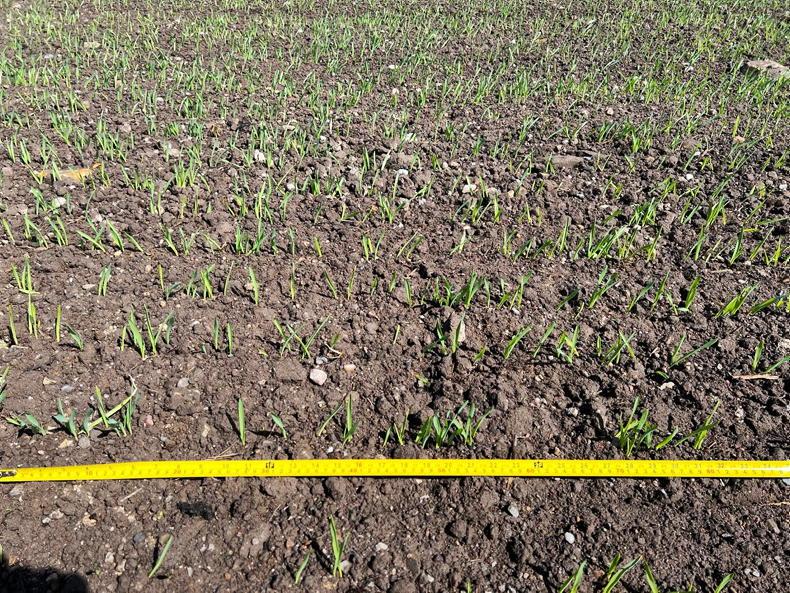
Dry and cold weather has dominated conditions on Stephen Wallace’s farm in recent weeks, although the prolonged dry spell has allowed spring work to remain on schedule.
“It hasn’t been great spraying weather, but I’m up-to-date so there’s no real pressure,” he said. Growth across crops has been slow due to low temperatures.
Hybrid winter barley received its T2 fungicide at awns peeping stage, although Stephen said that awns are still continuing to emerge two weeks later. Winter oilseed rape is being grown on the farm for the first time this year. The crop had a green area index of 0.59 in February but has improved significantly since then.
While he feels there could be more branching, he is happy overall with crop appearance. Due to the late season, petal fall fungicide applications are unlikely for another week or two. Flag leaves in the winter wheat are currently 30-50% emerged.
A small amount of scorch is visible following liquid nitrogen applications, although Stephen described it as minor. Winter wheat has received 200kg N/ha along with T0 and T1 fungicide applications, with the T1 consisting of Folpet and Revystar. Some low-level septoria is present low in the crop, but no yellow rust has been detected.
Hybrid winter rye is now fully headed out. Stephen missed the timing for the final growth regulator as the crop moved quickly through growth stages. The crop received 160kg/ha of nitrogen.
Spring sowing is now complete, with the final acres of spring oats established despite slow emergence. Most spring barley was sown towards the end of April and has established well, with plant counts of 380-400 plants/m².
All cereals are grown for feed, with spring barley brought to 140kg N/ha of nitrogen and spring oats receiving 120kg N/ha.
Next on the agenda are fungicides on winter wheat, herbicide applications on oats and looking at grain marketing options for the harvest.
Tullamore Farm, Co Offaly
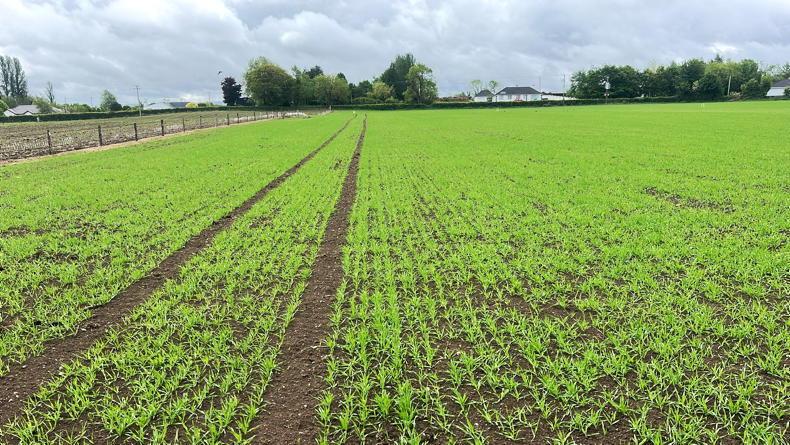
Cold and dry conditions have dominated Tullamore Farm over the past month, with growth slow to take off across crops and grassland. Around 30mm of rain fell over the weekend, which Shaun said was needed after prolonged dry conditions.
“Now all we need is heat,” he said.
This year, the farm has 13 acres of spring barley and 14 acres of a wholecrop mix sown. The spring barley variety, Hurler, was sown on April 24 into ploughed ground.
Farmyard manure was applied ahead of sowing, while 430kg/ha of 10:12:25 fertiliser was incorporated into the seedbed. The wholecrop follows a mixture of grass, previous wholecrop and overwintered oilseed rape ground. The crop consists of 25% barley, 25% oats and 50% peas, sown at 150kg/ha.
Three 370kg/ha of 10:10:20 were applied at sowing and no further fertiliser is planned. Shaun said emergence has been slow across both crops due to the cold weather, with CAN fertiliser to be applied once conditions improve.
No aphicides have been applied yet, although decisions on aphid control will be made over the coming weeks depending on weather and crop pressure. Shaun said he prefers to avoid insecticides where possible but will use them if required, as was the case last season.
Ground previously used for wholecrop last year has now been reseeded back into a perennial ryegrass and white clover mix.
Around 50ac of silage ground is currently closed up, although cutting will likely be delayed until June to improve bulk and quality.
Shaun still has one pit of high-quality silage remaining on the farm.
Livestock are also keeping the farm busy, with AI work ongoing in the cows. Lamb performance has remained strong despite the weather, averaging 290g/day liveweight gain, although this is approximately 30g/day behind last year’s figures.



SHARING OPTIONS