



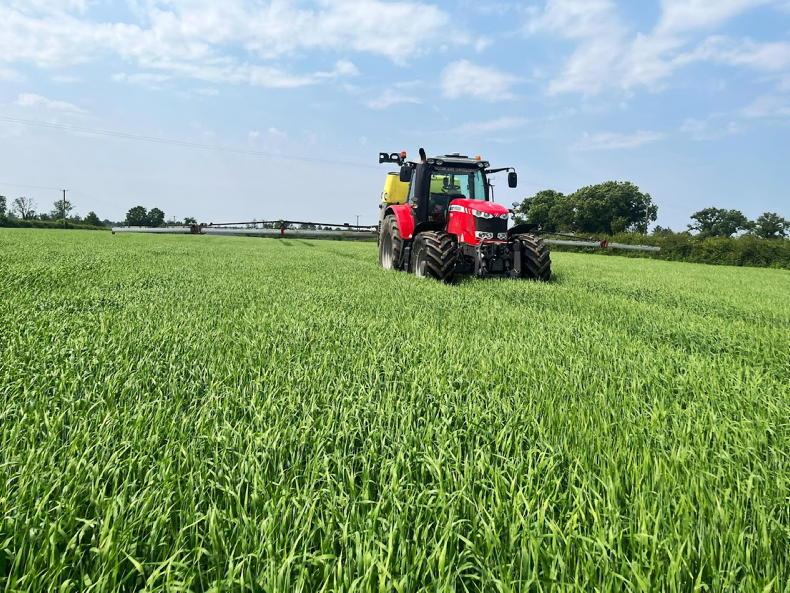
Neill was glad to see rain falling over the weekend as his farm had missed all showers during the week previous to this. This was the first rain in five weeks, and crops were starting to suffer from drought stress.
Neill’s winter barley is turning in very quickly. Neill hopes that the rain will help with the last bit of grain fill. The crop is still clean of disease, with no ramularia. Neill expects to begin harvesting in three weeks.
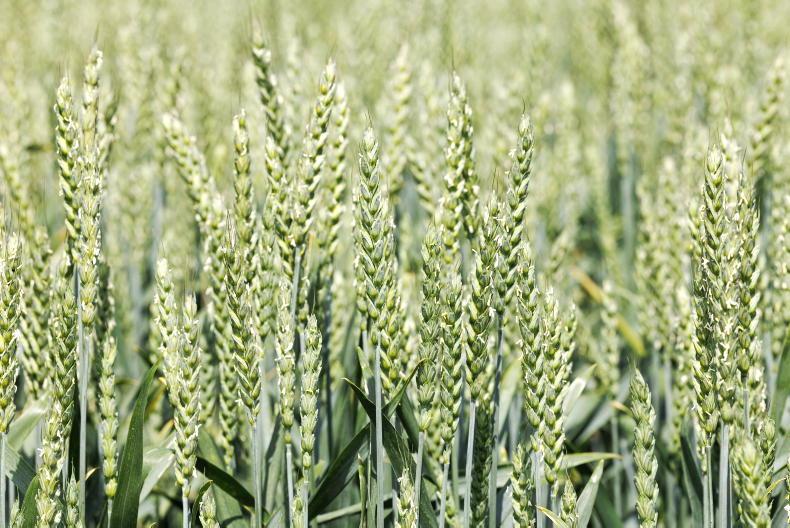
The winter wheat received a flowering spray on 10 June. Djembe (1l/ha), Ninja 10CS, and N16 (25l/ha) were applied. Neill has used N16 for many years and feels that it helps the crop to stay green for longer. The wheat only looks OK, with the best of it following beans. Some wheat has been badly affected by the drought on very dry land, with the flag leaf curling up.
The spring beans have finished flowering. There was a lot of pollinator activity and Neill hopes this leads to good pod set. They are remaining clean, with very little chocolate spot.
Having already applied one fungicide, Neill will not be applying another. He does not want to do damage to the tall, dense crop as he drives through it, and he also does not want the crop to be green for too long, leading to a very late harvest. He is very happy with the crop and says that there is excellent potential.
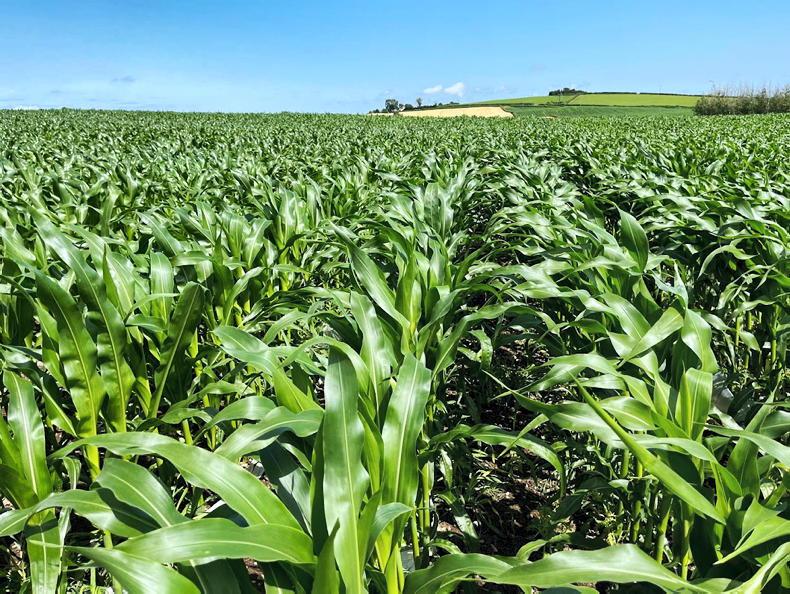
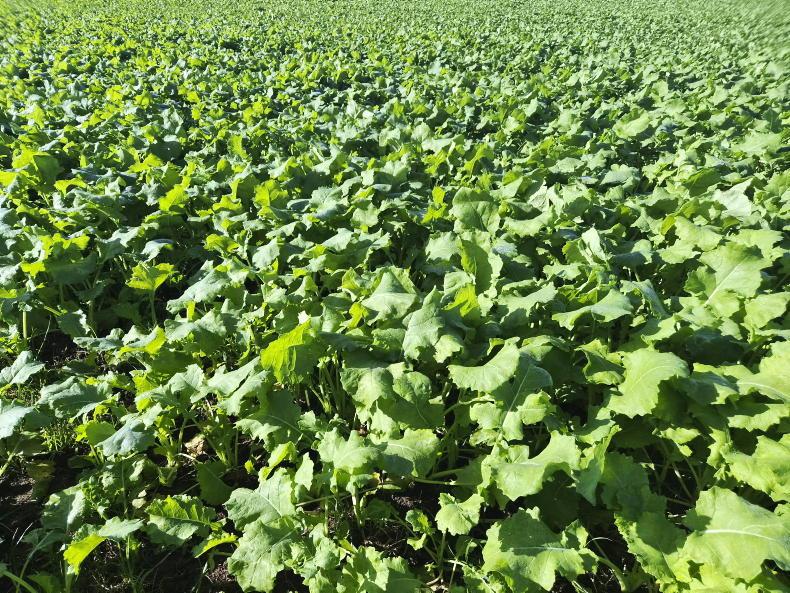
The forage maize looks excellent. It is very uniform, and has a nice colour.
Neill says that this was helped by the biodegradable plastic as almost no stress was caused when the crop was breaking through the plastic. Callisto (1l/ha) and Accent (50g/ha) were applied on 9 June to control difficult weeds such as groundsel.
With all spraying now completed, Neill is turning his attention to cleaning out the grain stores, and preparing machinery and the grain dryer for the upcoming harvest.
A welcome 33mm of rain arrived over the past couple of weeks in east Cork. This has been a great help for winter wheat and spring beans, but John says it came a bit too late for the spring barley.
The winter wheat has received its T3 of Profound (0.7l/ha) and Epso Combitop (7kg/ha).
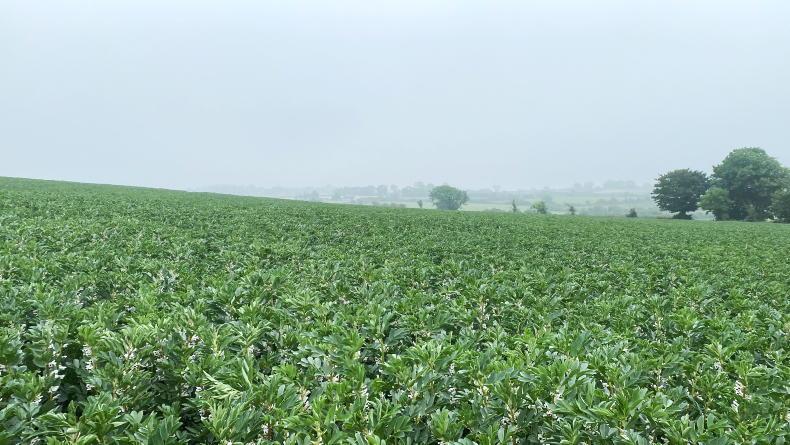
John is happy with the crop. The weather has been good for flowering so Fusarium levels should be low. While there is some Septoria on leaf three, the top two leaves are clean.
The winter barley is beginning to turn. Grain fill looks excellent, which John says will make up for some patchy headlands. There are some low levels of ramularia, but John doesn’t expect this to cause any yield loss at this stage. Harvesting is expected to start around 20 July.
John’s Caprice spring beans have finished flowering and pod set looks good. They received their second fungicide (Signum at 0.75kg/ha, Basfoliar Activ at 2l/ha, Epso Combitop at 7kg/ha) two weeks ago, and will receive their final fungicide next week. Some leaves at the base of the plant were wilting before the rain arrived, but there is plenty of moisture now to help pod fill. John has some traps in his beans to catch bruchid beetles as part of a Teagasc project focusing on the level of bruchid beetles in beans across the country.
Spring barley plant counts were on target at 300 plants/m2, but the dry weather resulted in poor tillering and a thin crop. John says the crop is clean of weeds and disease, but he does not expect a good yield. They received a T1 of Mandarin and a T2 of Cayunis, Profound, Arizona and Epso Combitop.
Considering the contrasting fortunes of certain crops this year, John is glad that he has a good rotation and therefore a mix of crops on the farm, reducing his overall risk to weather and global markets.
There have been very heavy showers in Galway over the past two weeks, with around 50mm of rain falling in an hour on 13 June.
While this has eased drought stress, it has also lifted the disease pressure and caused some winter barley to lodge.
Conall hopes that the lodging is a sign that there will be heavy ears and good yields.
He expects to begin harvesting the winter barley around the same time as last year, 11 July. The KWS Joyau will be cut first. It has already lost all of its green colour at this stage.
The winter oats are looking better than Conall expected, but they are quite tall (5ft) due to only one plant growth regulator being applied. He hopes there are no very heavy showers in the next couple of weeks, so that they stay standing until harvest.
The spring beans are finished flowering. Conall applied the second and final fungicide of Signum (0.75kg/ha) recently. He also included Phylgreen 200, a seaweed biostimulant, to help with plant health and to fight drought stress.
Conall is happy with how they look now considering the dry conditions they have faced.
As mentioned last month, the earliest planted and best crops of spring barley received a T1 fungicide of Coyote. These crops were sprayed with a T2 of Elatus Era (1l/ha) and folpet (1.5l/ha). Some heavier crops received Terpal (0.6l/ha) as the flag leaf began to emerge.
Conall expects these crops to yield 3t/ac or above. Late planted crops do not look as good, and are quite thin. They did not tiller well despite an application of CeCeCe 750.
Due to the dry weather, Conall decided not to apply a T1 to these crops at all. They received a T2 of Innox Pro (0.6l/ha) and Serpent (1.1l/ha) in the past few days. Conall thinks that these crops will yield no more than 2t to 2.5t/ac.



SHARING OPTIONS