There is much talk nowadays about sustainability in an ever-changing world of increased greenhouse gas (GHG) emissions and increasing environmental constraints.
The three pillars of sustainability - environmental, economic and social - are intrinsically linked and are essential to survival of any farming enterprise.
The Signpost programme is a multi-annual collaborative campaign, led by Teagasc and with over 40 industry partners, to lead and support the transition of Irish farming towards more sustainable farming systems by 2030: by reducing agricultural emissions, improving water quality, enhancing biodiversity, reducing costs and improving farm margins. It will also act as a test bed for on-farm carbon sequestration measurements.
Approximately 80% of all GHG emissions on tillage farms are associated with nitrogen inputs.
The EU’s target to reduce chemical fertiliser use by 20%, while maintaining sustainable crop margins, will indeed be difficult, but there are actions that can offset this impact, including the use of organic fertilisers, increasing leguminous crops in rotation and by growing cover crops (species dependent) between subsequent crops.
Mop up nutrients
Cover crops by their nature will mop up nutrients, which may possibly be lost over winter leading to poorer water quality.
They can also be a very effective weed control measure for difficult to control grass weeds, thereby reducing herbicide use. The two most crucial factors to consider when growing cover crops are sowing date and species selection.
Research has shown that early sowing, immediately after harvest, produces high bulk density crops, which may allow chemical fertiliser reductions.
Cover crops (which fix nitrogen) have the ability to reduce GHG emissions by a little over 1t CO2e/ha if they replace the crop’s chemical nitrogen application by 30kg/ha in the following crop.
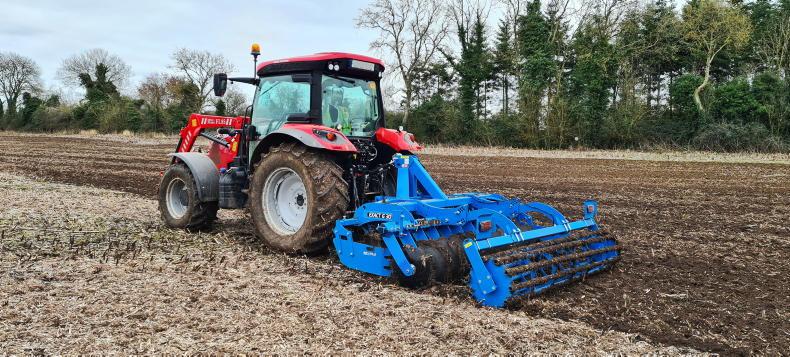
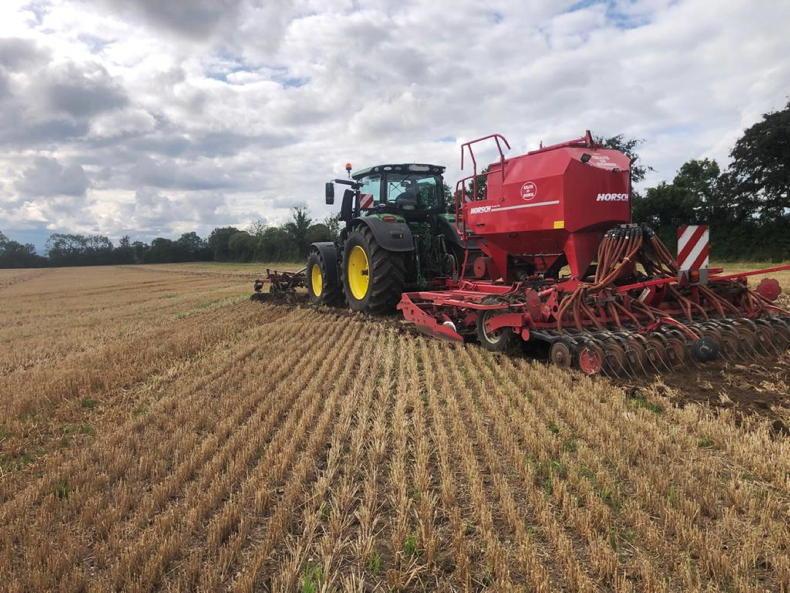
Cover crops can be established using many different methods.
Cultivation methods using minimum disturbance when combined with actions such as cover crops and straw incorporation can improve soil structure and add to carbon stocks in the soil.
There are added benefits of improved fuel efficiency and labour use. However, increased knowledge of your soils are necessary, as these systems are less forgiving than the plough-based systems.
Managing stubbles
All farmers are required to manage their stubbles differently following new regulations around green covers.
Stubble cultivation is an effective cultural practice to control problematic weeds on the farm and also to mop up nitrates which would otherwise be lost to your farm.
You can hear more about the Signpost programme and watch a cover crop establishment demonstration at the Crops and Cover Crop Culitvations open day on Wednesday 21 June at Teagasc, Oak Park, Co Carlow.
There is much talk nowadays about sustainability in an ever-changing world of increased greenhouse gas (GHG) emissions and increasing environmental constraints.
The three pillars of sustainability - environmental, economic and social - are intrinsically linked and are essential to survival of any farming enterprise.
The Signpost programme is a multi-annual collaborative campaign, led by Teagasc and with over 40 industry partners, to lead and support the transition of Irish farming towards more sustainable farming systems by 2030: by reducing agricultural emissions, improving water quality, enhancing biodiversity, reducing costs and improving farm margins. It will also act as a test bed for on-farm carbon sequestration measurements.
Approximately 80% of all GHG emissions on tillage farms are associated with nitrogen inputs.
The EU’s target to reduce chemical fertiliser use by 20%, while maintaining sustainable crop margins, will indeed be difficult, but there are actions that can offset this impact, including the use of organic fertilisers, increasing leguminous crops in rotation and by growing cover crops (species dependent) between subsequent crops.
Mop up nutrients
Cover crops by their nature will mop up nutrients, which may possibly be lost over winter leading to poorer water quality.
They can also be a very effective weed control measure for difficult to control grass weeds, thereby reducing herbicide use. The two most crucial factors to consider when growing cover crops are sowing date and species selection.
Research has shown that early sowing, immediately after harvest, produces high bulk density crops, which may allow chemical fertiliser reductions.
Cover crops (which fix nitrogen) have the ability to reduce GHG emissions by a little over 1t CO2e/ha if they replace the crop’s chemical nitrogen application by 30kg/ha in the following crop.

Cover crops can be established using many different methods.
Cultivation methods using minimum disturbance when combined with actions such as cover crops and straw incorporation can improve soil structure and add to carbon stocks in the soil.
There are added benefits of improved fuel efficiency and labour use. However, increased knowledge of your soils are necessary, as these systems are less forgiving than the plough-based systems.
Managing stubbles
All farmers are required to manage their stubbles differently following new regulations around green covers.
Stubble cultivation is an effective cultural practice to control problematic weeds on the farm and also to mop up nitrates which would otherwise be lost to your farm.
You can hear more about the Signpost programme and watch a cover crop establishment demonstration at the Crops and Cover Crop Culitvations open day on Wednesday 21 June at Teagasc, Oak Park, Co Carlow.
SHARING OPTIONS