Ireland has the second highest barley yields in the world, with only Belgium producing higher average yields (about 0.5t/ha higher on average). However, this average masks the significant differences in the make-up of the barley crop between the two countries.
In Ireland, only about 15% of the total barley crop is winter barley, while in Belgium, over 90% of the barley crop is winter-sown. Given that winter barley is inherently higher yielding than spring barley, Ireland would have the highest yields if the two countries were compared like-for-like.
Yield formation in barley
The impact of foliar disease on wheat is to reduce canopy survival and consequently grain-fill, resulting in smaller grains. This is why wheat disease control programmes aim to keep the last three leaves free of disease, as these are the ones that intercept most of the sunlight during grain filling. The general approach to disease control in barley is quite different.
Unlike wheat, the main contributor to high yields in winter and spring barley is high grain number rather than increasing grain fill (see Figure 1). While the bulk of the data points that make up Figure 1 are from UK trials, this figure also demonstrates the higher yields attainable in Ireland (green triangles) compared to the UK (blue circles) and these result from the production of higher grain number per unit area.
In order to maximise yield of either winter or spring barley, the objective is, therefore, to maximise grain number per unit area. Grain number is determined by the combination of plant number and ear number per plant, which give the final ear count, and the average grain number per ear.
In barley, there is much more scope to increase the final ear count (through crop husbandry) than the grain number per ear, which is much less variable than it is in wheat. Obviously, the plant number established has an impact on ear count, but once you exceed about 300 plants established, there is no further benefit.
Tillering, therefore, becomes key to maximising ear number. Figure 2 shows a typical tillering pattern for a barley plant. While this is for spring barley, the pattern is the same in relation to crop growth stage in winter barley. The first shoot is produced at the same time as the third leaf and new shoots usually continue to be produced until the first node (GS31) is produced.
Tiller number starts to decline during stem extension, and continues until after ear emergence. This is a period of highest growth rate and any growth impediment tends to result in the self-destruction of shoots.
So tiller production and tiller loss are affected by the availability of the resources needed for growth; nutrients, water and sunlight. If any of these are limiting, it will stop tiller production or increase the rate of tiller loss.
If too many shoots are lost due to, for example, a very dry period, the crop can recommence tillering once these resources become available again and this can lead to the formation of late tillers which remain green at harvest.
Key diseases
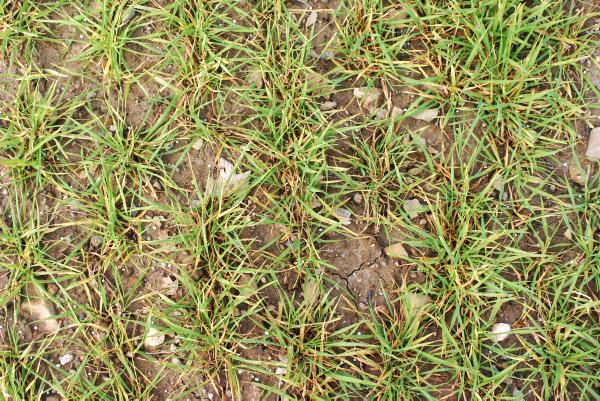
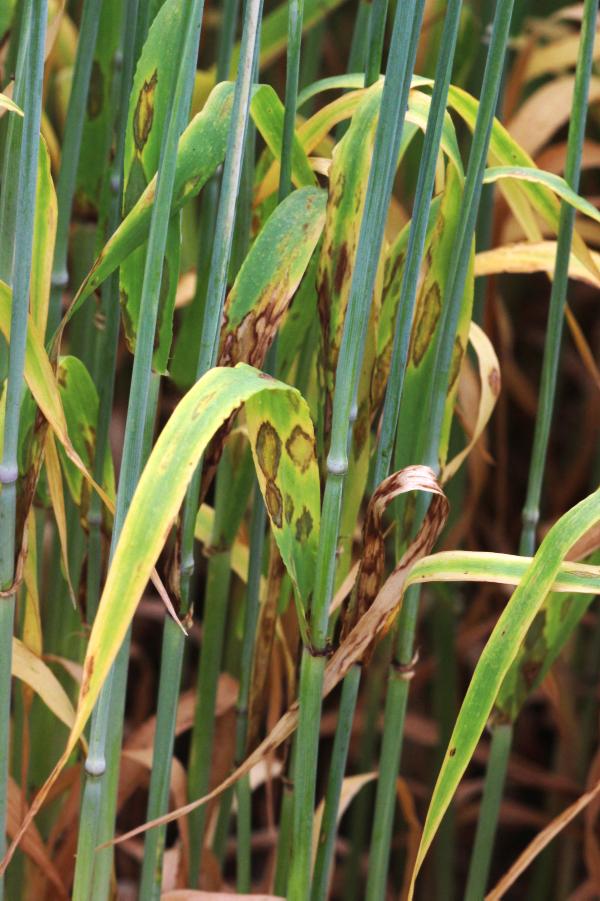
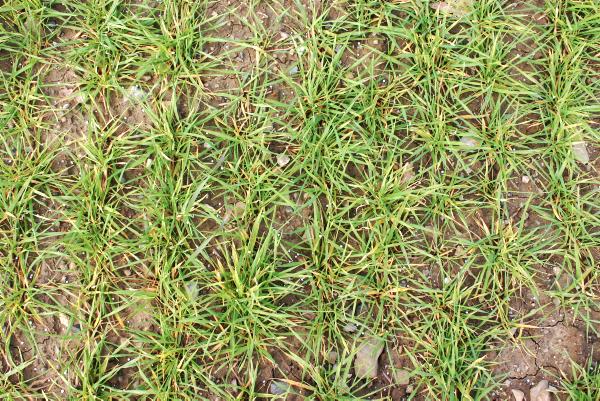
Rhynchosporium has come into winter barley crops early for the last few years, with infection becoming obvious in some crops in January. Saffron appears to be the worst affected variety but the related variety, Cassia, can also be badly infected.
Similarly, there have been many early infections in spring barley, particularly in the more susceptible varieties. At Oak Park, following a very wet and cold winter in 2010, the spring variety Snakebite was showing very obvious lesions by the time the second leaf had emerged. But the dry spring that followed did subsequently slow up the development of the infection.
Rhynchosporium is predominantly carried on trash, so continuous barley crops are at most risk. There may also be an increased risk of infection if there has only been a single crop break between two barley crops.
In this situation, the stubbles are ploughed down and back up the following year, bringing the stubble debris back up in time to infect the next barley crop.
This disease can also be seed-borne and doesn’t appear to be well controlled by seed treatments. It would be unwise, therefore, to home-save seed from crops with significant Rhynchosporium infections late in the growing season.
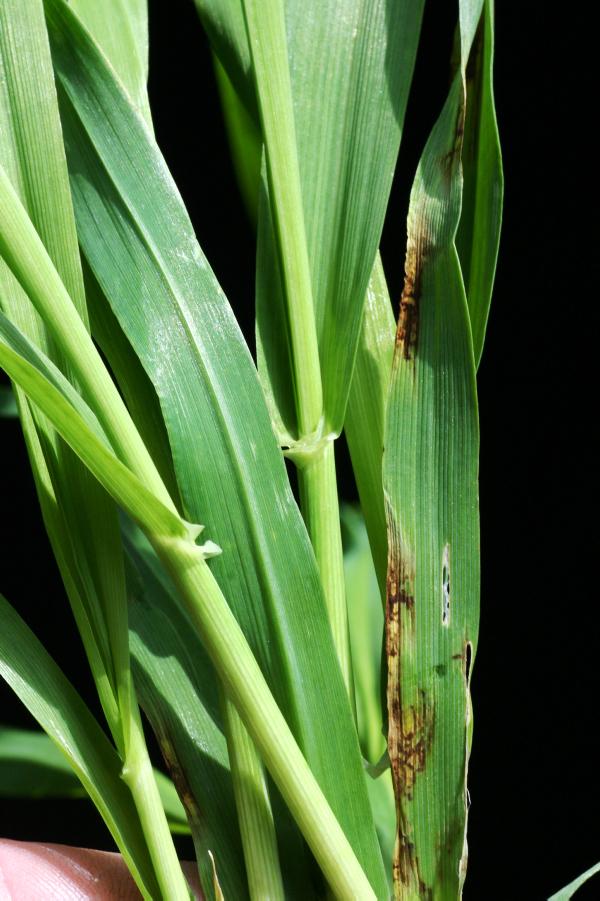
This season, mildew and net blotch were easily found on winter barley in the warm autumn conditions. This most likely spread from spring barley volunteers which carried high levels of infection and acted as a source of infection for crops of winter barley emerging nearby. The diseases occurred at levels which, in the majority of cases, did not warrant spraying and subsequently dried up as temperatures dropped.
Rhynchosporium is now the main disease to be found in barley crops but is currently at low levels.
The impact of foliar disease
on yield formation
Foliar disease impacts on barley crops by destroying green leaf area and, consequently, the crop’s ability to intercept light and produce carbohydrates that are needed for growth.
It is likely, therefore, that if disease occurs during tillering or before ear emergence, it could significantly reduce ear number and thus yield potential in barley.
A series of experiments looking at the yield response to a range of fungicide timings was carried out in Carlow and Cork in the harvest years 2010 to 2013 on Saffron winter barley. To capture all potential timings, fungicides were applied at five different timings:
1. In the autumn after the start of tillering;2. Early spring before stem extension;3. Early stem extension;4. Flag leaf fully emerged/awns emerging;5. Ear emergence. The same fungicide combination was applied at each timing – half-rate Cauldron plus half-rate Proline – to provide a mix that would give good control of the range of diseases likely to occur throughout the season. In crops with no or low levels of disease, there was no response to fungicide application, highlighting the opportunity to save costs in clean crops. Where disease was present, the average yield response to fungicides was very similar from the autumn, tillering and early stem extension sprays, at about 0.3t/ha to 0.4t/ha (see Table 1).
Response to autumn or early spring disease control was far more frequent in Cork than in Carlow, reflecting the generally higher disease pressure at that site. The early stem extension spray timing showed the most consistent benefit, with all sites, except Carlow in 2011 and 2012, showing a positive response.
The spray applied at flag leaf emergence/awns emerging gave, on average, the highest yield response of 0.75t/ha where significant disease was present, but, in six of the eight sites, there was no response. There was no beneficial response to fungicides applied at ear emergence in any of the trials.
These results highlight the need to control disease in barley when it occurs at any significant level rather than waiting for a particular crop growth stage, although they do bring into question the value of late season applications of fungicide.
Fungicide choice
Prothioconazole-based products, such as Proline or Fandango, have been the cornerstone of barley disease control in recent years. To date, there has been no sign of any loss in activity against barley diseases, like there has been against septoria in wheat.
However, the risk of resistance development should not be ignored and sensible product use must be encouraged.
The newer generation of SDHI fungicides offer very high levels of disease control in barley, similar to or better than Proline (Figure 3).
The SDHI group of fungicides are, however, at high risk from resistance development and should never be used without a partner active ingredient that is also active against the target disease or diseases. Additionally, they cannot be used more than twice in a season.
It is also worth remembering that some of the strobilurin fungicides still maintain good activity against a range of barley diseases. And chlorothalonil continues to have really good activity against ramularia.
There are, therefore, a wide range of products and active options when it comes to fungicide choice in barley.
The basic principles when choosing what to apply should be based on price, the use of more than one active ingredient in each spray treatment and the need to use a diversity of products through the growing season.
Ireland has the second highest barley yields in the world, with only Belgium producing higher average yields (about 0.5t/ha higher on average). However, this average masks the significant differences in the make-up of the barley crop between the two countries.
In Ireland, only about 15% of the total barley crop is winter barley, while in Belgium, over 90% of the barley crop is winter-sown. Given that winter barley is inherently higher yielding than spring barley, Ireland would have the highest yields if the two countries were compared like-for-like.
Yield formation in barley
The impact of foliar disease on wheat is to reduce canopy survival and consequently grain-fill, resulting in smaller grains. This is why wheat disease control programmes aim to keep the last three leaves free of disease, as these are the ones that intercept most of the sunlight during grain filling. The general approach to disease control in barley is quite different.
Unlike wheat, the main contributor to high yields in winter and spring barley is high grain number rather than increasing grain fill (see Figure 1). While the bulk of the data points that make up Figure 1 are from UK trials, this figure also demonstrates the higher yields attainable in Ireland (green triangles) compared to the UK (blue circles) and these result from the production of higher grain number per unit area.
In order to maximise yield of either winter or spring barley, the objective is, therefore, to maximise grain number per unit area. Grain number is determined by the combination of plant number and ear number per plant, which give the final ear count, and the average grain number per ear.
In barley, there is much more scope to increase the final ear count (through crop husbandry) than the grain number per ear, which is much less variable than it is in wheat. Obviously, the plant number established has an impact on ear count, but once you exceed about 300 plants established, there is no further benefit.
Tillering, therefore, becomes key to maximising ear number. Figure 2 shows a typical tillering pattern for a barley plant. While this is for spring barley, the pattern is the same in relation to crop growth stage in winter barley. The first shoot is produced at the same time as the third leaf and new shoots usually continue to be produced until the first node (GS31) is produced.
Tiller number starts to decline during stem extension, and continues until after ear emergence. This is a period of highest growth rate and any growth impediment tends to result in the self-destruction of shoots.
So tiller production and tiller loss are affected by the availability of the resources needed for growth; nutrients, water and sunlight. If any of these are limiting, it will stop tiller production or increase the rate of tiller loss.
If too many shoots are lost due to, for example, a very dry period, the crop can recommence tillering once these resources become available again and this can lead to the formation of late tillers which remain green at harvest.
Key diseases
Rhynchosporium has come into winter barley crops early for the last few years, with infection becoming obvious in some crops in January. Saffron appears to be the worst affected variety but the related variety, Cassia, can also be badly infected.
Similarly, there have been many early infections in spring barley, particularly in the more susceptible varieties. At Oak Park, following a very wet and cold winter in 2010, the spring variety Snakebite was showing very obvious lesions by the time the second leaf had emerged. But the dry spring that followed did subsequently slow up the development of the infection.
Rhynchosporium is predominantly carried on trash, so continuous barley crops are at most risk. There may also be an increased risk of infection if there has only been a single crop break between two barley crops.
In this situation, the stubbles are ploughed down and back up the following year, bringing the stubble debris back up in time to infect the next barley crop.
This disease can also be seed-borne and doesn’t appear to be well controlled by seed treatments. It would be unwise, therefore, to home-save seed from crops with significant Rhynchosporium infections late in the growing season.
This season, mildew and net blotch were easily found on winter barley in the warm autumn conditions. This most likely spread from spring barley volunteers which carried high levels of infection and acted as a source of infection for crops of winter barley emerging nearby. The diseases occurred at levels which, in the majority of cases, did not warrant spraying and subsequently dried up as temperatures dropped.
Rhynchosporium is now the main disease to be found in barley crops but is currently at low levels.
The impact of foliar disease
on yield formation
Foliar disease impacts on barley crops by destroying green leaf area and, consequently, the crop’s ability to intercept light and produce carbohydrates that are needed for growth.
It is likely, therefore, that if disease occurs during tillering or before ear emergence, it could significantly reduce ear number and thus yield potential in barley.
A series of experiments looking at the yield response to a range of fungicide timings was carried out in Carlow and Cork in the harvest years 2010 to 2013 on Saffron winter barley. To capture all potential timings, fungicides were applied at five different timings:
1. In the autumn after the start of tillering;2. Early spring before stem extension;3. Early stem extension;4. Flag leaf fully emerged/awns emerging;5. Ear emergence. The same fungicide combination was applied at each timing – half-rate Cauldron plus half-rate Proline – to provide a mix that would give good control of the range of diseases likely to occur throughout the season. In crops with no or low levels of disease, there was no response to fungicide application, highlighting the opportunity to save costs in clean crops. Where disease was present, the average yield response to fungicides was very similar from the autumn, tillering and early stem extension sprays, at about 0.3t/ha to 0.4t/ha (see Table 1).
Response to autumn or early spring disease control was far more frequent in Cork than in Carlow, reflecting the generally higher disease pressure at that site. The early stem extension spray timing showed the most consistent benefit, with all sites, except Carlow in 2011 and 2012, showing a positive response.
The spray applied at flag leaf emergence/awns emerging gave, on average, the highest yield response of 0.75t/ha where significant disease was present, but, in six of the eight sites, there was no response. There was no beneficial response to fungicides applied at ear emergence in any of the trials.
These results highlight the need to control disease in barley when it occurs at any significant level rather than waiting for a particular crop growth stage, although they do bring into question the value of late season applications of fungicide.
Fungicide choice
Prothioconazole-based products, such as Proline or Fandango, have been the cornerstone of barley disease control in recent years. To date, there has been no sign of any loss in activity against barley diseases, like there has been against septoria in wheat.
However, the risk of resistance development should not be ignored and sensible product use must be encouraged.
The newer generation of SDHI fungicides offer very high levels of disease control in barley, similar to or better than Proline (Figure 3).
The SDHI group of fungicides are, however, at high risk from resistance development and should never be used without a partner active ingredient that is also active against the target disease or diseases. Additionally, they cannot be used more than twice in a season.
It is also worth remembering that some of the strobilurin fungicides still maintain good activity against a range of barley diseases. And chlorothalonil continues to have really good activity against ramularia.
There are, therefore, a wide range of products and active options when it comes to fungicide choice in barley.
The basic principles when choosing what to apply should be based on price, the use of more than one active ingredient in each spray treatment and the need to use a diversity of products through the growing season.






SHARING OPTIONS