The question I have been asked most in recent weeks has been whether or not to roll winter crops now. The difficult weather last backend meant there was no rolling done, so this is neither an unreasonable nor unexpected question.
In general, I think it is good to roll a winter crop now, provided there is some growth about for recovery and that land is dry enough. But try and avoid frost and situations where soil is very dry and cloddy.
My first response to anyone asking this question tends it be: “What are you intending to roll with?” I ask this because there is a significant difference between rolling pre-emerge in the autumn and rolling a weak crop at the start of spring growth.
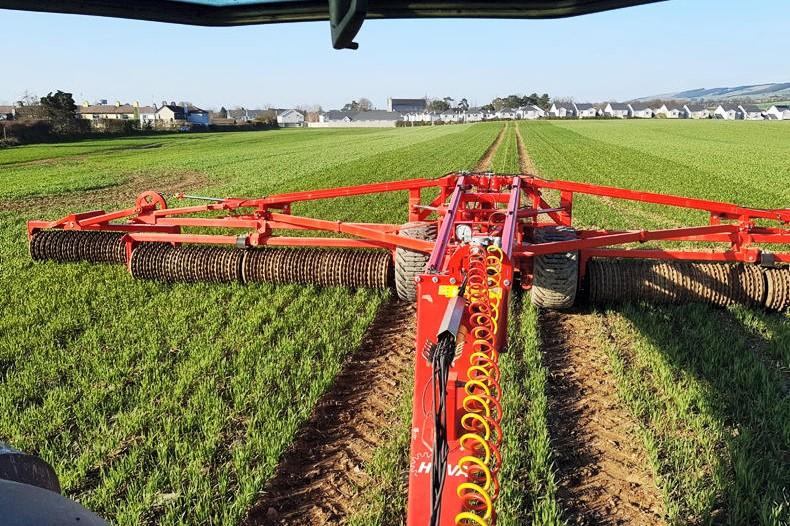
A flat roller is preferable post-emerge, but may not be an option and they tend to be narrow. Ring rollers have a much greater width to minimise wheelings, but the rings will cause extra damage to leaves. A soft seedbed surface will help reduce damage, regardless of the roller used.
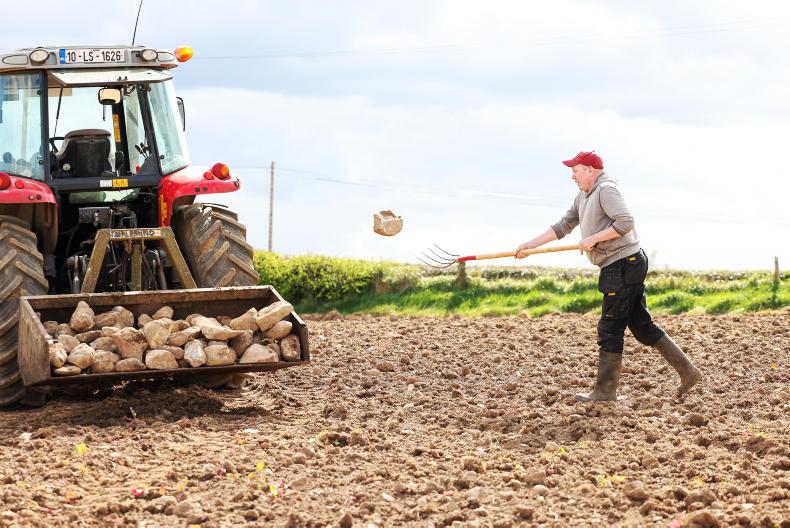
Bury small to medium stones. This is crucial, because they can cause havoc if your crops are lodged. That could happen through no fault of your own, such as during a storm at a critical growth stage, or persistent light rain accompanied by heavy wind during the peak of grain fill. It is always important to consider the prospect of having to lift a crop off the ground for harvest. As well as burying stones, a run of the roller now will give you a more level surface, which could again be very useful if you have to lift a crop off the ground at harvest. Having a level surface helps the lifters on the combine work better – a saving on the driver. This helps reduce or prevent soil being taken onto the table during harvest and so minimise grain contamination. It also means less wear and tear on the combine. As well as levelling the seedbed, a run of the roller helps to firm the surface where the roots which help anchor the plant grow. This can be very useful in preventing root-roll in wet conditions. Nowadays, this is the most common form of lodging, especially in wheat.In a loose seedbed, the lateral anchor roots have much less grip than in a firm seedbed. If there is a lot of moisture about, the roots can pull through the soil and allow the plant to fall over. Strong stems will tend to increase the pressure for root-roll lodging.Rolling can slightly damage the stronger stems on a plant and this can cause them to give up a little of their apical dominance. This is a biological process that gives all the advantages to the main or stronger stem and so minimises tillering, except where conditions are very favourable for growth. It has long been contended that the gentle squeeze of the roller helps to promote tillering and that could be very useful in backward crops.
Damage caused to plants by wheels and the roller. The major cause of damage is the roller and that is why I ask what type of roller will be used. A flat roller will tend to do the least severe damage to plant leaves, but it will do some damage by way of bruising, etc. But there can be a lot of wheelings. The amount of severe damage would be low compared to a relatively new cultivator roller with sharp edges on the rings. A well-worn ring roller would be preferable for spring rolling, as it would be less inclined to cut leaves and would minimise wheelings.
There is a danger that rolling and sealing the surface might reduce water penetration and force run-off and possible erosion in future heavy rain. As is always the case, the better physical condition your land is in, the more easily and safely it can take any sort of cultivation.
Physical bruising of the leaves could make your crops more prone to damage by frost, because the leaves are wounded. Also, because leaves are bruised, one should not spray a rolled crop within 10 days of rolling. So, if a spray in imminent, do not roll. Additional thought is needed if you have recently applied a residual herbicide. As well as crop damage, rolling could expose fresh weed seeds that may not be caught by the residual spray.
In general, the bulk of damage caused by rolling is superficial and perhaps somewhat stimulatory. However, once the plant begins to move into stem extension and the growing point has moved up inside the stem, keep the roller out. Any damage to the tiny developing ear at that point could result in its death and that will tend to be a dominant main stem with no head on top. So, once you get to stem extension, keep the roller out.
In most instances, rolling is a positive step if you have a wide machine to minimise tracking. It is preferable to use a ring-roller that is well worn to minimise leaf shear. Do not bring in a roller once the plants have moved into stem extension, as the developing ear inside the stem could be damaged during rolling and die.
The question I have been asked most in recent weeks has been whether or not to roll winter crops now. The difficult weather last backend meant there was no rolling done, so this is neither an unreasonable nor unexpected question.
In general, I think it is good to roll a winter crop now, provided there is some growth about for recovery and that land is dry enough. But try and avoid frost and situations where soil is very dry and cloddy.
My first response to anyone asking this question tends it be: “What are you intending to roll with?” I ask this because there is a significant difference between rolling pre-emerge in the autumn and rolling a weak crop at the start of spring growth.
A flat roller is preferable post-emerge, but may not be an option and they tend to be narrow. Ring rollers have a much greater width to minimise wheelings, but the rings will cause extra damage to leaves. A soft seedbed surface will help reduce damage, regardless of the roller used.
Bury small to medium stones. This is crucial, because they can cause havoc if your crops are lodged. That could happen through no fault of your own, such as during a storm at a critical growth stage, or persistent light rain accompanied by heavy wind during the peak of grain fill. It is always important to consider the prospect of having to lift a crop off the ground for harvest. As well as burying stones, a run of the roller now will give you a more level surface, which could again be very useful if you have to lift a crop off the ground at harvest. Having a level surface helps the lifters on the combine work better – a saving on the driver. This helps reduce or prevent soil being taken onto the table during harvest and so minimise grain contamination. It also means less wear and tear on the combine. As well as levelling the seedbed, a run of the roller helps to firm the surface where the roots which help anchor the plant grow. This can be very useful in preventing root-roll in wet conditions. Nowadays, this is the most common form of lodging, especially in wheat.In a loose seedbed, the lateral anchor roots have much less grip than in a firm seedbed. If there is a lot of moisture about, the roots can pull through the soil and allow the plant to fall over. Strong stems will tend to increase the pressure for root-roll lodging.Rolling can slightly damage the stronger stems on a plant and this can cause them to give up a little of their apical dominance. This is a biological process that gives all the advantages to the main or stronger stem and so minimises tillering, except where conditions are very favourable for growth. It has long been contended that the gentle squeeze of the roller helps to promote tillering and that could be very useful in backward crops.
Damage caused to plants by wheels and the roller. The major cause of damage is the roller and that is why I ask what type of roller will be used. A flat roller will tend to do the least severe damage to plant leaves, but it will do some damage by way of bruising, etc. But there can be a lot of wheelings. The amount of severe damage would be low compared to a relatively new cultivator roller with sharp edges on the rings. A well-worn ring roller would be preferable for spring rolling, as it would be less inclined to cut leaves and would minimise wheelings.
There is a danger that rolling and sealing the surface might reduce water penetration and force run-off and possible erosion in future heavy rain. As is always the case, the better physical condition your land is in, the more easily and safely it can take any sort of cultivation.
Physical bruising of the leaves could make your crops more prone to damage by frost, because the leaves are wounded. Also, because leaves are bruised, one should not spray a rolled crop within 10 days of rolling. So, if a spray in imminent, do not roll. Additional thought is needed if you have recently applied a residual herbicide. As well as crop damage, rolling could expose fresh weed seeds that may not be caught by the residual spray.
In general, the bulk of damage caused by rolling is superficial and perhaps somewhat stimulatory. However, once the plant begins to move into stem extension and the growing point has moved up inside the stem, keep the roller out. Any damage to the tiny developing ear at that point could result in its death and that will tend to be a dominant main stem with no head on top. So, once you get to stem extension, keep the roller out.
In most instances, rolling is a positive step if you have a wide machine to minimise tracking. It is preferable to use a ring-roller that is well worn to minimise leaf shear. Do not bring in a roller once the plants have moved into stem extension, as the developing ear inside the stem could be damaged during rolling and die.






SHARING OPTIONS