



In order to maximise the health and productivity of their soil, tillage farmers first need to get to know their soils.
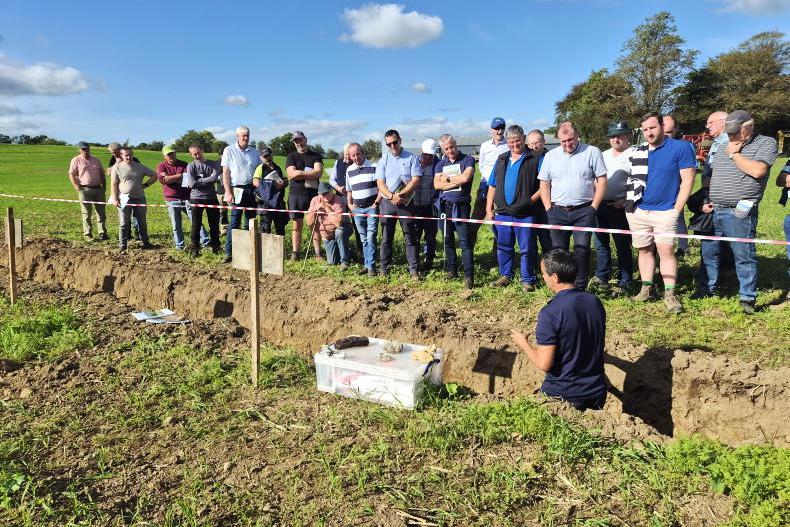
This was the message from soil quality technologist at Teagasc Luis Lopez-Sangil at a recent farm walk for Teagasc's soil health week on From the Tramlines participant Hugh McDonnell’s farm near Bagenalstown, Co Carlow.
Luis advised tillage farmers to “become the experts in each of your soils”.
He explained that it is only once you know what the soil looks like, what the issues are and what potentially caused these issues that actions can be taken to improve the health of the soil.
You don’t need to dig a soil pit either. You can see a lot about your soil by digging down to 50cm with a spade, according to Luis.
Cultivation
However, only so much can be done to improve a soil, especially when it comes to the subsoil and the soil that is below the depth of cultivation.
“There are things that you can do and there are other things you need to learn to live with,” he said.
Luis noted that soil compaction and waterlogging are the two most important problems regarding soils in Irish agriculture, with compaction probably being “the number one enemy” in Irish tillage farming.
Roots
Luis explained that tillage farmers should be trying to maximise the amount of organic matter in the soil, both at the surface level and at depth. He commented that roots are very important in doing this.
“The more roots you have and the deeper you have the roots, the higher the amount of organic matter and nutrients you will be incorporating into the soil.”
Increasing the organic matter in turn makes life easier for the roots.
“The easier it is for the roots to grow in the soil, the less energy they need to invest to break up the soil, so all that energy goes back into the crop,” he said.


SHARING OPTIONS