"I don’t feel my age,” Veronica Molloy, owner of Crossogue Preserves in Co Tipperary says. “I feel about 20, except my body tells me I’m not!”
We are sitting at Veronica’s dining room table with cups of French press coffee, freshly made scones, lashings of butter and a selection of Veronica’s homemade jams.
“Some of the more boring flavours,” she says, apologetically. “Just strawberry and raspberry, I’m afraid.” I assure her I am not disappointed. This is the late-morning coffee spread of dreams.
At 81, Veronica has achieved much from business and from life. The windows of her dining room offer a glimpse of the beautiful expanse of the countryside, where her son, Mark, operates Crossogue Equestrian. Just outside, you’ll find the purpose-built production centre for Crossogue Preserves, where she and her small team of artisan jam-and-jelly experts create over 200 different flavours of preserve – many of which have won Blas na h’Éireann and Great Taste Awards throughout their 30-plus years in business.
But Veronica didn’t start out life as the jam-making prodigy she is known as today. In fact, though Irish through and through, she didn’t even start out life in Ireland.
“I love cooking, but I’m not a trained chef,” she explains. “I was a nurse; that was my occupation before I got married. I was born and brought up in east Africa. My mum was Irish and my dad was Canadian English. He was born in Montreal. He proposed to Mummy just as the Second World War broke out. She said yes, but he was planning to practise law in Kenya, so he popped her on a warship with her dog and sent her out to Kenya
“I was born there,” she continues. “I went to a convent with Irish nuns and Irish priests and Mummy was very much involved in our local church, which started off as a tin shack until they got a stone one built. I lived about 10 miles from Nairobi.”
There, Veronica had an idyllic childhood. Her mother, originally from Kilsheelan in south Tipperary, had a small 10ac farm with Jersey cows, ducks, hens and horses. Veronica and her siblings grew up riding and attending pony clubs.
“We had a very carefree life,” she recalls. “I loved my childhood. “I went to boarding school and had lots of friends who came from upcountry. They couldn’t go home for half term, so they would come to us. Then, I would have my holidays with them upcountry. We’d all bring friends home and Daddy would say, ‘Well, who have we got here today?’ And there would be a hundred children looking up at him.
“Mummy was the epitome of a sociable, warm mother,” she adds. “She really was a family lady.”

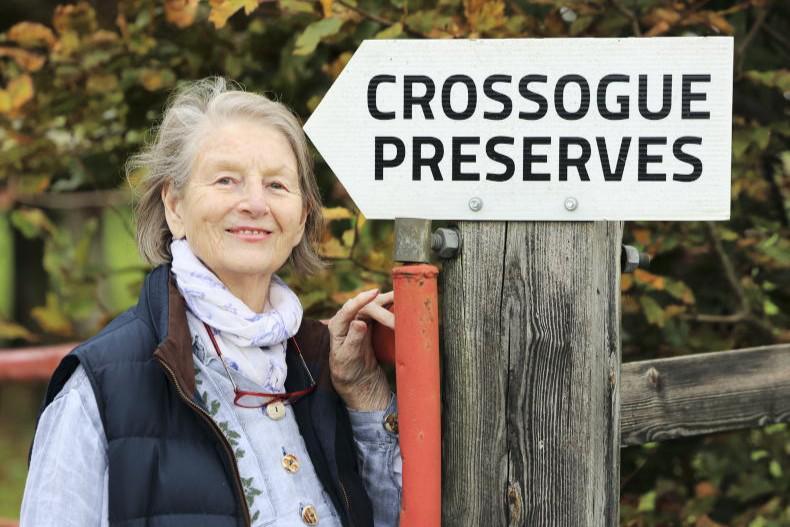
Despite having grown up in Kenya, Veronica is deeply rooted to the land where her family's farm and equestrian centre is located in Co Tipperary. \ Odhran Ducie
Jam-making
Veronica says growing up, they were “a bit spoiled” as they had a cook and other employees helping with their household, but her mother always made them make their beds and take on responsibilities. She also ensured her children treated everyone with great respect. ]
Her father believed that once they came of age, they needed to leave for school or further training. When the time came, Veronica moved to Cambridge, where she took up nursing.
“My mother had a brother back home in Kilsheelan,” she says. “He had no children, so he would often entertain his nieces and nephews. I received an invitation to come to the Dublin Horse Show and attend the ball, so I accepted. I came over and went to the ball, and who should be there but my husband-to-be?”
Her would-be husband, Tony, had just returned to Ireland from New Zealand, where he had been learning about farming before taking on his own family farm.
“We were introduced and hit it off right away,” she says, smiling. “I think it might have been because he had been to New Zealand and I was a bit colonial [having been brought up in Kenya] and wild. I had just begun my nursing training, so I went back to finish. He would pop over [for visits] and eventually, he popped the question and we were married.”
Veronica and Tony settled on the farm in Crossogue and within nine years, their six children were born. Veronica got stuck into both farm life and being a mum. She started growing their own vegetables and fruits and her mother-in-law Nancy Molloy, who lived down the road, taught her how to make jam.
“She taught me the fundamentals of jam-making because I hadn’t a clue, so that’s how I began,” she says. “I used to make jam and marmalade for the family, and I started entering my preserves and vegetables into local shows.
Then, shops started to ask if I would make jams for them to sell. I supplied my first shop 30 years ago – they had hand-written labels. And it just grew from there.”
At this time, Veronica had also helped Mark establish Crossogue Equestrian. Ultimately, she needed to decide whether to continue with Mark, or to go full-throttle into Crossogue Preserves. She chose the preserves.

Veronica and her team at Crossogue Preserves sell several varieties of mincemeat during the festive season. \ Odhran Ducie
“I knew nothing about business,” she says. “I did a certification course and joined the Tipperary Enterprise Board [as they were known at that time]. They were a terrific help; I learned about marketing and everything through them. Bord Bia were also fantastic.”
Great taste
Veronica started entering her preserves into the Great Taste Awards, organised by the Guild of Fine Food in the United Kingdom. Her preserves started winning and business continued to expand. “To this day, we still make our Crossogue Preserves in saucepans, and just 20 jars at a go,” she says.
“Winning awards was the best way of advertising. I’m not good at cold selling. Our preserves have gone all over the world. At one stage, we were selling them in Malaysia. They have been all over Europe and in the United States.
From hand-written labels, Crossogue Preserves have come a long way, with much of Veronica’s present-day sales coming from online orders via the Crossogue Preserves website, see crossoguepreserves.com.
“I always thought I should write a book called, My Journey in a Jam Jar,” she says, laughing. “Because the jam has taken me all over the place.”
Veronica’s brandy mincemeat
At Crossogue Preserves, Veronica and her team make several varieties of seasonal mincemeat – and they are all delicious. There are some recipes she will always keep close to her chest, but she was willing to part with this recipe for her brandy mincemeat. Mincemeat making is a much less complicated process than one might think – the key is to let the mixture sit and let the flavours all fuse together. Like all good things, a truly great mincemeat is one worth waiting for.

Traditional mincemeat is made with dried fruits, candied peel, suet and apples. \Odhran Ducie
Makes approx eight 250g jars
Ingredients
250g Bramley apple
(or any cooking apple)
450g sultanas
450g raisins
115g vegetable suet
115g mixed peel
450g brown sugar
250g treacle
1 tbsp lemon juice
2 tbsp brandy
Method
1 Chop the Bramley apple and cook gently in a saucepan for 20 minutes. Let cool and place in a large mixing bowl. Add the remaining ingredients to the apple and combine. Leave to soak overnight in a cool, dark room.
2 Sanitise jam jars: wash the glass jars with hot, soapy water and rinse well. Place the jars on a baking tray, open end up, and sanitise in a 100°C oven for 20-30 minutes. Put a pot of water on to boil and place the lids in the boiling water for the last 10 minutes.
3 Fill the jars with the soaked mincemeat and wipe around the tops of the jars with a cloth soaked in vinegar before placing the lid on the jar. Leave for the lids to seal. If you like, you can take the further step of placing the filled, sealed jars in a large pot of simmering water for an additional 10 minutes.
4 The mincemeat will keep for up to six months, if properly preserved, and will keep in the fridge for several weeks in the lead-up to Christmas. Make mincemeat pies using shortcrust or puff pastry and serve with brandy cream.
Read more
Leave these classic Christmas cookies out for Santa
The ultimate Christmas baking project: make a gingerbread farm
"I don’t feel my age,” Veronica Molloy, owner of Crossogue Preserves in Co Tipperary says. “I feel about 20, except my body tells me I’m not!”
We are sitting at Veronica’s dining room table with cups of French press coffee, freshly made scones, lashings of butter and a selection of Veronica’s homemade jams.
“Some of the more boring flavours,” she says, apologetically. “Just strawberry and raspberry, I’m afraid.” I assure her I am not disappointed. This is the late-morning coffee spread of dreams.
At 81, Veronica has achieved much from business and from life. The windows of her dining room offer a glimpse of the beautiful expanse of the countryside, where her son, Mark, operates Crossogue Equestrian. Just outside, you’ll find the purpose-built production centre for Crossogue Preserves, where she and her small team of artisan jam-and-jelly experts create over 200 different flavours of preserve – many of which have won Blas na h’Éireann and Great Taste Awards throughout their 30-plus years in business.
But Veronica didn’t start out life as the jam-making prodigy she is known as today. In fact, though Irish through and through, she didn’t even start out life in Ireland.
“I love cooking, but I’m not a trained chef,” she explains. “I was a nurse; that was my occupation before I got married. I was born and brought up in east Africa. My mum was Irish and my dad was Canadian English. He was born in Montreal. He proposed to Mummy just as the Second World War broke out. She said yes, but he was planning to practise law in Kenya, so he popped her on a warship with her dog and sent her out to Kenya
“I was born there,” she continues. “I went to a convent with Irish nuns and Irish priests and Mummy was very much involved in our local church, which started off as a tin shack until they got a stone one built. I lived about 10 miles from Nairobi.”
There, Veronica had an idyllic childhood. Her mother, originally from Kilsheelan in south Tipperary, had a small 10ac farm with Jersey cows, ducks, hens and horses. Veronica and her siblings grew up riding and attending pony clubs.
“We had a very carefree life,” she recalls. “I loved my childhood. “I went to boarding school and had lots of friends who came from upcountry. They couldn’t go home for half term, so they would come to us. Then, I would have my holidays with them upcountry. We’d all bring friends home and Daddy would say, ‘Well, who have we got here today?’ And there would be a hundred children looking up at him.
“Mummy was the epitome of a sociable, warm mother,” she adds. “She really was a family lady.”
Despite having grown up in Kenya, Veronica is deeply rooted to the land where her family's farm and equestrian centre is located in Co Tipperary. \ Odhran Ducie
Jam-making
Veronica says growing up, they were “a bit spoiled” as they had a cook and other employees helping with their household, but her mother always made them make their beds and take on responsibilities. She also ensured her children treated everyone with great respect. ]
Her father believed that once they came of age, they needed to leave for school or further training. When the time came, Veronica moved to Cambridge, where she took up nursing.
“My mother had a brother back home in Kilsheelan,” she says. “He had no children, so he would often entertain his nieces and nephews. I received an invitation to come to the Dublin Horse Show and attend the ball, so I accepted. I came over and went to the ball, and who should be there but my husband-to-be?”
Her would-be husband, Tony, had just returned to Ireland from New Zealand, where he had been learning about farming before taking on his own family farm.
“We were introduced and hit it off right away,” she says, smiling. “I think it might have been because he had been to New Zealand and I was a bit colonial [having been brought up in Kenya] and wild. I had just begun my nursing training, so I went back to finish. He would pop over [for visits] and eventually, he popped the question and we were married.”
Veronica and Tony settled on the farm in Crossogue and within nine years, their six children were born. Veronica got stuck into both farm life and being a mum. She started growing their own vegetables and fruits and her mother-in-law Nancy Molloy, who lived down the road, taught her how to make jam.
“She taught me the fundamentals of jam-making because I hadn’t a clue, so that’s how I began,” she says. “I used to make jam and marmalade for the family, and I started entering my preserves and vegetables into local shows.
Then, shops started to ask if I would make jams for them to sell. I supplied my first shop 30 years ago – they had hand-written labels. And it just grew from there.”
At this time, Veronica had also helped Mark establish Crossogue Equestrian. Ultimately, she needed to decide whether to continue with Mark, or to go full-throttle into Crossogue Preserves. She chose the preserves.
Veronica and her team at Crossogue Preserves sell several varieties of mincemeat during the festive season. \ Odhran Ducie
“I knew nothing about business,” she says. “I did a certification course and joined the Tipperary Enterprise Board [as they were known at that time]. They were a terrific help; I learned about marketing and everything through them. Bord Bia were also fantastic.”
Great taste
Veronica started entering her preserves into the Great Taste Awards, organised by the Guild of Fine Food in the United Kingdom. Her preserves started winning and business continued to expand. “To this day, we still make our Crossogue Preserves in saucepans, and just 20 jars at a go,” she says.
“Winning awards was the best way of advertising. I’m not good at cold selling. Our preserves have gone all over the world. At one stage, we were selling them in Malaysia. They have been all over Europe and in the United States.
From hand-written labels, Crossogue Preserves have come a long way, with much of Veronica’s present-day sales coming from online orders via the Crossogue Preserves website, see crossoguepreserves.com.
“I always thought I should write a book called, My Journey in a Jam Jar,” she says, laughing. “Because the jam has taken me all over the place.”
Veronica’s brandy mincemeat
At Crossogue Preserves, Veronica and her team make several varieties of seasonal mincemeat – and they are all delicious. There are some recipes she will always keep close to her chest, but she was willing to part with this recipe for her brandy mincemeat. Mincemeat making is a much less complicated process than one might think – the key is to let the mixture sit and let the flavours all fuse together. Like all good things, a truly great mincemeat is one worth waiting for.
Traditional mincemeat is made with dried fruits, candied peel, suet and apples. \Odhran Ducie
Makes approx eight 250g jars
Ingredients
250g Bramley apple
(or any cooking apple)
450g sultanas
450g raisins
115g vegetable suet
115g mixed peel
450g brown sugar
250g treacle
1 tbsp lemon juice
2 tbsp brandy
Method
1 Chop the Bramley apple and cook gently in a saucepan for 20 minutes. Let cool and place in a large mixing bowl. Add the remaining ingredients to the apple and combine. Leave to soak overnight in a cool, dark room.
2 Sanitise jam jars: wash the glass jars with hot, soapy water and rinse well. Place the jars on a baking tray, open end up, and sanitise in a 100°C oven for 20-30 minutes. Put a pot of water on to boil and place the lids in the boiling water for the last 10 minutes.
3 Fill the jars with the soaked mincemeat and wipe around the tops of the jars with a cloth soaked in vinegar before placing the lid on the jar. Leave for the lids to seal. If you like, you can take the further step of placing the filled, sealed jars in a large pot of simmering water for an additional 10 minutes.
4 The mincemeat will keep for up to six months, if properly preserved, and will keep in the fridge for several weeks in the lead-up to Christmas. Make mincemeat pies using shortcrust or puff pastry and serve with brandy cream.
Read more
Leave these classic Christmas cookies out for Santa
The ultimate Christmas baking project: make a gingerbread farm





SHARING OPTIONS