Ten years ago, we had as many suckler cows as dairy cows. Today there are twice as many dairy cows as there are sucklers, but that’s not the only change.
The swing from the British Friesian to the more dairy-type Holstein, coupled with the total banning of growth hormones, have placed our beef sector at a disadvantage relative to international competitors.
The outcome has been an almost total abandonment of third country markets by the Irish beef processing sector.
While Britain takes almost half our beef exports, its trade agreements with third countries and refusal to adopt a common front with the EU in relation to continuing to take Brazilian beef must force a renegotiation of its Brexit right to sell unlimited quantities of UK-produced beef onto the EU market.
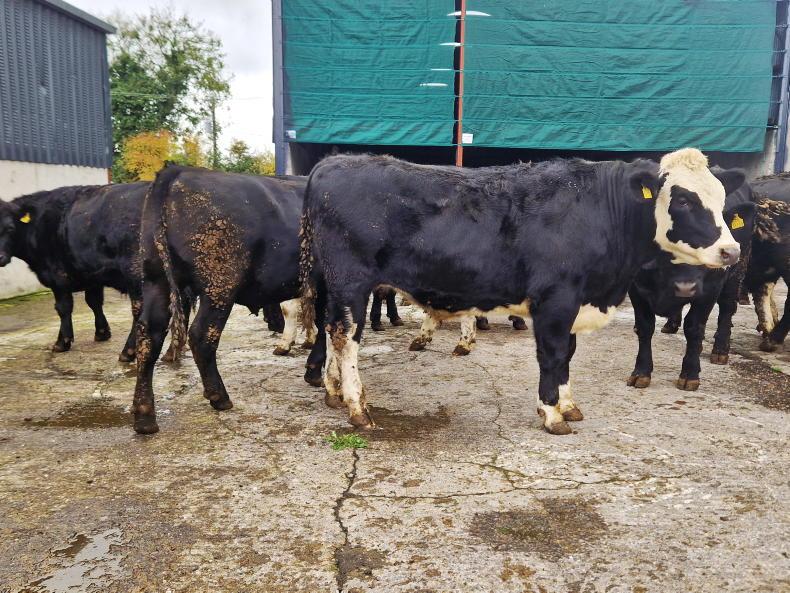
But, in fairness, the Irish beef sector has not stood still in its pursuit of increased production efficiency. Last week’s open day at Fethard, Co Tipperary was outstanding. Darren Carty goes into the details on page 32.
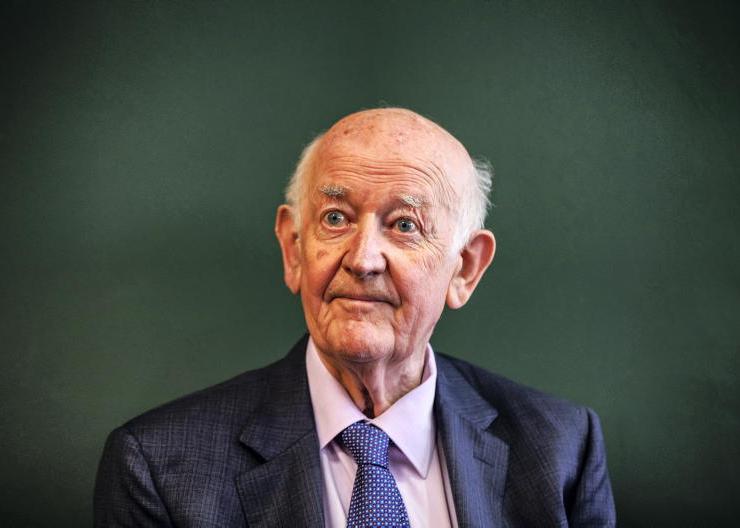
While it was a joint effort between Dawn Meats, Teagasc and the west Cork group-owned Shinagh Estate, the day for me at least was a vivid reminder of the vision and determination of Dawn Meats founder Dan Browne.
Having been chairman of both Bord Bia and Teagasc, he had been a dairy scientist at Moorepark, before managing and then joining with the Queally group in taking over the Midleton plant from the ashes of the Cork Marts IMP group in 1980. Dan Browne was undoubtedly one of the outstanding Irishmen of his generation.
While chairman of Teagasc, he pushed for research work to test his view that the dairy herd could be used to produce beef profitably.
He pressed for stocking rate experiments, he wanted details on what kind of bulls could be used and he was in a position to test the meat quality from the progeny.
In many ways, the Fethard large-scale unit brought together production techniques with the rigorous genetic quantification that ICBF can take enormous credit for.
There was forage and grazing work done over many years at the Teagasc centre in Grange as well as meat quality assessments that have led to the acceptance of a premium payable to farmers based on eating quality.
Will it all be enough to ensure the long-term health and viability of an Irish beef sector? Hopefully.
We saw an outstanding example of labour productivity, production efficiency and precision of measurement on the Fethard farm.
Dan Browne was uniquely open in the sharing of knowledge, prices and costs and I remember his willingness to introduce us in the Irish Farmers Journal to customers as far afield as Strasbourg and Moscow. The company itself, Dawn Meats, is now one of the very largest meat processors in Europe. His legacy in helping to put together a structure at industry, farm and scientific level has put in a unique base but still strikingly vulnerable to income volatility.