


The Agri-Climate Rural Environment Scheme (ACRES) offers payment of up €7,300 via the general entry route and up to €10,500 under the co-operation entry route. It has generated huge interest from farmers, with in excess of 46,000 applications received in the first tranche. The level of applications is far greater than anticipated, with 30,000 places initially allocated for tranche one (autumn 2022) and a further 20,000 places in tranche two, which was planned to open in autumn 2023.
The high volume of applications is creating challenges for the Department of Agriculture. Minister for Agriculture Charlie McConalogue is expressing his desire to get as many of the 46,000 applications accepted under tranche one, while the Department of Agriculture has outlined difficulties including capacity issues around administration, mapping and workload constraints for advisers/co-operation management teams.
It is probable that at the time of reading this document there will have been some updates on the situation. If not, then it is very likely that farmers who applied will find out if they have been accepted in the coming week. This is due to the fact that there is pressure building to open the Basic Income Support for Sustainability (BISS) application portal and to do this, lands included in BISS applications must be updated to take account of ACRES plans.
There was a suggestion at one of the recent Irish Farmers Journal CAP information meetings held in conjunction with the Department of Agriculture and AIB that a scenario may arise that not all maps may be updated to reflect ACRES plans at the time of opening BISS. This situation would only likely emerge if a solution has been found to take in a higher number of applications in the first application intake.
Another possibility which emerged in recent months is the possibility of accepting a cohort of applications as the year progresses or providing a gap or bridging payment, but both scenarios would also present logistical challenges.
For now it is a waiting game for farmers who applied to see if they have made the cut.
On-Farm Capital Investment Scheme
There is also massive anticipation surrounding the opening of the On-Farm Capital Investment Scheme. The opening is said to be imminent and, again, farmers reading this piece could have the full details to hand. The scheme which replaces the Targeted Agricultural Modernisation Scheme (TAMS) has a budget of approximately €400m, with funding allocated from the CAP Strategic Plan (€100m) and from transitional funds from the last Rural Development Programme.
Some details have emerged in recent months. The scheme will continue to operate in a tranche mechanism, with application windows likely to remain at about three months. The standard rate of grant aid will remain at 40%, while young trained farmers, women farmers and organic farmers will receive 60% grant aid.
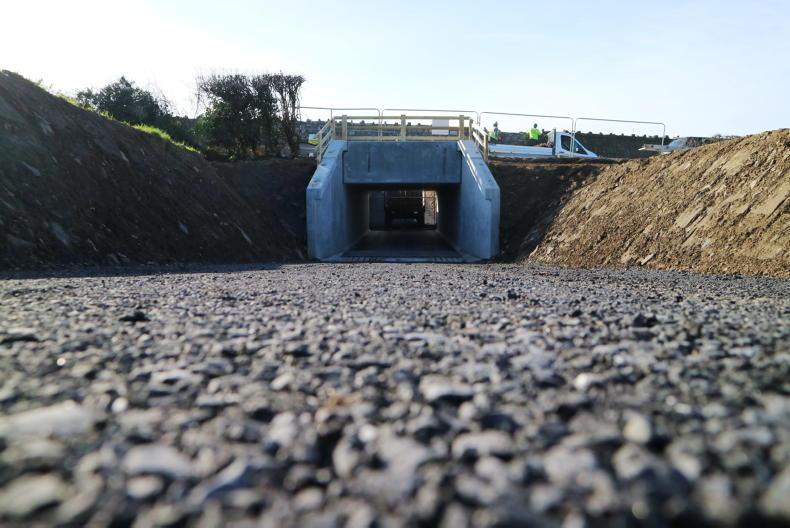
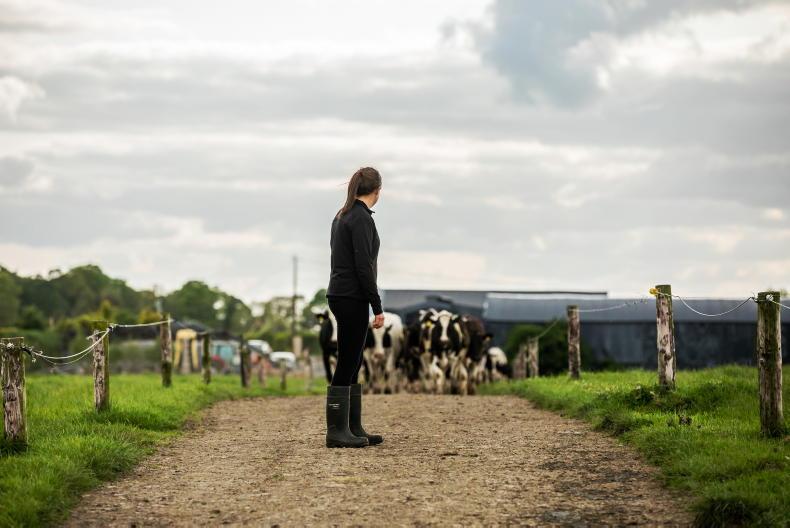
The investment ceiling for grant aid has increased from €80,000 to €90,000 and remains at €160,000 for partnerships. We are told the list of eligible items must align with climate action or environmental goals and promote farm safety. In this regard, there is much interest surrounding proposals for certain items of grant aid, including milking equipment to be limited to dairy herds with a maximum of 120 cows or possibly 160 cows for young trained farmers, and underpasses.
There has also been a strong reaction in recent weeks regarding news that dribble bars are set to be excluded from low-emission slurry spreading equipment in favour of trailing shoes. There appears to be a greater focus on growing the tillage area with beet equipment, seed potato stores, harvest weed seed control and soil de-stoning equipment. There is also a strong focus on energy efficiency with items such as solar panels likely to receive a higher rate of grant aid.
Whenever the scheme opens, the appetite is expected to be strong, with farmers who maxed out funding under TAMS keen to get the ball rolling.
Dairy Beef Welfare Scheme
Details regarding the Dairy Beef Welfare Scheme are scarce.
This is not surprising given the Department planned to continue with the current scheme which rewarded farmers for weighing dairy-bred animals only to be refused by the European Commission. This scheme will continue for one final year in 2023 and be replaced with a scheme targeted at improving the quality of progeny from the dairy herd. This will start in 2024 and it will be based on rewarding farmers for selecting particular sires, with high dairy beef index criteria mooted as an option.
More details will emerge ahead of this year’s breeding season.



SHARING OPTIONS