



A new study is aiming to increase the use of estimated breeding values (EBVs) among NI sheep farmers to accelerate genetic improvement in the national sheep flock.
The AgriSearch-led study is based at AFBI Hillsborough, and will investigate the effect that high and low EBVs for muscle, as well as different finishing diets, have on a range of lamb performance measures.
Ram buying decisions by most NI sheep farmers are still influenced by the appearance of the stock and not by information from performance recording.
The reluctance to use figures is probably due to a number of factors. Many commercial farmers question the reliability of figures as data sets remain small. Also, significant numbers of pedigree breeders are put off by the cost of performance recording and state that customer demand for EBVs is not there.
However, research in 2015 found that genetic improvement from increasing the use of EBVs could be worth up to £3.2m to NI sheep farmers each year.
The new study, called RamCompare NI, will investigate rams from the Signet performance recording system, which is used in Britain, as well as rams from the Sheep Ireland system used in the Republic of Ireland.
Systems link
A significant element of the study is the establishment of a central progeny test flock, which will have all lambs performance recorded in both the Signet and Sheep Ireland systems. This could potentially lead to the two systems being linked in the future.
At present, differences between the Signet and Sheep Ireland recording systems means it is difficult for a pedigree breeder to accurately performance record progeny within one of the systems if the parents were initially assessed in the other.
For example, if a Signet performance recorded ram is bought into a Sheep Ireland performance recorded flock, then it is automatically scored as three stars (out of five) regardless of its values in the UK system.
The study could also provide the foundation for developing new EBVs for characteristics such as feed efficiency and meat quality. Researchers point out that genetic improvement in an animal’s ability to convert feed into liveweight, or produce better quality meat, has been limited in the sheep sector when compared to pigs or poultry.
Breed comparisons
At present, EBVs for individual rams from performance recording programmes used by sheep breed societies in the UK are only comparable within breeds and not across different breeds.
RamCompare was the first project in the UK to develop EBVs which could be compared across breeds by performance recording 70 terminal sire rams from five terminal breeds. The first phase of RamCompare was completed last year and was based on commercial flocks in Britain, with no input from any NI farms.
The new study based at the sheep unit in AFBI Hillsborough will run parallel to the second phase of RamCompare. The two most popular terminal breeds in NI, Texel and Suffolk, are being used in the study. The three-year research project is being funded by AgriSearch, Dunbia and DAERA.
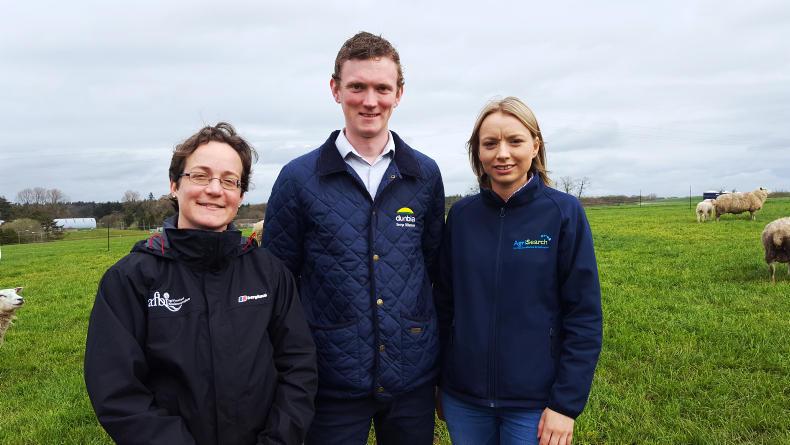
Elizabeth Earle from AgriSearch said that the study does not aim to draw comparisons between the two performance recording systems. “It is to show that progeny from sires with higher EBVs will perform better than lambs from rams with lower EBVs, regardless of the system used. Genetic improvement is permanent and cumulative, which means improvements made in one generation are added to those made in previous generations,” she said.
First crop
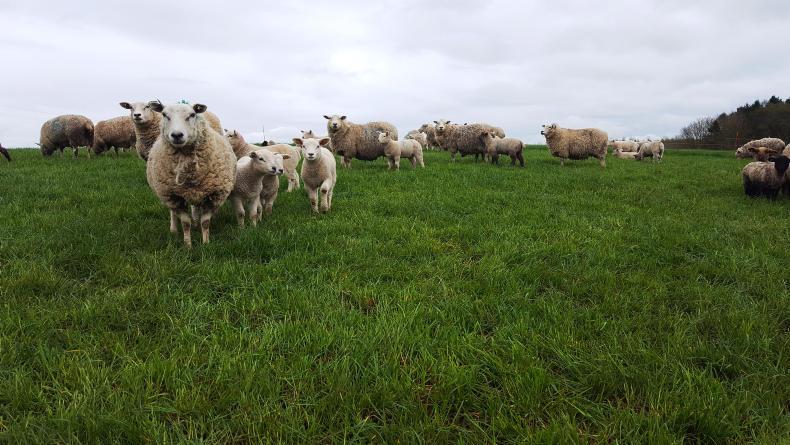
The first crop of lambs for the RamCompare NI study are already on the ground. A total of 286 ewes in the AFBI flock were artificially inseminated last autumn and lambing took place in late February/early March.
Sires used were a mixture of Signet and Sheep Ireland performance recorded rams with half the rams from each system having high EBVs for muscle and half with low EBVs for muscle. On average, 37 ewes were artificially inseminated with each sire last year.
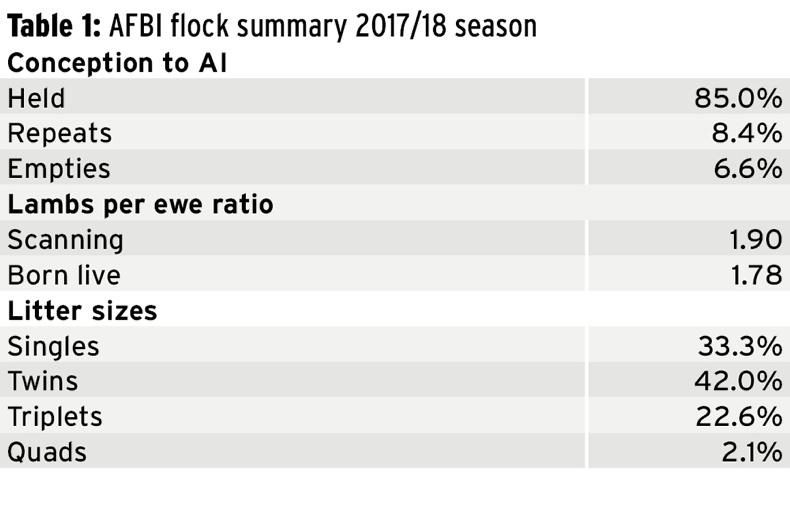
The AFBI flock itself is made up of composite ewes from Belclare, Lleyn, Highlander and Texel breeds. As Table 1 outlines, 85% of ewes held to AI, so 243 ewes had lambs sired to rams under investigation in the first year of the study.
The ewes lamb down at AFBI Hillsborough and most move to grazing ground on AFBI’s farm at Loughgall shortly after lambing. Ewes and lambs are on a four-paddock rotational grazing system at present and a representative sample of 80 lambs will be selected post-weaning for the further study into finishing diet. These lambs will be grouped indoors and assigned diets from auto EID feeders.
The study is investigating the effect of high and low terminal sire EBVs for muscle, as well as grass- and concentrate-based finishing diets, across three different measures:
Progeny performance
A broad range of areas will be recorded to include birth weights, eight-week weights, 12-week weights, daily liveweight gain, carcase weight, kill out, fat depth and muscle depth.
A sample of lambs will be CT scanned and bone to muscle ratio, as well as saleable meat yield, will be calculated.
Preliminary results from the first phase of the RamCompare project found that variations in performance across 10 terminal traits ranged just as widely within breeds as across breeds.
Net feed efficiency
This is defined as the difference between an animal’s actual feed intake and its expected feed intake for maintenance, body size and production.
Previous research shows that net feed efficiency is moderately heritable in sheep so selective breeding can improve how efficient feed is converted to liveweight in flocks.
Lambs will be offered either grass only, or grass and concentrate diets where the concentrate is offered using automatic feeders fitted with EID tag readers.
The grass will be zero grazed, with individual intakes of grass and concentrates measured for each lamb.
Meat quality
A broad range of factors relate to, and influence meat quality such as tenderness, palatability, water holding capacity, colour, texture, and nutritional value.
Previous research has shown that the selection of sires with high EBVs for muscling also reduced total carcase fatness by 3% to 10%, resulting in increased lean meat yield.
“The project will look at identifying genetic lines for meat quality and saleable meat yield. The study will also investigate the potential effects of finishing diets and feed efficiencies on the end product,” George Williamson from Dunbia said.




SHARING OPTIONS