Despite the prolonged dry periods this summer, farmers shouldn’t dismiss the risk of important internal parasites like liver fluke, lungworm and gutworm later this year.
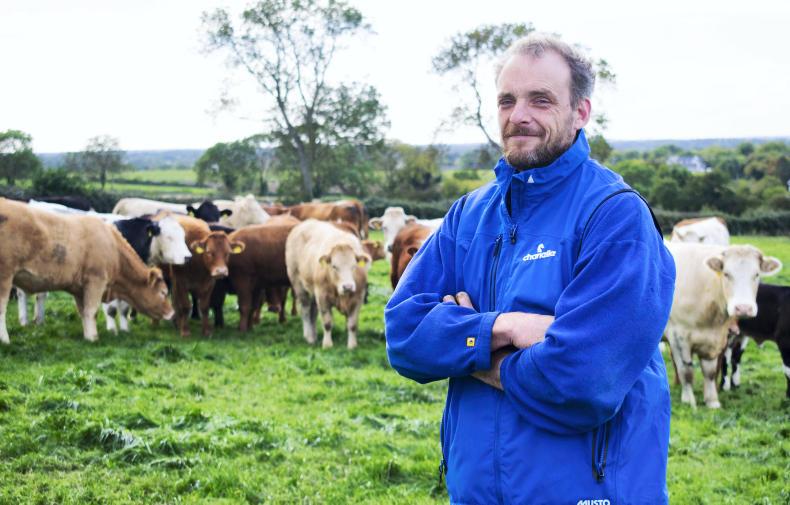
Justin Walsh, Suckler and Tillage Farmer from Co Meath.
ADVERTISEMENT
Mature fluke can shed eggs in dung for months in cattle and years in sheep, without causing any clinical signs. As soon as conditions are favourable these can develop, infect other animals and a fluke problem can escalate in the herd or flock.
Indeed, given the year we’ve had, farmers may have got to graze areas that in previous years might have been too wet. These wet spots are a paradise for pea-sized mud snails, the intermediate host of fluke’s larvae and most important piece of the fluke cycle.
ADVERTISEMENT
Likewise, 200 lungworm larvae that an animal would readily pick up from pasture can develop into 70, 8cm long adults in the animal’s lungs. Within 30 days of the first larvae being ingested, these adult lungworm can produce up to 2.5 million larvae themselves.
In recent years, nationwide milk bulk tank screening has highlighted the presence of gutworm on most Irish farms. Gutworm larvae can survive for months on pasture in varying conditions. Where infected animals are shedding via their dung, rainfall helps to disperse larvae out into the pasture. Ingested gutworm larvae can develop into adults in as little as two weeks. The message is clear, we can’t afford to be complacent because it was ‘a dry year’.
White drenches
Albendazole belongs to the benzimadazole family (white drenches) and is effective against lungworms, gutworms, tapeworms and adult liver fluke. It also kills fluke or worm eggs in the animal at time of treatment. Albendazole works by eliminating the parasite’s ability to absorb nutrients – starving them to death – and affecting an egg’s ability to develop.
It is licensed for use in both beef and lactating dairy cattle, as well as sheep. Indeed, it is one of only three active ingredients licensed for liver fluke treatment in milking dairy herds.
Where does Albex fit in this back end?
Albex is currently the number one Albendazole in Ireland and is available in three pack sizes – all of which are compatible with automatic drenchers.
Treating with Albex 10% at housing and again ten weeks later will ensure that your cows are liver fluke and worm free. Albendazole products like Albex have benefits over other active ingredients at this time of year in that they are effective against both fluke and worms, and will kill inhibited gutworm larvae in the animal at housing, which some other active ingredients cannot.
In animals at pasture, dosing with Albex in advance of ‘fluke weather’ will reduce the amount of eggs being shed by adult fluke and thus minimize the risk at source.
For maximum cover against worms you should be looking to use Albex every three weeks in grazing animals
Dairy
On dairy farms, the milk withdrawal of just 60 hours means it easily fits into a herd health plan. Based on 2011 research, an outbreak in lungworm in a dairy herd costs approximately €163 per cow, per lactation.
On sheep farms, the four-day meat withdrawal makes Albex an ideal product to use throughout the season for combatting worms, even when drafting commences. Given the heightened risk of acute symptoms arising from liver fluke – sometimes death – on sheep versus cattle farms, reducing fluke burdens throughout the season is also important.
Justin Walsh, Suckler and Tillage Farmer from Co Meath.
Justin Walsh, Suckler Beef Farmer and ICBF Weighing Technician
Justin Walsh is a suckler and tillage farmer on the Hill of Tara in County Meath. He keeps 100 cows split 60:40 between spring and autumn calving, bulls are sold on for finishing at 450kg and heifers are fattened for slaughter around eighteen months at a 350kg carcasse weight.
Cow of choice on the farm is a mixture of Limousin and Simmental and breeding is 100% AI. A five-star Limousin terminal bull is used to mop up.
“Off-farm I work as an ICBF weighing technician – I weigh cattle for other farmers in the area. This has opened my eyes to the importance of maximising performance in cattle. The margins are so tight in this game, we need to maximise animal performance wherever possible. All my bulls go to the same man at 450kg live weight, it’s in my interest to get them to that weight as quickly as I can and as cheaply as I can.
“Some years ago we had an outbreak of lungworm here in calves and we reckon it hit thrive by 20%. Across my whole herd that’s the equivalent of me losing one weaned calf for every three weeks the problem goes on. Since then, Albex has slotted into my herd health plan and we are back on track performance-wise.
“Working as a weight technician has also taught me that no one beats a weighing scales when judging stock. Often a farmer will judge his or her animals before they go up on the scales and will be 100kg out. You can see how dosing products mightn’t work properly or how resistance develops. After our experience here, I’m very careful,” he said.
Dosing tip – ‘Back where they came’
There are a number of steps we can take to ensure that our dosing products work effectively. Firstly, at treatment it is vital that we ensure our equipment is calibrated correctly and that we have an accurate weight on our animals. Under dosing, either through incorrect estimation of body weight, improper administration of the product or incorrect of calibration of equipment, will reduce effectiveness of the product and may cause resistance in the long term. Note that Albendazole products require a slightly increased dose rate when targeting fluke as well as worms.
To further reduce the likelihood of resistance to wormers on our farms, it is good practice to return animals back to ‘dirty’ pasture for a number of days after treatment. This will reduce contamination on the new pasture and also means that already resistant worm larvae will be shed and mate with susceptible larvae, diluting resistant populations.
For further advice on parasite control, contact your veterinary surgeon.
Register for free to read this story and our free stories.
This content is available to digital subscribers and loyalty code users only. Sign in to your account, use the code or subscribe to get unlimited access.
The reader loyalty code gives you full access to the site from when you enter it until the following Wednesday at 9pm. Find your unique code on the back page of Irish Country Living every week.
CODE ACCEPTED
You have full access to the site until next Wednesday at 9pm.
CODE NOT VALID
Please try again or contact support.
Mature fluke can shed eggs in dung for months in cattle and years in sheep, without causing any clinical signs. As soon as conditions are favourable these can develop, infect other animals and a fluke problem can escalate in the herd or flock.
Indeed, given the year we’ve had, farmers may have got to graze areas that in previous years might have been too wet. These wet spots are a paradise for pea-sized mud snails, the intermediate host of fluke’s larvae and most important piece of the fluke cycle.
Likewise, 200 lungworm larvae that an animal would readily pick up from pasture can develop into 70, 8cm long adults in the animal’s lungs. Within 30 days of the first larvae being ingested, these adult lungworm can produce up to 2.5 million larvae themselves.
In recent years, nationwide milk bulk tank screening has highlighted the presence of gutworm on most Irish farms. Gutworm larvae can survive for months on pasture in varying conditions. Where infected animals are shedding via their dung, rainfall helps to disperse larvae out into the pasture. Ingested gutworm larvae can develop into adults in as little as two weeks. The message is clear, we can’t afford to be complacent because it was ‘a dry year’.
White drenches
Albendazole belongs to the benzimadazole family (white drenches) and is effective against lungworms, gutworms, tapeworms and adult liver fluke. It also kills fluke or worm eggs in the animal at time of treatment. Albendazole works by eliminating the parasite’s ability to absorb nutrients – starving them to death – and affecting an egg’s ability to develop.
It is licensed for use in both beef and lactating dairy cattle, as well as sheep. Indeed, it is one of only three active ingredients licensed for liver fluke treatment in milking dairy herds.
Where does Albex fit in this back end?
Albex is currently the number one Albendazole in Ireland and is available in three pack sizes – all of which are compatible with automatic drenchers.
Treating with Albex 10% at housing and again ten weeks later will ensure that your cows are liver fluke and worm free. Albendazole products like Albex have benefits over other active ingredients at this time of year in that they are effective against both fluke and worms, and will kill inhibited gutworm larvae in the animal at housing, which some other active ingredients cannot.
In animals at pasture, dosing with Albex in advance of ‘fluke weather’ will reduce the amount of eggs being shed by adult fluke and thus minimize the risk at source.
For maximum cover against worms you should be looking to use Albex every three weeks in grazing animals
Dairy
On dairy farms, the milk withdrawal of just 60 hours means it easily fits into a herd health plan. Based on 2011 research, an outbreak in lungworm in a dairy herd costs approximately €163 per cow, per lactation.
On sheep farms, the four-day meat withdrawal makes Albex an ideal product to use throughout the season for combatting worms, even when drafting commences. Given the heightened risk of acute symptoms arising from liver fluke – sometimes death – on sheep versus cattle farms, reducing fluke burdens throughout the season is also important.
Justin Walsh, Suckler and Tillage Farmer from Co Meath.
Justin Walsh, Suckler Beef Farmer and ICBF Weighing Technician
Justin Walsh is a suckler and tillage farmer on the Hill of Tara in County Meath. He keeps 100 cows split 60:40 between spring and autumn calving, bulls are sold on for finishing at 450kg and heifers are fattened for slaughter around eighteen months at a 350kg carcasse weight.
Cow of choice on the farm is a mixture of Limousin and Simmental and breeding is 100% AI. A five-star Limousin terminal bull is used to mop up.
“Off-farm I work as an ICBF weighing technician – I weigh cattle for other farmers in the area. This has opened my eyes to the importance of maximising performance in cattle. The margins are so tight in this game, we need to maximise animal performance wherever possible. All my bulls go to the same man at 450kg live weight, it’s in my interest to get them to that weight as quickly as I can and as cheaply as I can.
“Some years ago we had an outbreak of lungworm here in calves and we reckon it hit thrive by 20%. Across my whole herd that’s the equivalent of me losing one weaned calf for every three weeks the problem goes on. Since then, Albex has slotted into my herd health plan and we are back on track performance-wise.
“Working as a weight technician has also taught me that no one beats a weighing scales when judging stock. Often a farmer will judge his or her animals before they go up on the scales and will be 100kg out. You can see how dosing products mightn’t work properly or how resistance develops. After our experience here, I’m very careful,” he said.
Dosing tip – ‘Back where they came’
There are a number of steps we can take to ensure that our dosing products work effectively. Firstly, at treatment it is vital that we ensure our equipment is calibrated correctly and that we have an accurate weight on our animals. Under dosing, either through incorrect estimation of body weight, improper administration of the product or incorrect of calibration of equipment, will reduce effectiveness of the product and may cause resistance in the long term. Note that Albendazole products require a slightly increased dose rate when targeting fluke as well as worms.
To further reduce the likelihood of resistance to wormers on our farms, it is good practice to return animals back to ‘dirty’ pasture for a number of days after treatment. This will reduce contamination on the new pasture and also means that already resistant worm larvae will be shed and mate with susceptible larvae, diluting resistant populations.
For further advice on parasite control, contact your veterinary surgeon.
If you would like to speak to a member of our team, please call us on 01-4199525.
Link sent to your email address
We have sent an email to your address. Please click on the link in this email to reset your password. If you can't find it in your inbox, please check your spam folder. If you can't find the email, please call us on 01-4199525.
ENTER YOUR LOYALTY CODE:
The reader loyalty code gives you full access to the site from when you enter it until the following Wednesday at 9pm. Find your unique code on the back page of Irish Country Living every week.








SHARING OPTIONS