



Grass: average grass growth this week is behind the normal for the time of year, though milder weather in the coming days may see some lift in growth. With this mild weather comes more rainfall, with poorly and moderately drained soils being water logged, and all other types still ranking as saturated.
Getting out to grass this week or even the week after will very much be a challenge, and efforts should be focused on getting the platform properly set up when weather does improve.
Teagasc are hosting several walks concentrated on spring grazing management, primarily selecting paddocks for early grazing, early nitrogen and slurry, grazing during difficult conditions and protecting water quality. The farms are spread throughout the country and are a mixture of beef, dairy beef and sheep enterprises. For more information on these, check out grassland events on the Teagasc website.
Calf series: on week three of our dedicated calf series, we discuss buying and getting calves home. Whenever we discuss purchasing calves, we always talk about buying off-farm from a small number of farmers, but a huge volume of calves are purchased at marts.
Much of the information on p32 is still relevant regarding having facilities at home prepared in advance, using CBV and the calf price table to gauge price, and in selecting healthy calves. While calves will be mixed alongside others, there is still a benefit in purchasing from a low number of herds at the mart from an animal health and biosecurity point of view.
Developing a relationship with a trusted dairy farmer is still probably the gold standard. After a year of rearing calves, you will soon be able identify how well calves were managed regarding colostrum, vaccinations of dams and breeding, and if it’s generally positive, then you can utilise this farmer again.
It’s also a major benefit to dairy farmers who do not have to deal with transporting calves to marts and time spent selling them, while they can also ask regular customers to take calves quicker if pressure comes on facilities. Scanning the QR code on p32 will bring you through to a video supporting the article.
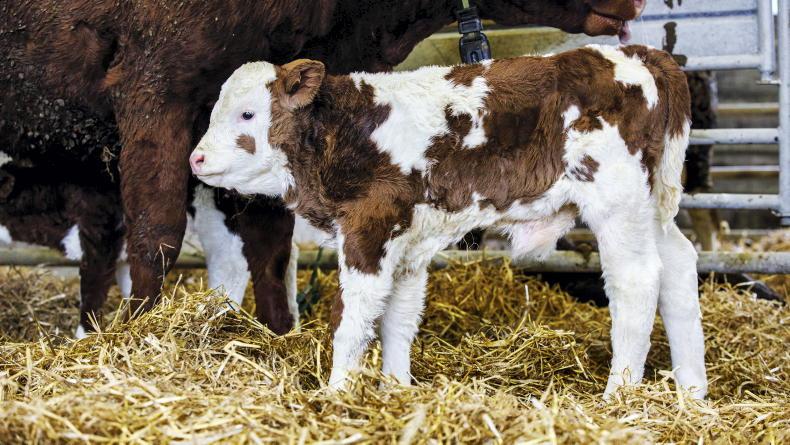
Disease in sheds: sheds are rapidly becoming busy with calving now well in to gear on many farms. Recent wet weather has stalled any hope of turning out freshly calved cows for the most part, while it has also lead to sheds being damper. Straw is relatively available and should be used liberally, with creep areas for calves bedded at least twice a week. Temporary creep areas may have to be created, with an option being to roll out straw on to a slatted pen and giving sole access to calves of this bedded area.
Disinfection must remain, with calving boxes disinfected after each calving and cleaned out fully at a minimum after every second cow entering it. When freshly calved cows are housed on slatted pens, it is also worth scraping and disinfecting slats regularly, with dirty teats a primary source of infection of E coli for calves.



SHARING OPTIONS