At a recent event hosted by veterinary pharmaceutical company HIPRA, Colin Lindsey showed a group of vets the best technique when performing an on-farm post mortem and what samples to take.
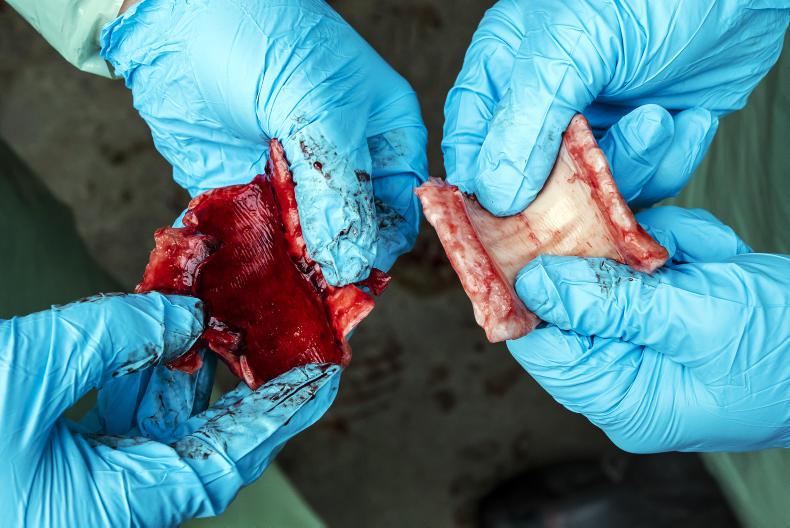
Tracheas (windpipes) from two fallen animals with one showing severe pathology (reddening) potentially caused by IBR virus. \ Philip Doyle
ADVERTISEMENT
While no farmer ever wants to lose animals, we will occasionally. Post mortems are a very important source of information for the farm and finding the cause of death can be extremely valuable.
Getting your vet to perform one and take samples can provide information that might guide management with the animal’s cohorts.
This is particularly true with pneumonia control and prevention.
ADVERTISEMENT
So don’t let fallen animals go without finding out, where possible, what caused the death.
Register for free to read this story and our free stories.
This content is available to digital subscribers and loyalty code users only. Sign in to your account, use the code or subscribe to get unlimited access.
However, if you would like to share the information in this article, you may use the headline, summary and link below:
Title: Watch: the value of a proper postmortem exam
At a recent event hosted by veterinary pharmaceutical company HIPRA, Colin Lindsey showed a group of vets the best technique when performing an on-farm post mortem and what samples to take.
The reader loyalty code gives you full access to the site from when you enter it until the following Wednesday at 9pm. Find your unique code on the back page of Irish Country Living every week.
CODE ACCEPTED
You have full access to the site until next Wednesday at 9pm.
CODE NOT VALID
Please try again or contact support.
While no farmer ever wants to lose animals, we will occasionally. Post mortems are a very important source of information for the farm and finding the cause of death can be extremely valuable.
Getting your vet to perform one and take samples can provide information that might guide management with the animal’s cohorts.
This is particularly true with pneumonia control and prevention.
So don’t let fallen animals go without finding out, where possible, what caused the death.
If you would like to speak to a member of our team, please call us on 01-4199525.
Link sent to your email address
We have sent an email to your address. Please click on the link in this email to reset your password. If you can't find it in your inbox, please check your spam folder. If you can't find the email, please call us on 01-4199525.
ENTER YOUR LOYALTY CODE:
The reader loyalty code gives you full access to the site from when you enter it until the following Wednesday at 9pm. Find your unique code on the back page of Irish Country Living every week.







SHARING OPTIONS