It is fair to say that losing the opportunity to participate in the Horizon programme didn’t feature highly in the Brexit debate leading up to the referendum in the UK on EU membership.
It also isn’t headline news that the UK is opting to rejoin the Horizon programme, but it is one small step on the road to building a better working relationship between the EU and UK. Other steps would make sense without compromising Brexit, but that will be for another day.
Horizon is a research programme where scientists from across the EU pool their research resources and create an economy of scale that maximises return for the investment.
Interest in the programme is confined to scientists and people with a strong interest in politics. Therefore, what the UK’s position on Horizon is won't feature prominently in the thinking of the loudest pro-Brexit advocates, for whom anything EU is bad and anything that is standalone-UK is good.
Pragmatism replaces purism
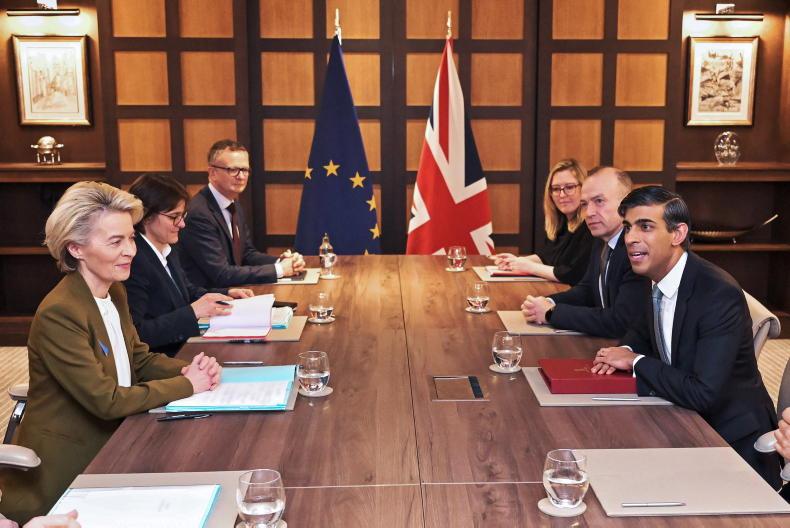
However, since Rishi Sunak took over as UK prime minister almost a year ago, the UK government has adopted a Brexit strategy that is more pragmatic than purist.
A settlement (with flaws) was quickly negotiated with the EU through the Windsor Framework, which creates a mechanism for managing the UK land border with the EU in Ireland.
Ironically, when it comes into effect next month, this will be the only part of the UK that is enforcing border controls, as wider adoption has been further deferred.
Signing up to be part of the Horizon programme is a low-key measure that restores EU-UK co-operation to levels similar to what was in place during UK membership of the EU.
Realign
The question now is how far can the 'new' EU-UK relationship go in realigning EU and UK interests. A spirit of co-operation is an essential starting point and that is in place.
The next most glaring opportunity is for the UK to adopt the Horizon approach to veterinary controls.
These are still identical in the post-Brexit UK and EU and if this could be tied down, it would at a stroke remove much of the difficulties around the Windsor Framework and remove a burden on UK exporters of livestock and plant products that isn’t currently carried by their EU counterparts.
Further potential
That leads to the question that if the EU and UK can align on a number of common interests, why not go further and have the UK back into the single market and perhaps even the customs union?
Norway, for example, is part of the single market and Turkey is part of the customs union, but both are still outside the EU.
This is where it gets complicated. Since the UK has left, it has signed trade agreements with Australia and New Zealand and is anxious to sign more.
With these in place, it isn’t really possible to have the UK as part of a single market for the free movement of goods. This also complicates any possible move by the UK to rejoin the EU.
When it joined originally in 1973, one of the big issues was the huge lamb quota New Zealand had with the UK being carried into the then-nine-member EEC - that was to grow to a 28-member EU.
Any future membership of the EU would have to wrestle with the UK trade deals and quotas for agri produce given to Australia and New Zealand.
Precludes
Another thing that precludes a UK negotiation for returning to the EU - even if it wanted to, which is unlikely - is the fact that EU officials have Brexit fatigue.
Speaking to a former Irish official in Brussels earlier this week, it was striking to learn that it would take a couple of decades and retirement of everyone involved in the Brexit negotiation to allow new talks to commence.
Clearly, the EU and UK are on a road of collaboration and avoiding hostility, but this isn’t the same as being part of the EU. However, given where we were up until this time last year, that is progress.
Read more
Brexit enables British branding but still no border controls
‘Not for EU’ appears on NI beef
It is fair to say that losing the opportunity to participate in the Horizon programme didn’t feature highly in the Brexit debate leading up to the referendum in the UK on EU membership.
It also isn’t headline news that the UK is opting to rejoin the Horizon programme, but it is one small step on the road to building a better working relationship between the EU and UK. Other steps would make sense without compromising Brexit, but that will be for another day.
Horizon is a research programme where scientists from across the EU pool their research resources and create an economy of scale that maximises return for the investment.
Interest in the programme is confined to scientists and people with a strong interest in politics. Therefore, what the UK’s position on Horizon is won't feature prominently in the thinking of the loudest pro-Brexit advocates, for whom anything EU is bad and anything that is standalone-UK is good.
Pragmatism replaces purism
However, since Rishi Sunak took over as UK prime minister almost a year ago, the UK government has adopted a Brexit strategy that is more pragmatic than purist.
A settlement (with flaws) was quickly negotiated with the EU through the Windsor Framework, which creates a mechanism for managing the UK land border with the EU in Ireland.
Ironically, when it comes into effect next month, this will be the only part of the UK that is enforcing border controls, as wider adoption has been further deferred.
Signing up to be part of the Horizon programme is a low-key measure that restores EU-UK co-operation to levels similar to what was in place during UK membership of the EU.
Realign
The question now is how far can the 'new' EU-UK relationship go in realigning EU and UK interests. A spirit of co-operation is an essential starting point and that is in place.
The next most glaring opportunity is for the UK to adopt the Horizon approach to veterinary controls.
These are still identical in the post-Brexit UK and EU and if this could be tied down, it would at a stroke remove much of the difficulties around the Windsor Framework and remove a burden on UK exporters of livestock and plant products that isn’t currently carried by their EU counterparts.
Further potential
That leads to the question that if the EU and UK can align on a number of common interests, why not go further and have the UK back into the single market and perhaps even the customs union?
Norway, for example, is part of the single market and Turkey is part of the customs union, but both are still outside the EU.
This is where it gets complicated. Since the UK has left, it has signed trade agreements with Australia and New Zealand and is anxious to sign more.
With these in place, it isn’t really possible to have the UK as part of a single market for the free movement of goods. This also complicates any possible move by the UK to rejoin the EU.
When it joined originally in 1973, one of the big issues was the huge lamb quota New Zealand had with the UK being carried into the then-nine-member EEC - that was to grow to a 28-member EU.
Any future membership of the EU would have to wrestle with the UK trade deals and quotas for agri produce given to Australia and New Zealand.
Precludes
Another thing that precludes a UK negotiation for returning to the EU - even if it wanted to, which is unlikely - is the fact that EU officials have Brexit fatigue.
Speaking to a former Irish official in Brussels earlier this week, it was striking to learn that it would take a couple of decades and retirement of everyone involved in the Brexit negotiation to allow new talks to commence.
Clearly, the EU and UK are on a road of collaboration and avoiding hostility, but this isn’t the same as being part of the EU. However, given where we were up until this time last year, that is progress.
Read more
Brexit enables British branding but still no border controls
‘Not for EU’ appears on NI beef






SHARING OPTIONS