



The 'build it and they will come' approach to organic agriculture in Ireland received a boost last week, with the announcement by Bord Bia that a €1m campaign to build the market for organic produce was being launched.
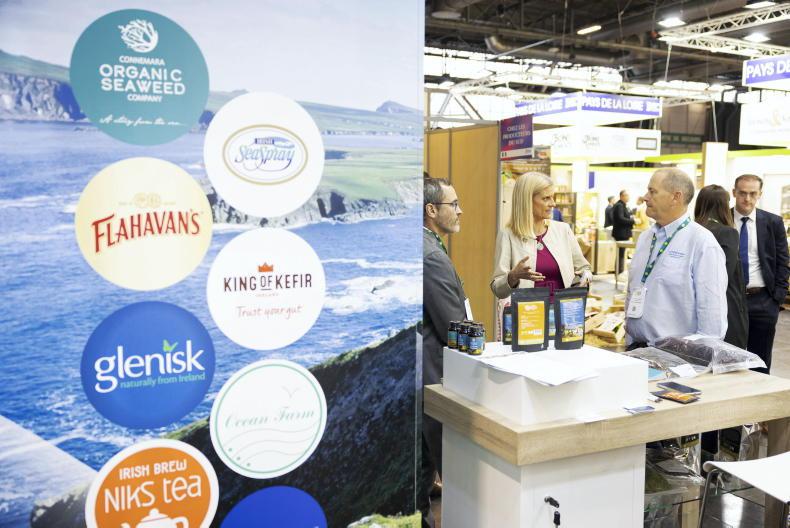
Parallel to this, Irish organic food exporters were participating in the organic food show in Paris, supported by Minister of State Pippa Hackett.
Both these events demonstrate the Government’s commitment to making organic work in a challenging marketplace, at home and abroad.
Well-resourced
The commitment to primary onfarm production has already been demonstrated, with the generous €57m Organic Farming Scheme (OFS) budget for 2024 announced by Minister of State Pippa Hackett lending support for farmers transitioning from conventional farming to organic.
This is a €21m increase on the €36m allocated for 2023, with 4,100 farmers set to receive payments this year.
With this level of onfarm support, further growth will happen next year, and this means that finding premium markets for the produce has become a necessity.
Market concerns
The potential market is something of a concern, as highlighted by a group of EU countries at a council of ministers meeting in Luxembourg, which also took place last week.
There, Lithuania tabled a paper with the support of 11 other member states from Eastern Europe and Scandinavia, but not Ireland.
It called on the Commission to have a strategic debate on the prospects for organic, and referred to the growth phase between 2015 and 2020 in the EU having flatlined or even declined since.
Agriculture Commissioner Janusz Wojciechowski pushed back, referring to the value of sales showing an increase in 2019-2021, though he did accept that the pandemic and inflation caused by the Russian invasion of Ukraine could impact on consumer choices.
Getting a premium
The great concern with increasing Irish organic production is that product will end up being sold in mainstream markets at the same price as conventional product. That had been happening even before the current phase of expansion, particularly in the sheep meat sector.
A cause of this has been identified as the absence of an integrated marketing structure for the sale of organic produce, particularly in the case of store lambs from an organic farm not finding an organic finisher.
The launch of an “organic hub online platform” back in September could be the answer to the problem of matching organic farmers selling with organic farmers wishing to buy livestock.
The other great challenge that the €1m Bord Bia campaign is designed to address is finding consumers who are willing to pay a premium for organic agricultural produce. That challenge increases the higher the value of an original, conventionally produced product is.
Securing a 10% or 15% premium on a vegetable that is retailing at under €1 will be easier than getting the same extra margin on a steak that is retailing at closer to €10.
Irish livestock producers are very much in the latter category, as are dairy farmers, while vegetable growers have become almost extinct following prolonged undervaluation of their product on retail shelves.
Comment
It is easy to be dismissive of the faith placed in organic farming at Government and EU level as a viable solution for the problems in farming.
Apart from this year, milk prices from conventional production have been attractive for dairy farmers; their problems lie in the production constraints. For beef and sheep producers, years of miniscule margins mean they are more likely to grasp at anything that has a chance of improving their position.
Also, if our 50 years of membership in the EU has taught us anything, it is that farmers will follow the money - and the money is currently being directed towards organic farming, whatever its merits.
Apart from this year, milk prices from conventional production have been attractive for dairy farmers; their problems lie in the production constraints
It would be wrong to think that output will increase in proportion to the area or number of farmers switching to organic production. It won't, because the motivation for many who are switching is to downsize, and reduce input costs and capture the payment. That said, production will increase, and when we have the product, we need a market.
Will the Irish and EU markets provide the premium necessary to sustain the sector without massive onfarm support in the longer term?
There may be plenty of misgivings across Europe about the extent of premium markets, but only time will tell if the investment made in organic agriculture will be rewarded or if it turns out to be a well-intentioned but misguided leap of faith.


SHARING OPTIONS