Exports of cheese and cream products from the EU to China will face additional tariffs of between 7.4% and 11.7%, a significant reduction on the potential duties of as much as 42.7% announced by authorities in Beijing when an anti-subsidy probe was announced in December 2025.
The tariffs, which are expected to come into force from 21 February, will be levied in addition to the 15% levy already in place for EU dairy exports to China.
Fresh tariffs initially were announced in December as part of a preliminary ruling on the investigation into subsidised EU dairy exports which began in August 2024. That investigation was launched amid rising tensions between China and the EU after Brussels imposed tariffs on electric vehicle imports.
The news of the reduction in tariffs from the levels proposed in December is welcome news for Irish co-ops Lakeland and Tirlán, which have built a presence in the Chinese market in recent years.
However, Conor Mulvihill, Director of Dairy Industry Ireland, said: “While the revisions represent an improvement on the announcement made before Christmas, these tariffs still make our products uncompetitive in the Chinese market. We are competing with imports from other countries that face no such tariffs, which means these new rates still place Irish and EU dairy at a significant disadvantage.”
Mulvihill acknowledged that it was a positive that the announcement this week did not expand the additional tariffs to any other dairy category. “China remains an important market for both EU and Irish dairy,” he said.
In the 12 months to the end of November 2025, Irish diary exports to China were worth €310m, the lowest level since at least 2015. The expansion of dairy markets elsewhere, increased domestic production in China and increased prices over the last decade means that China’s share of Irish dairy exports has fallen from 10.2% in 2015 to 4.3% in 2025.
Total Irish imports of goods from China across the same time period rose from €4.4bn to €12.5bn. The country’s electric-vehicle manufacturers continue to take market share in Ireland, with data released this week showing that China’s BYD were the fourth biggest selling brand of electric car in Ireland in January 2026.
While the changing face of the trade landscape in China might be frustrating for Irish dairy exporters, it must be even more so for Irish beef exporters hoping to make headway into the market.
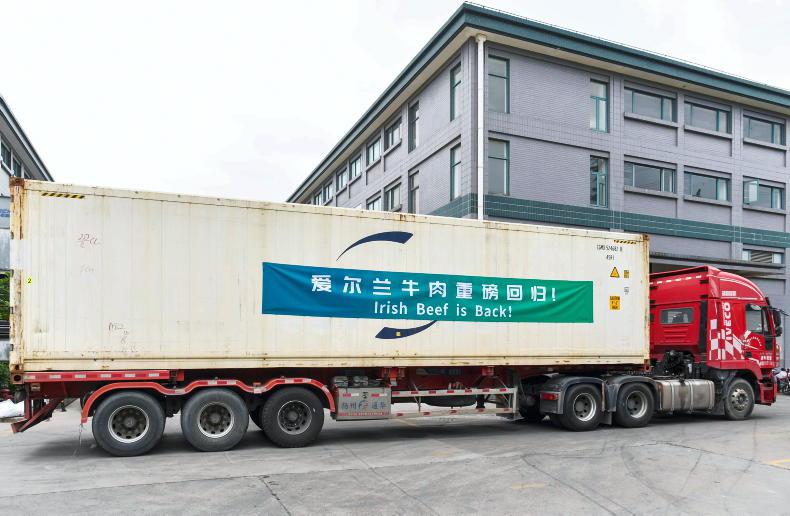
Less than two weeks after Taoiseach Micheál Martin announced the reopening of the Chinese market for Irish beef, it closed again following the confirmation of two cases of bluetongue on two farms in Co Wexford.
Access for Irish beef had previously been suspended since October 2024 following an atypical case of BSE. That access had only been in place since January of 2024 following a previous suspension following another BSE case here.