



The rational response to an uncertain outlook, in business or in politics, is to prepare for the worst along with hoping for the best.
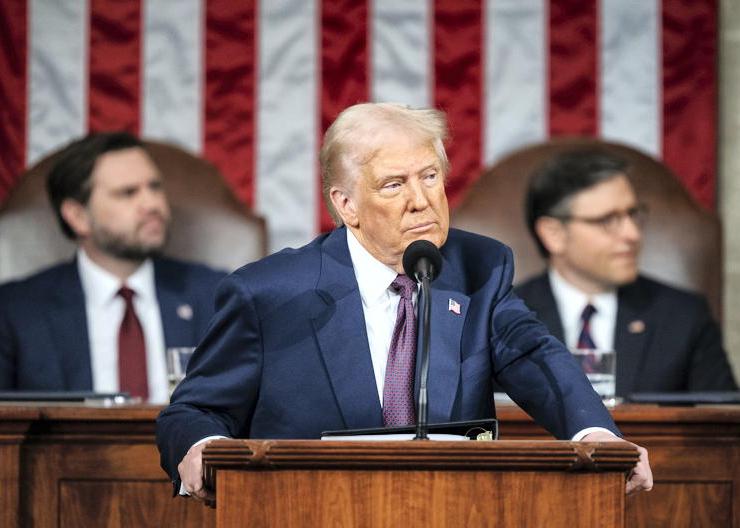
For the EU, after last week’s contributions from Donald Trump in Davos, the outlook is sufficiently uncertain to constitute a threat that domestic policy in each EU member state should address, beyond hoping for the best – which is a fair summary of the Irish Government response to date.
The seizure of Greenland may have been cancelled and the punitive tariffs on six EU members (plus the UK and Norway), all of whom had displeased Trump, were forgotten.
Instead his Board of Peace was unveiled, clearly designed as a rival to the United Nations, and the invited members trooped on stage without embarrassment.
Notable absentees were Israel’s Benjamin Netanyahu and Russia’s Vladimir Putin, both under indictment by the International Criminal Court.
Had they turned up, they would have been arrested and dispatched to stand trial at The Hague. Both have visited the USA unworried, since the USA is also a non-member, but wisely have never set foot in London, Paris, Brussels or Rome.
Zurich is under four hours flying time from Moscow, Putin could easily have made the trip but Trump’s envoy Steve Witkoff instead scurried off to Moscow before the Davos meeting concluded. Ireland has been invited but has not responded.
The line-up onstage included Ilhan Aliyev, president of Azerbaijan since 2003. He succeeded his father Heydar, president from 1993 after a military coup and a career as a KGB officer in the former Soviet Union.
Azerbaijan is rated one of the most corrupt countries in the world by Transparency International. The Aliyev family has ensured orderly succession, as president Trump may also be doing – Ilhan’s daughter Aliyeva owns the state’s most profitable concessions, is one of the region’s richest women and is tipped to succeed her father and grandfather in the family business after, of course, an election.
Dictators and autocrats
Trump’s appointees to the Board of Peace include several dictators and autocrats, but Aliyev is the sole example of a hereditary democrat. Trump’s son-in-law, Jared Kushner, also a member, unveiled his Gaza Riviera plan onstage.
Others joining the parade included two EU members out of 27, Hungary and Bulgaria, both pro-Russian in the conflict over Ukraine, both poorly ranked on the transparency corruption index and facing financial sanctions from the EU.
It is doubtful if either would be admitted to the EU today if they were still on the list of applicant countries – Hungary joined in 2004, Bulgaria in 2007. Both are full members and there is no straightforward mechanism for expulsion, an omission likely to be rectified before any further applications are progressed.
The key European NATO countries, including France, Germany, Italy and the UK, have declined Trump’s invitation to join the Board of Peace, to which he has appointed himself president indefinitely.
He sees this unlikely concoction as a competitor for worldwide influence with the many UN-linked bodies from which the USA has already withdrawn, but it could fade away quickly.
The Irish Government has declined to give a clear response to Trump’s invitation, instead offering to “consider the issue”, the latest manifestation of indecision on foreign policy which has become a reflex.
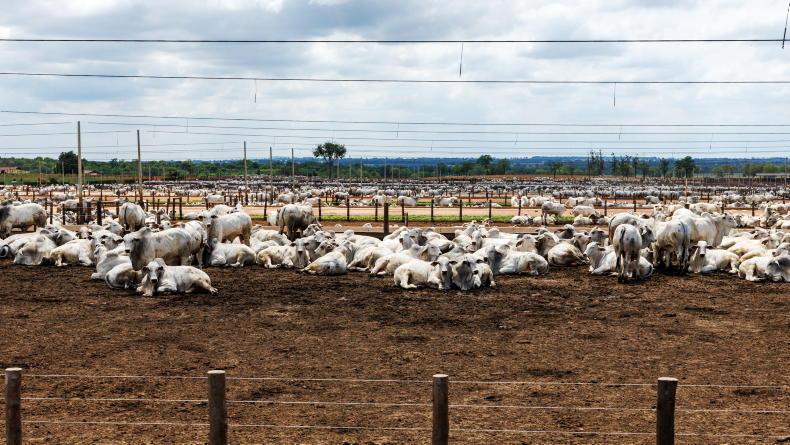
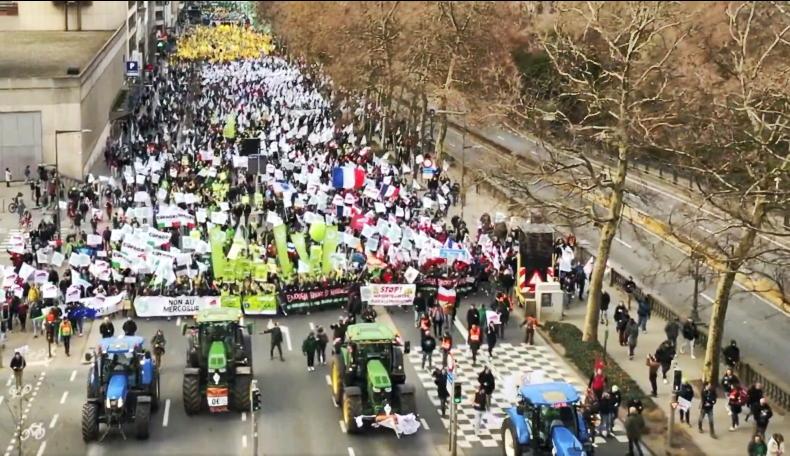
Another recent example was the pointless no vote on Mercosur, which will also be remembered by European partners.
Tánaiste Simon Harris acknowledged that Trump’s Davos performance was a wake-up call, declaring that “it has to make us prepare better,” but did no more than ask officials in the Department of Finance to “...accelerate scenario planning”.
They will highlight one extreme worst-case scenario which the Minister for Finance has declined to address, a transatlantic trade war which depresses Ireland’s economic prospects coinciding with pressure from Europe to contribute financially to an enhancement of collective defence capability.
There could eventually be demands that NATO membership become a requirement for EU states, or big cash contributions in lieu to the emerging EU common defence policy.
If NATO loses the United States, there will be intense scrutiny of the four out of 27 EU members which espouse neutrality, avoiding high and rising military budgets.
Two are small islands in the Mediterranean including Cyprus which has several NATO bases provided by the UK and Turkey, and Malta, of no strategic importance.
The Cypriot government has not joined NATO but Cyprus is a NATO island. The quartet of EU ‘neutrals’ is completed by Ireland and Austria, both of which will be under pressure to join or to cough up.
There is already an impression, largely mistaken, that Ireland’s corporate tax boom comes at the expense of EU partners rather than of the US Treasury.
Either way, concern that the NATO non-members are enjoying a free ride is becoming a threat that should alarm the Minister for Finance.


SHARING OPTIONS