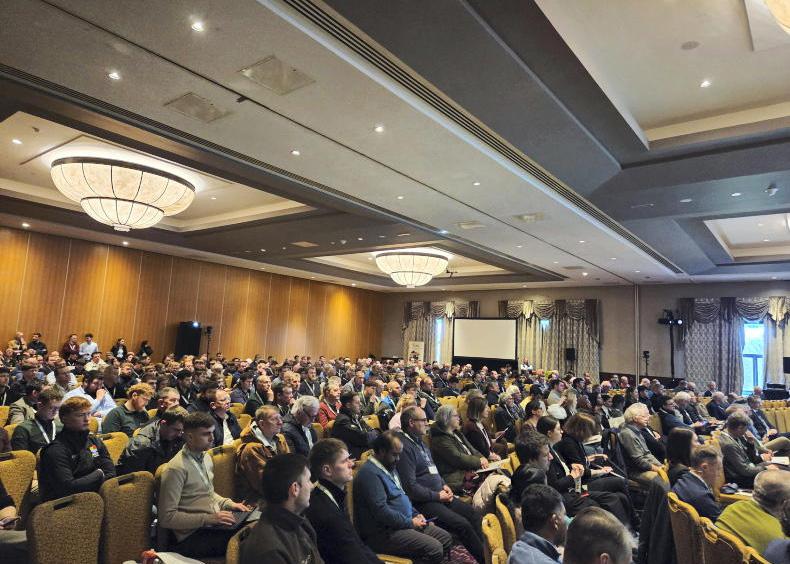
Competitiveness is very high and rising on the EU agenda,” according to Dr Roel Jongeneel of Wageningen University and Research in the Netherlands.
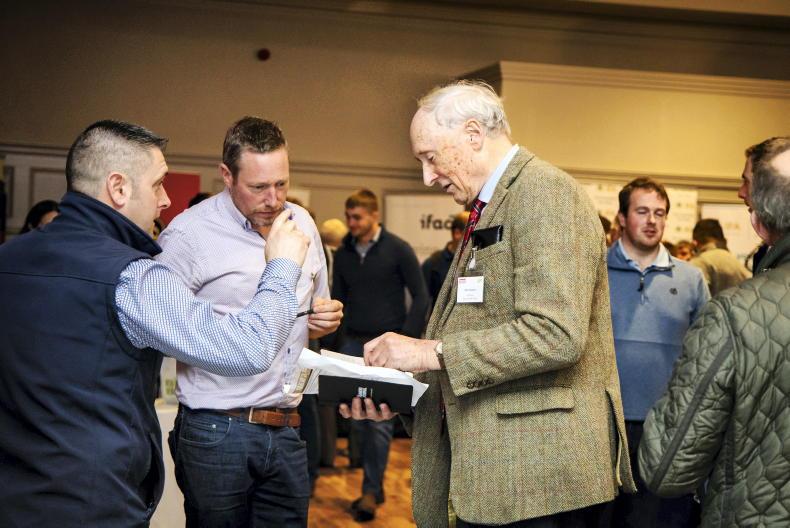
Speaking at the Teagasc National Tillage Conference, he said the EU agri-food chain adds over €1 trillion in value to the economy, which means the economic footprint of agriculture and food is larger than the automotive industry in the EU.
Roel commented that the industry should look to grow this even further: “In terms of competitiveness, we should look to adding-value, whether this is generated by the farmer or along the supply chain,” he said.
The researcher told the attendees that we are living in turbulent times, the power of trade is shifting around the world, and we could be entering a new period of international trade and trade dynamics. Despite this, he noted that the EU is currently performing quite well on competitiveness.
Total Factor Productivity, a measure of competitiveness and growth, has grown by 10% in the EU in the past ten years compared to 7% in the USA.
China has grown by 70%, but this was from a very low base. Within the EU, Ireland is ranked in the top five best-performing countries over the past ten years.
The EU is managing to do this while operating in a different manner to many other big players in the world market, Dr Jongeneel said, “balancing social, economic and ecological interests”.
However, to maintain competitiveness, he warned that we need good policy. He also noted that new innovations such as new genomic techniques (NGTs) must be used and applied by policy to improve productivity.
Regarding recent EU trade deals, he said, “It is about fairness, if we have standards in the EU, which are higher than standards elsewhere, you would like to have a fair, level playing field and recognition of the farmers for this.”
While Dr Jongeneel thinks this has been achieved in the recently announced EU-India trade deal, the Mercusor trade deal has not provided this.
However, he also noted that Mercusor should not have a large impact on grain trade patterns.
Uncontrollables
Trevor Donnellan, an economist with Teagasc, also spoke on the day. He commented that the focus of tillage farms has to be on productivity.
“There are a lot of uncontrollables in the tillage sector, like weather and world cereal prices, but there are also controllables that will be at the core of improving productivity in the sector,” he said.
Donnellan noted that Teagasc is constantly trying to improve the competitiveness of the Irish tillage sector. From an advisory point of view, there are a number of decision support tools available to “help farmers make good decisions and support competitiveness”.
These include the Teagasc E-Profit Monitor, AgNav, and some modelling work as part of the VALPRO Path project which will soon be available as the project nears completion.