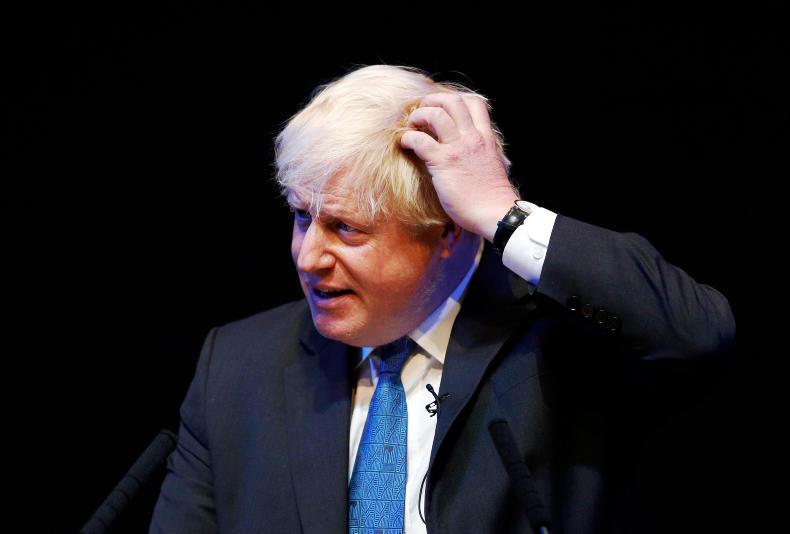
UK prime minister Boris Johnson. \ REUTERS/Darren Staples
ADVERTISEMENT
The pound sterling has slumped to a two year low as tensions rise between Dublin and London over Brexit.
On Tuesday, the value of sterling relative to the euro fell close to £0.92, which is the weakest level the UK currency has traded at since August 2017.
A weaker sterling makes Irish exports much less competitive on retail shelves
ADVERTISEMENT
A weak sterling is bad news for Ireland’s agri-food industry, with almost one-third of Irish food and drink exports destined for the UK market each year. A weaker sterling makes Irish exports much less competitive on retail shelves and erodes margins for food companies and farmer co-ops.
Financial markets are growing increasingly nervous about the likelihood of a no-deal Brexit on 31 October .
The polarised positions of both leaders has spooked financial markets in the last week and sterling has weakened accordingly. The yields on Irish bonds (Irish Government debt) have also risen as investors worry over the impact a no-deal Brexit would have on Ireland’s economy.

Register for free to read this story and our free stories.
This content is available to digital subscribers and loyalty code users only. Sign in to your account, use the code or subscribe to get unlimited access.
The reader loyalty code gives you full access to the site from when you enter it until the following Wednesday at 9pm. Find your unique code on the back page of Irish Country Living every week.
CODE ACCEPTED
You have full access to the site until next Wednesday at 9pm.
CODE NOT VALID
Please try again or contact support.
The pound sterling has slumped to a two year low as tensions rise between Dublin and London over Brexit.
On Tuesday, the value of sterling relative to the euro fell close to £0.92, which is the weakest level the UK currency has traded at since August 2017.
A weaker sterling makes Irish exports much less competitive on retail shelves
A weak sterling is bad news for Ireland’s agri-food industry, with almost one-third of Irish food and drink exports destined for the UK market each year. A weaker sterling makes Irish exports much less competitive on retail shelves and erodes margins for food companies and farmer co-ops.
Financial markets are growing increasingly nervous about the likelihood of a no-deal Brexit on 31 October .
The polarised positions of both leaders has spooked financial markets in the last week and sterling has weakened accordingly. The yields on Irish bonds (Irish Government debt) have also risen as investors worry over the impact a no-deal Brexit would have on Ireland’s economy.
If you would like to speak to a member of our team, please call us on 01-4199525.
Link sent to your email address
We have sent an email to your address. Please click on the link in this email to reset your password. If you can't find it in your inbox, please check your spam folder. If you can't find the email, please call us on 01-4199525.
ENTER YOUR LOYALTY CODE:
The reader loyalty code gives you full access to the site from when you enter it until the following Wednesday at 9pm. Find your unique code on the back page of Irish Country Living every week.
SHARING OPTIONS