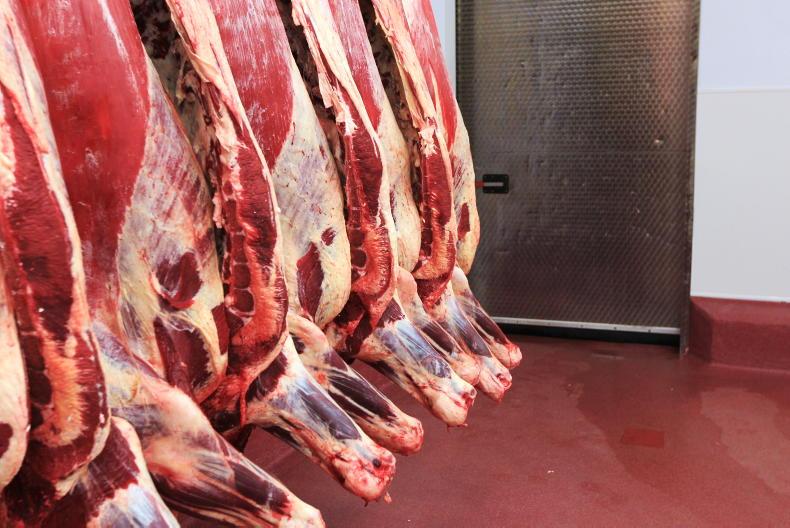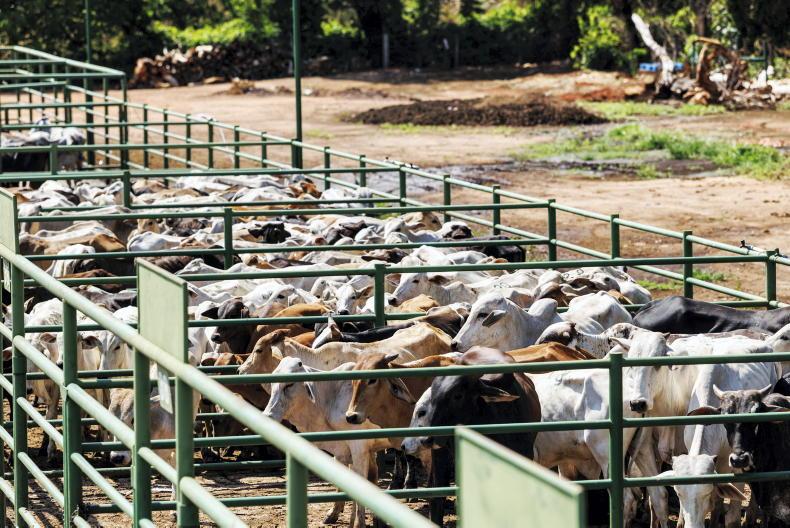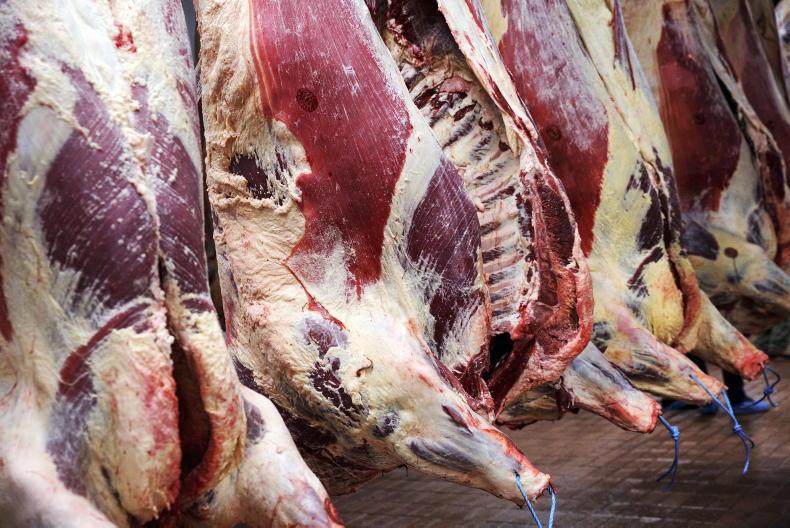

In the USDA October World Markets and Trade report for livestock and poultry, global beef production for 2027 is estimated to be around 60m tonnes, similar to the current year. It forecasts that output will fall in Brazil, Australia, USA and the EU but this would be offset by increases in Argentina, Uruguay and India.
India is an exporter of buffalo meat to lower value markets, predominantly in Asia. For Irish beef producers and exporters, the main competition in the European market comes from Australia and the South American countries of Brazil, Argentina, Uruguay and Paraguay that make up the Mercosur trade bloc. The US, which is the third largest beef exporter globally, sends very small quantities to the EU and UK because most US beef cattle are treated with growth-promoting hormones which are banned in the EU and UK.
Cattle on feed at record low in US
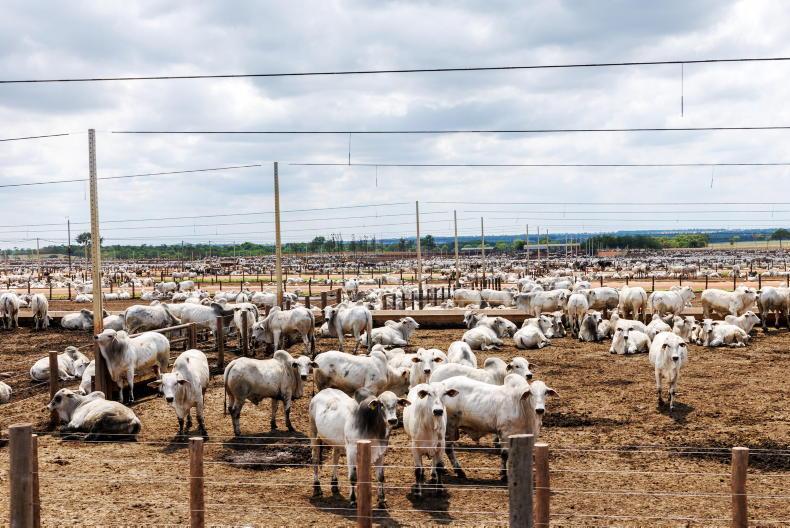
The latest USDA cattle on feed update for the US released on 23 October reports that in September, 1.78m cattle were placed in feedlots with a capacity of 1,000 head or more. This is the lowest number for the month of September since records began in 1996. Furthermore, the number of cattle sold from feedlots in September fell to 1.52m head, 7% below September last year and again the lowest September total since records were first kept in 1996.
This follows on from the October WASDE report, which revised beef production for 2026 down by 75m pounds to 24.8bn pounds, almost 5% lower than the 2025 total and the lowest in over a decade. It also forecast a small further reduction for 2027.
Brazil lobbying in UK
Following the EU suspension of meat imports from Brazil due to antibiotic controls, the UK has initiated its own inspection process of Brazil’s controls. ABIEC, which represents Brazil's meat exporters, ApexBrasil, the country's trade promotion agency, and Brazil's agricultural attaché jointly hosted a "Brazilian Beef Talks" event at Church House Westminster on 23 October. ABIEC described the event as addressing “trade relations between the two countries, conditions of access to the British market, and the sanitary control mechanisms adopted by Brazil”.
With the suspension on EU imports from Brazil likely to last for up to two years, there is a huge effort to keep access to the UK market open for Brazilian beef. Increasing US imports this year due to their scarcity of supply has helped offset the reduced exports to China since the quota was filled. However, Europe is the highest value market even if it was always a relatively low volume market in the overall context of Brazil’s beef exports.
Overall beef production and exports from Brazil were forecast to dip in 2027, so that will further reduce pressure on Brazil’s exporters in the coming months.
Australia has peaked
Late last year and in the first half of this year, Australia broke several monthly records for the volume of beef exported. However, since the middle of the year these have eased back considerably and projections by Meat and Livestock Australia suggest that after record volumes being exported this year, it will ease back from 2027 reflecting a drop in the cattle slaughter. It was noticeable that Australian beef exports to the UK, which had been on an upward trajectory until the middle of this year, eased back noticeably in the third quarter.
Australia is of particular interest to Irish farmers because it has trade deals with both the EU and UK which give preferential access. However, again, the strength of the US, its main export market and Asian markets has kept Europe as a lower priority destination.
Impact on Irish farmers
Beef supply has peaked in the major exporting countries that are in a position to supply the EU and UK markets. Similarly, 2026 is expected to see a further decline in beef production in the EU which means that there should be sustained demand for Irish beef in the months ahead. With the China quota available again from 1 January, we can also expect to see strong import demand from China for Brazilian and Australian beef in the first half of next year as exporters rush to take advantage of the quota before it is exhausted around mid-year.
All of this suggests that there should be robust demand for Irish beef in the weeks and months ahead. The key challenge will be to retain consumer loyalty as beef is an expensive protein relative to pork and chicken and high energy costs mean that inflation and cost of living pressures are likely to increase further. Currently the Irish market is well supplied with cattle but Christmas orders have been good and kept the supply-and-demand equation in balance. At a global level there is little indication of oversupply in the coming months, the key will be maintaining demand.