



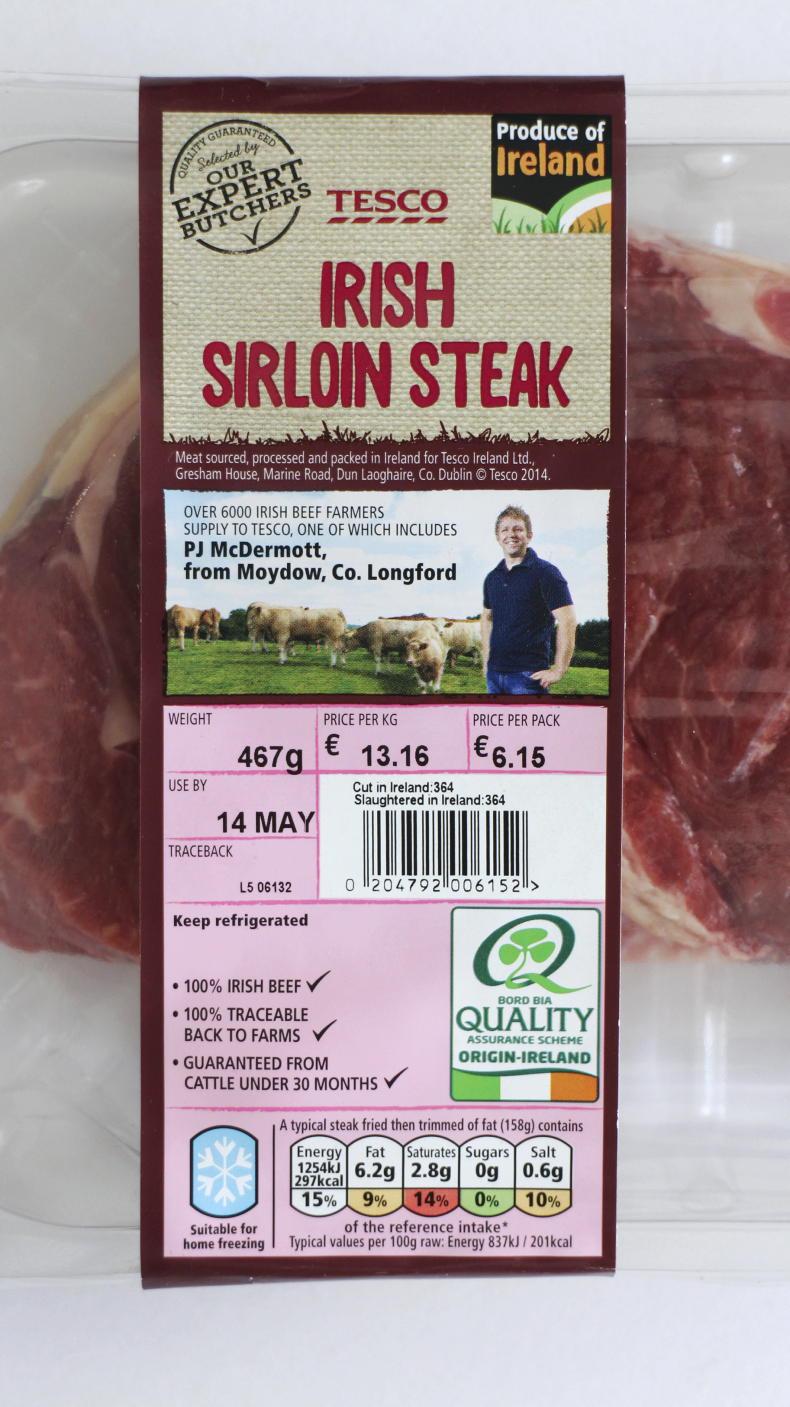
Country-of-origin beef labelling in the EU was introduced in the year 2000 and has been in operation in its current form since the start of 2002. Its primary role was to act as a confidence-boosting measure for shoppers buying beef in the aftermath of what was known as the BSE crisis.
BSE was a brain disease in cattle that was linked to nvCJD in humans, and while it was extremely rare, it was fatal for anyone who did contract it. BSE in cattle originated in the UK in the late 1990s and was associated with the feeding of meat and bone meal in livestock rations that hadn’t been properly treated.
As a result, meat and bone meal and any part of the animal linked to the brain was removed and had to be disposed of through approved waste channels, as opposed to going into animal feed.
Origin of beef labeling
By 2000, BSE had been identified in mainland Europe, and while the measures that would ultimately eradicate it were now in place, there was a crisis in consumer confidence in beef. However, research found that people tended to trust beef from particular countries, with their own domestic production usually being the highest regarded, but others, such as Ireland, scored well.
As a result, country-of-origin beef labelling was required by law across the EU. Details of an animal's country of birth, country of residence during its life and country of slaughter had to be recorded and displayed at the point of sale in butchers and supermarkets.
At the time, there was a lack of enthusiasm in the industry for this initiative. It was seen as another layer of bureaucracy that added a cost to the supply chain, with dubious value.
However, in time, this ceased to be an issue, and a more recent view expressed by a beef factory operator to the Irish Farmers Journal was that it should be extended beyond the retail sector to all other uses for beef, particularly in the hospitality and food-service sectors. There is logic in this suggestion.
Giving consumers choice
Following the Irish Farmers Journal revelations at the end of last year about access to antibiotics, the EU will impose requirements on beef imports from Brazil after September. While it is only proper that beef imported to the EU is produced under the same rules as those that control EU beef production, there is merit in giving consumers the choice of which beef they prefer.
Much imported beef in the UK and EU is sold through catering and food-service channels, where its country of origin doesn’t have to be identified. Worse, there is the potential for unscrupulous businesses to pass it off as domestic production or use a country of origin that they believe gives them a market advantage.
While this is banned under trading standards, there would be a benefit in simply extending the country-of-origin labelling to include catering and food service, as well as retail. The model is well established at this point, and additional bureaucracy should be minimal.
There is an urgency at present as the EU rules on imports from Brazil come into effect in September. While the initial impression is that the UK will follow the EU rules on this at the same time, there are some doubts in the industry.
That is because it is planned that, a year from now, the UK will align with all EU rules, and the thinking is that they may let the issue drift until then. If that proved to be the case, Brazilian beef banned from the EU could still be sold in the UK.
Comment
With the advent of both EU and UK trade deals, more imported beef will be a feature of the trade from now on.
As a major exporting country, we should embrace trade, but with a wider choice of options available to consumers, they should be identified so that consumers can make informed decisions.
This shouldn’t be seen as hostile to trade; in fact, labelling could be an enhanced promotional opportunity. Argentinian steakhouses are generally recognised as being of high quality, and other countries, such as Australia, run excellent promotional campaigns.
Country-of-origin labelling in catering and food service would enhance these campaigns further and, in the process, consumers would be making informed choices. Labelling would give the customer the ultimate control of trade.




SHARING OPTIONS