



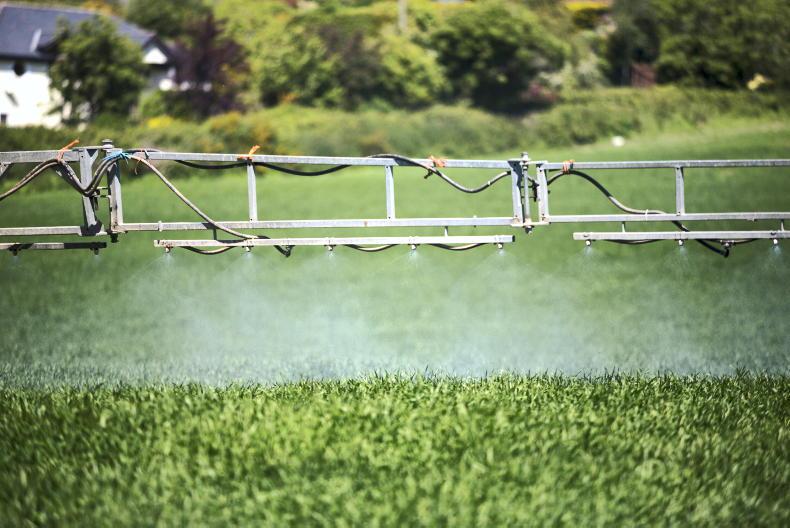
The European Commission looks set to ban the importation of products into the EU which have been treated with pesticides that are banned in the EU.
A press conference on Wednesday evening heard that the banning of a product in the EU must mean that it is banned in the EU. This means that products being imported should not have been treated with substances which cannot be used in the EU.
The issue has been a huge frustration to farmers in the EU for a long time and will no doubt be welcomed by farm organisations.
The move is intended to “level the playing field”. A report from a meeting of agricultural ministers in Brussels on Wednesday stated: “The EU’s food and feed safety rules are among the strongest in the world.
"As highlighted in the 'Vision for Agriculture and Food', the Commission pursues a stronger alignment of production standards applied to imported products.
“As regards the most hazardous pesticides banned in the EU, the Commission has already established a principle that such pesticide residues are not allowed back to the EU through imported products.”
Principle
The report from the meeting outlined actions under this principle:
The Commission said it also intends to improve import controls. Audits on non-EU countries have increased by 50%. The Commission will increase the level of checks and provide support for more checks to be carried out.
Task force
The statement said: “A dedicated EU task force will be launched in late January, pulling expertise and forces from the Commission and member states, to make import controls more efficient throughout the EU.
“In addition to these measures, the Commission has already proposed an extension of the country-of-origin labelling in line with sectoral specificities and single market rules, has intensified its promotion policy with higher budget for 2026 and launched an EU-wide ‘Buy European’ campaign.”



SHARING OPTIONS