



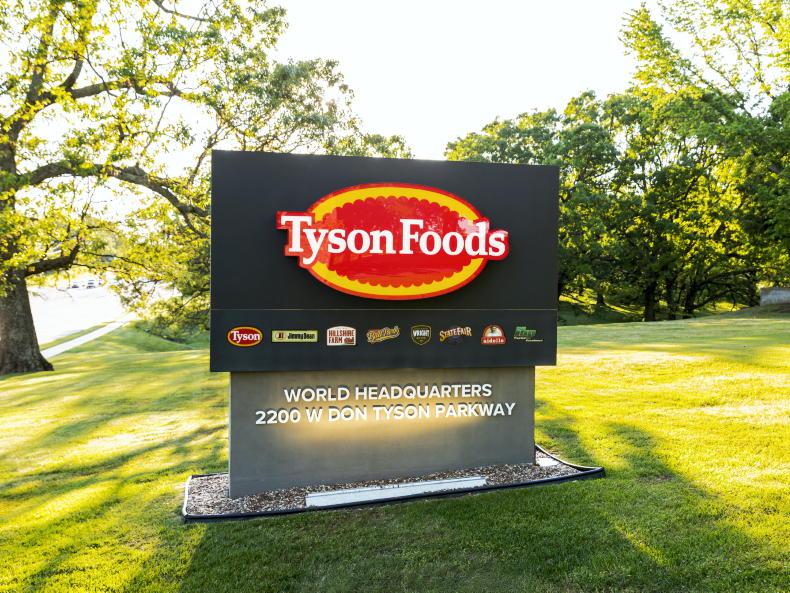
US beef processors came under President Trump’s spotlight recently as he accused them in a social media post of “driving up the price of beef through illicit collusion, price fixing, and price manipulation”. He said he was asking the Department of Justice (DOJ) to “act expeditiously” to take action to protect consumers.
Trump further said that while cattle prices have dropped substantially, the price of beef to consumers has gone up. “Therefore, you know that something is ‘fishy’,” he added.
Beef processing in the US is dominated by the so-called “big four” with JBS, Cargill, Tyson Foods and National Beef controlling 85% of the market. In a statement on the White House website about the DOJ investigation, it was noted that two of these companies are “either foreign-owned or have significant foreign ownership and control”.
The US president has been active in beef markets recently, putting a 50% tariff on imports from Brazil, a key source of US supply, while on the other hand announcing a four-fold increase in the import quota from Argentina to 80,000 tonnes.
Earnings
One of the companies listed by the White House, Tyson Foods, reported annual earnings this week which, if anything, contradicted Trump’s assertion about profiteering in the US beef industry.
While Tyson Foods overall financial performance for the 12 months ended on 30 September 2025 was ahead of analyst estimations, the performance of the company’s beef business showed the continued difficulties for that sector. In the 12 months, Tyson Foods lost $1.135bn (€980m) on beef sales of $21.6bn (€18.7bn).
The company reported an operating margin in its beef segment of -5.2%. Tyson Foods’ financial performance in the year was driven by its chicken and prepared foods segments which between them had combined sales of $26.78bn (€23.16bn) and operating income of $2.33bn (€2bn).
The company forecast an operating loss in beef processing of between $400m and $600m (€345m-€519m) for the coming fiscal year. The company said that beef supply in the US is expected to remain tight over the next 12 months, noting that farmers were more likely to retain heifers as they try to rebuild the country’s beef herd.



SHARING OPTIONS