


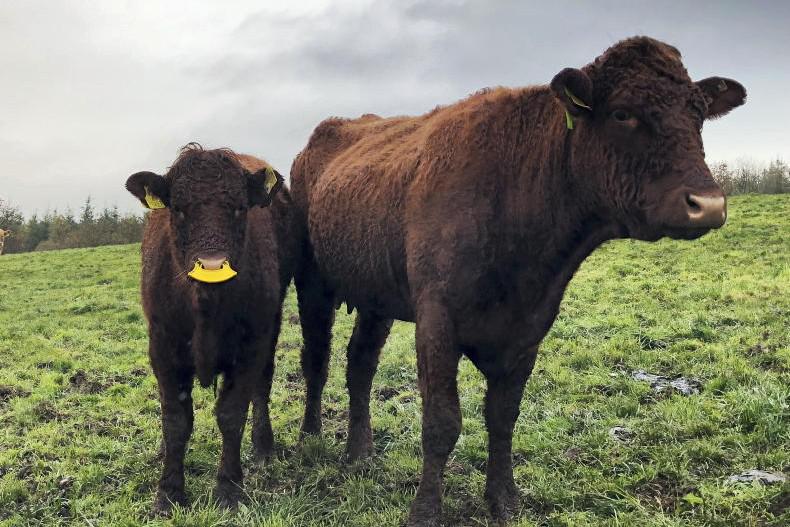
Stress at weaning: there has been a lot of talk over the last 10 days regarding vaccination of weanlings. While it is a very useful tool and significantly reduces the risk of viral pneumonia in weaned calves, it does not replace good practice.
Stress at weaning puts calves’ immune systems under pressure; bawling and sweating either at home or in a mart, before then being moved to another farm and mixed in with other weanlings, can easily lead to illness or death.
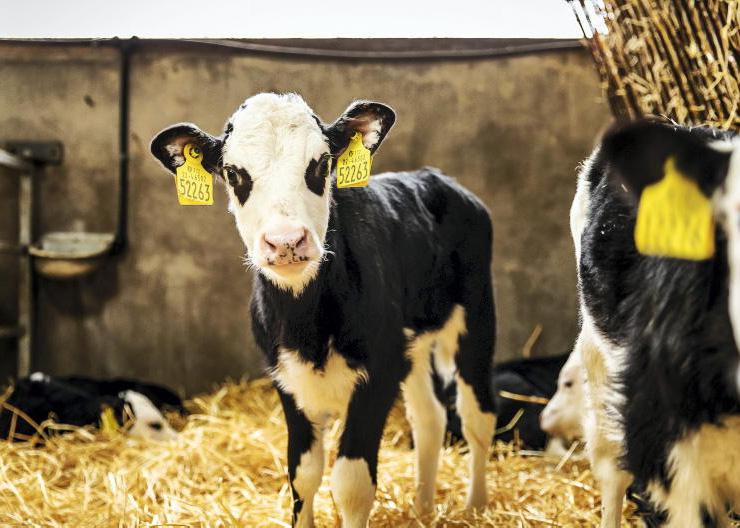
Correct weaning is not hard, and many farmers are being paid to do it through the Beef Welfare Scheme. Meal should be fed to calves before and after weaning at a minimum 1kg/head/day. Where vaccination is taking place, time it around weaning so that calves have full coverage at that time. Weaning paddles that prevent calves suckling their dams but still allowing them to remain with them for a few days, help to break the cow-calf bond, as does forward-grazing weanlings.
It’s important that cows are looked after too. If cows are being housed at weaning time, the lying area must be kept spotlessly clean to prevent mastitis. Dry cow sealers can be used, but caution should be exercised administering them, and they should not be used on cows that are difficult at calving, as cows’ quarters need to be drawn out post-calving to remove the residue.
Autumn breeding: many autumn-calving herds will begin breeding towards the end of the month. With cows indoors at service time, many farmers will opt to use AI and try and return a higher-value animal and profit per cow. Pick your bull team in plenty of time and get it into your own AI pot, or your technician’s. Ideally, use a selection of four to five bulls, with an additional new sire or two used on mature cows. If you find a certain sire has worked well on your cow type in the past, you can use more of this bull and should have an even group of calves. If you plan on using sexed semen on certain cows, discuss this with your AI technician around straw supply and timing of AI, as cows will have to be served earlier than when using conventional AI.
Cows will ideally have been mineral bolused ahead of calving, but where a drench is used, a top up pre breeding may be required. With breeding being three weeks out now, it is a good time to tail paint cows to help identify those that are not cycling and have them scanned.
Winter health: several ‘winter ready’ walks have been taking place across the country, hosted by Teagasc. One of the topics of discussion surrounds winter health management. The two primary parasites farmers will be looking to control are lice and fluke. With regards lice, clipping cattle at housing and using a pour-on solution before cattle show signs of itching is the best practice.
Clipping cattle will also help them regulate their body temperature as well. With regard to fluke, the critical thing to do is to read the label of the product you are using and know exactly what stages of liver fluke (early, immature, adult) that your product covers, and if a follow up is needed in a number of weeks.



SHARING OPTIONS