



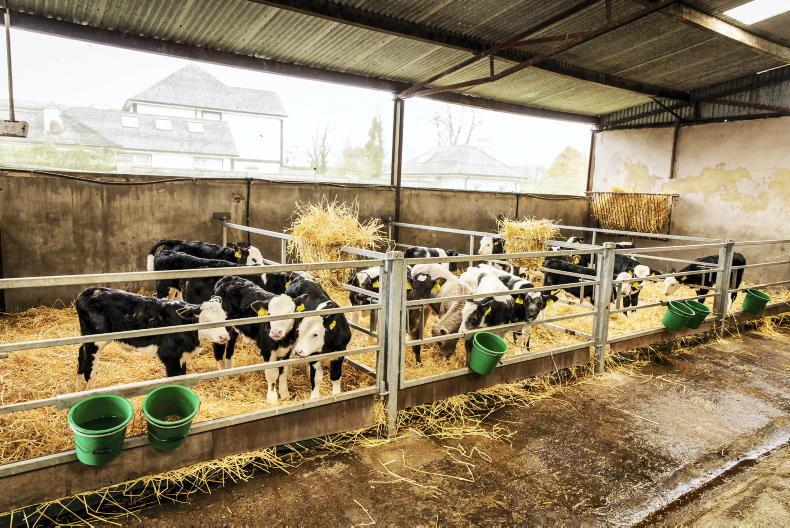
As the Thrive programme has reported over the last three years, dairy beef systems operate on tight margins where every aspect of the system needs to be optimised in order to leave a positive return.
This includes a high level of technical efficiency in terms of animal health, grassland management and the ability to make high-quality grass silage.
However, starting out with the correct calf type is probably the most important of all.
Limitations
Too often, we try to fit our farm to a certain system instead of applying a system that fits the farm. To do this, you have to identify the farm’s strong points and accept its limitations.
Three things to consider when sourcing calves for your dairy beef system are calf health, genetics and sex.
Starting out with a healthy calf is of utmost importance. One of the benefits of sourcing calves directly from farm is that you know the health status of the herd.
You can also see the calf environment which will tell you a lot about the health status and management protocol of calves on the farm.
Another benefit of buying off farm is that when you enter the calf shed, many calves will be lying down. Put them up slowly and monitor their initial movements.
A healthy calf will always stretch when it gets up – and depending on how long it has been lying will usually make manure or pass urine.
Where buying from the mart, you do not have this insight and so you have to base your judgement on a good visual assessment of the animal. This should be done prior to the sale. You need to inspect the calf, from the top of its nose to the tip of its tail.
The head
The nose should be clean and free from any mucus or discharge as this can be a telltale sign that something might not be right. The eyes will tell you a lot about the health of the calf. You always want to see a calf with bright eyes as it is a sign that the calf is healthy. If a calf is unwell, it will be slow to drink which leads to dehydration, which will result in their eyes being sunken and dull looking.
If its ears are drooped, it should act as a trigger for you to inspect further as something is going to be wrong. Drooped ears are a sure sign that a calf has had pneumonia or is running a temperature.
The navel needs to be closely inspected as it is the main entrance point for infection to a young calf. By the time calves are being purchased, navels should be dry. The navel area should be free from lumps which could indicate a hernia or infection.
Body
Make sure the calf is breathing properly. A calf at rest should not have a fast breath. If the calf is breathing rapidly, it is a sure sign of pneumonia.
Inspect the tail end of the calf and look for any visual signs of diarrhoea or scour, especially on the hocks of the calf. In calves that are over three weeks old, seeing blood and discharge on the hock area is a sure sign of coccidiosis. A wet tail can also be a sign of dehydration.
Legs
Inspect the calf walking and make sure they are putting each leg squarely and firmly on the ground and that there is no sign of swollen joints which would indicate infection.
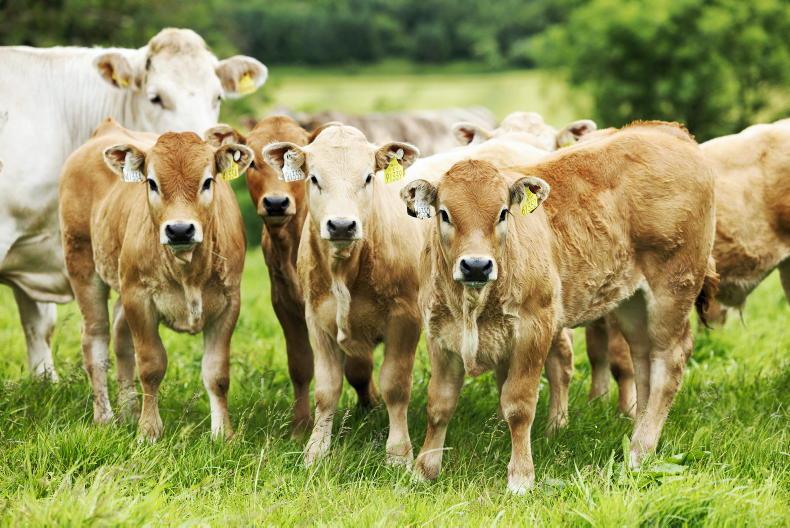
The genetic potential of the animal will determine a large proportion of the performance level and overall profitability of the system.
The Thrive programme only uses AI-sired calves from high beef merit dairy beef index (DBI) bulls. We also know the cow type that the calf is coming off as this is 50% of the genetics after all.
However, many beef-sired calves will be stock bull-sired. While there are excellent beef value DBI stock bulls on some farms, there are also very poor bulls out there. Knowing the difference in a calf at three weeks old is nearly impossible.
Typically, beef-sired calves have a greater genetic beef potential than dairy-sired animals. However, in recent years, we have seen the differential in calf price between dairy-sired bull calves and beef-sired calves stretch far beyond the value of the added genetic potential.
The addition of the commercial beef value (CBV) from ICBF will offer further information to farmers on this very topic, but we are not there yet.
Unfortunately, the CBV is not yet being displayed on mart boards and even for farmers sourcing calves directly from farm, it is not possible to enter a tag number on the ICBF app or website to access the calf’s CBV – it must be done by the herd owner.
The CBV is also only as good as the information that is recorded.
Until we are at a level where every calf is genotyped at birth, the reliability of these figures will be questioned.
While it may seem a small decision, it can have huge consequences to the overall profitability.
In the Thrive programme, an example of this is many of the farmers in the west opting to go down the route of an early-maturing heifer system aiming to slaughter animals off grass at the end of the second grazing season.
These animals are never going to come into big carcase weights.
Benefits
However, the benefits of these systems for heavier-type land is that they are lighter on the ground in the shoulders of the year, you can perhaps carry more per acre, finished off grass, meaning there is no second winter housing accommodation requirement and a slaughter bonus payment for these types of animal is currently readily available.
On drier farms, steer systems may make more sense. On the Irish Farmers Journal Thrive demonstration farm in Cashel, Co Tipperary, last year, the early-maturing steer was the most profitably system.
Obviously with steers you are getting a higher carcase weight and the demonstration farm is able to graze these animals into October without an issue.



SHARING OPTIONS