All cattle on the Irish Farmers Journal THRIVE demonstration farm in Cashel, Co Tipperary, were weighed last week. This was the first weighing since turnout for the yearling stock so we were keen to see how they had performed over the first three months at grass.
Winter performance had been excellent for these cattle thanks to having top-quality silage in the yard, which was fed alongside 2kg of meal/head/day. Bullocks achieved a daily liveweight gain of almost 1.2kg/day over the winter, while heifers were not far behind at just over 1.0kg/day. This saw turnout to grass weights of 348kg and 335kg for the bullocks and heifers, respectively.
Compensatory growth
With such good winter performance, there was a fear that we may not have benefited from any compensatory growth once they got back out to grass.
Compensatory growth is a period of accelerated or catch-up growth that follows a period of restricted growth in an animal. Typically, we see this when cattle get to grass in spring having grown at quite a moderate rate (eg 0.6kg to 0.7kg/head/day) over the winter.
This allows farmers to harness cheaper weight gain from grazed grass in spring compared to more expensive feeding indoors during the winter.
Weights
However, cattle have performed very well over the first 85 days at grass with bullocks maintaining their growth rate of 1.22kg/day since turnout and are averaging 461kg, while heifers continue to grow at just over the 1.0kg/head/day mark and are now 429kg.
The average turnout weight of the entire group was 342kg, while 84 days later, it stands at 446kg.
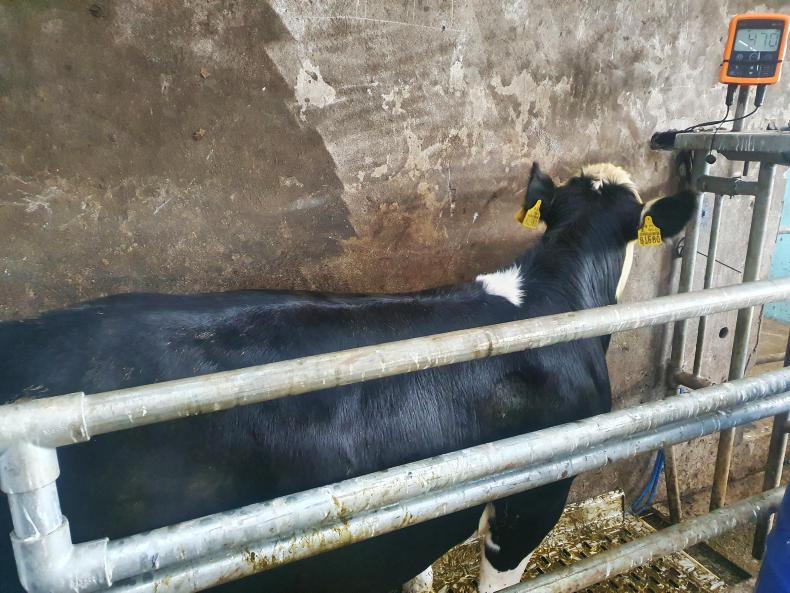
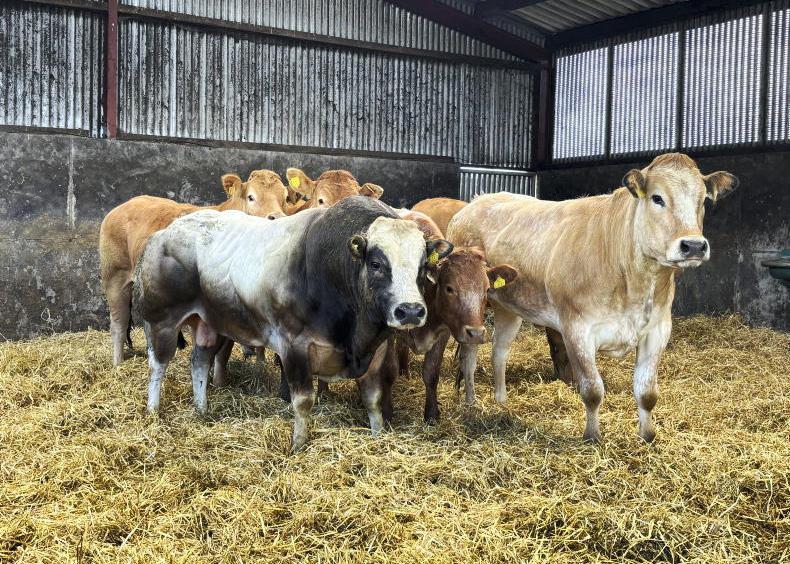
This HE4105-sired steer weighed 470kg and averaged 1.29kg/day since turnout.
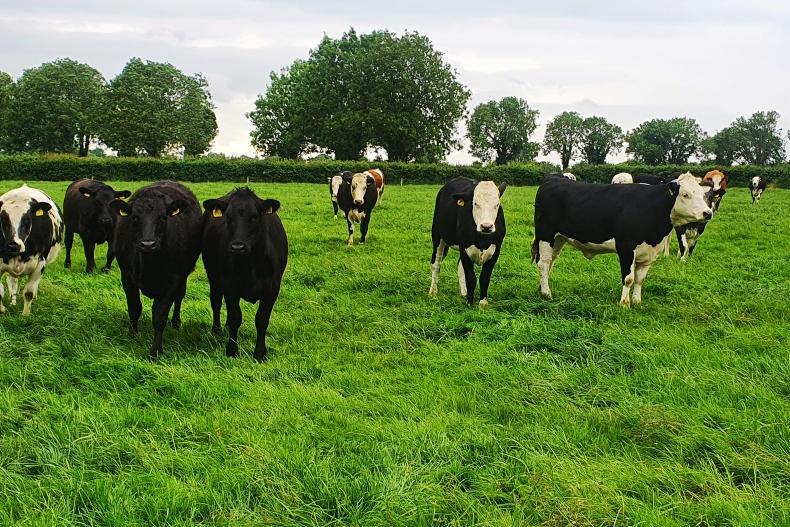
While this is very respectable performance, it has been a superb grazing season so far for these cattle. Conditions have been near perfect since turnout in mid-March. Grass quality beneath their heads has been very good all the way through so stock had no excuse not to be thriving.
Grass growth
There has never been a stage when grass supply has been an issue on the farm all spring. Grass demand on a dairy calf-to-beef system is quite low in the first half of the year as yearlings are only eating around 7kgDM/head at turnout while calves reared this spring are only eating a couple of kilos at this stage.
This allowed us to take out more paddocks as high-quality baled silage throughout the month of May. Grass growth has slowed in the last couple of weeks. Up to a fortnight ago, the weekly grass growth rates were in the high 40s. However, for the last two weeks, growth has been just over 30kg DM/ha.
We are hopeful that the farm will get sufficient rain over the coming days to boost grass growth once again.
We do not expect to see daily liveweight gains to remain at the level they have been for the first three months at grass. However, if we can maintain growth rates of over 1kg for the bullocks and 0.9kg for the heifers until mid-August when we will start some meal feeding, then there should be no issue getting the majority of these cattle away off grass in the back-end of the year. If we take an average target slaughter date of mid-October, this gives us another 120 days to finish.
As with all groups of cattle, there is quite a range in weights among the 140 cattle with the top one-third of bullocks weighing 498kg compared to the bottom one-third at 423kg, while the top one-third of heifers averaged 461kg compared with the bottom one-third at 396kg.
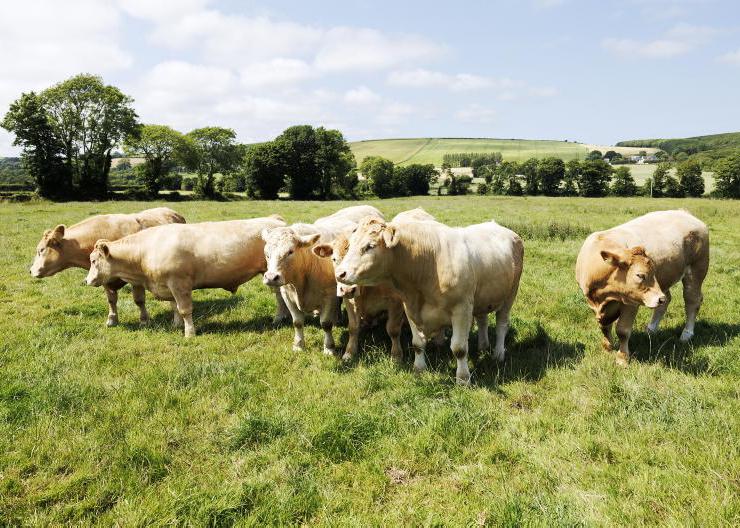
There is quite a range in weights among the 140 cattle
While there might be a temptation to pull out the bottom one-third of each group and start to feed a couple of kilos of meal from now onwards, in reality this will just cause these smaller-framed animals to start to lay down more fat rather than lean muscle and cause carcase fat specification issues at slaughter.
The plan is to weigh again in early August to see how cattle are progressing. It is at this stage that we will start to re-batch cattle into smaller groups depending on their target slaughter date.
All cattle on the Irish Farmers Journal THRIVE demonstration farm in Cashel, Co Tipperary, were weighed last week. This was the first weighing since turnout for the yearling stock so we were keen to see how they had performed over the first three months at grass.
Winter performance had been excellent for these cattle thanks to having top-quality silage in the yard, which was fed alongside 2kg of meal/head/day. Bullocks achieved a daily liveweight gain of almost 1.2kg/day over the winter, while heifers were not far behind at just over 1.0kg/day. This saw turnout to grass weights of 348kg and 335kg for the bullocks and heifers, respectively.
Compensatory growth
With such good winter performance, there was a fear that we may not have benefited from any compensatory growth once they got back out to grass.
Compensatory growth is a period of accelerated or catch-up growth that follows a period of restricted growth in an animal. Typically, we see this when cattle get to grass in spring having grown at quite a moderate rate (eg 0.6kg to 0.7kg/head/day) over the winter.
This allows farmers to harness cheaper weight gain from grazed grass in spring compared to more expensive feeding indoors during the winter.
Weights
However, cattle have performed very well over the first 85 days at grass with bullocks maintaining their growth rate of 1.22kg/day since turnout and are averaging 461kg, while heifers continue to grow at just over the 1.0kg/head/day mark and are now 429kg.
The average turnout weight of the entire group was 342kg, while 84 days later, it stands at 446kg.
This HE4105-sired steer weighed 470kg and averaged 1.29kg/day since turnout.
While this is very respectable performance, it has been a superb grazing season so far for these cattle. Conditions have been near perfect since turnout in mid-March. Grass quality beneath their heads has been very good all the way through so stock had no excuse not to be thriving.
Grass growth
There has never been a stage when grass supply has been an issue on the farm all spring. Grass demand on a dairy calf-to-beef system is quite low in the first half of the year as yearlings are only eating around 7kgDM/head at turnout while calves reared this spring are only eating a couple of kilos at this stage.
This allowed us to take out more paddocks as high-quality baled silage throughout the month of May. Grass growth has slowed in the last couple of weeks. Up to a fortnight ago, the weekly grass growth rates were in the high 40s. However, for the last two weeks, growth has been just over 30kg DM/ha.
We are hopeful that the farm will get sufficient rain over the coming days to boost grass growth once again.
We do not expect to see daily liveweight gains to remain at the level they have been for the first three months at grass. However, if we can maintain growth rates of over 1kg for the bullocks and 0.9kg for the heifers until mid-August when we will start some meal feeding, then there should be no issue getting the majority of these cattle away off grass in the back-end of the year. If we take an average target slaughter date of mid-October, this gives us another 120 days to finish.
As with all groups of cattle, there is quite a range in weights among the 140 cattle with the top one-third of bullocks weighing 498kg compared to the bottom one-third at 423kg, while the top one-third of heifers averaged 461kg compared with the bottom one-third at 396kg.
There is quite a range in weights among the 140 cattle
While there might be a temptation to pull out the bottom one-third of each group and start to feed a couple of kilos of meal from now onwards, in reality this will just cause these smaller-framed animals to start to lay down more fat rather than lean muscle and cause carcase fat specification issues at slaughter.
The plan is to weigh again in early August to see how cattle are progressing. It is at this stage that we will start to re-batch cattle into smaller groups depending on their target slaughter date.






SHARING OPTIONS