



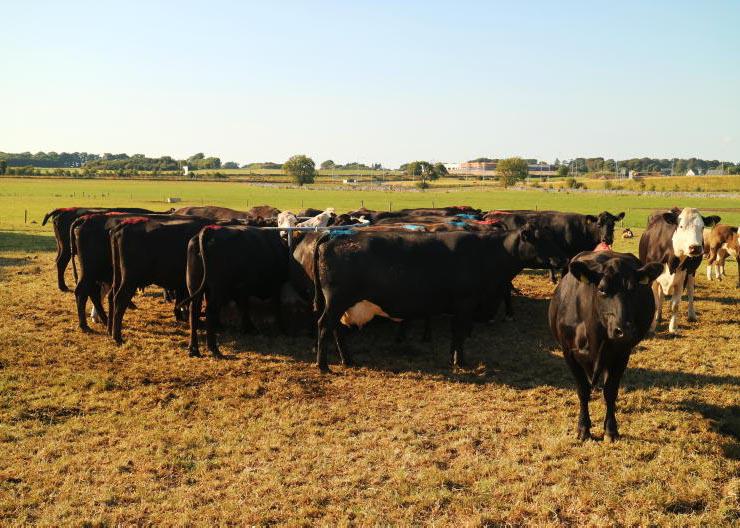
A high number of farmers holding out hope for significant volumes of rainfall last week were left disappointed by sporadic rainfall volumes. Met Éireann reports that the driest conditions were in the southeast and east – the areas which needed rain the most. Rainfall volumes were recorded from just 2.4mm to 16.6mm.
The highest volume fell in the Mullingar region with over 50mm following periods of torrential rainfall, while along the western coast, volumes averaged from 20mm to 35mm.
At the time of writing, this week’s forecast is for showery outbreaks of rain with the potential for heavier and more persistent rainfall on Sunday.
Met Éireann forecasts rainfall volumes ranging from 10mm to 30mm this week but with temperatures also rising and a yellow temperature warning in places it is predicted that soil moisture deficits (SMD) will decrease by 15mm to 20mm in parts of the south and east and 10mm to 15mm in the north and west.
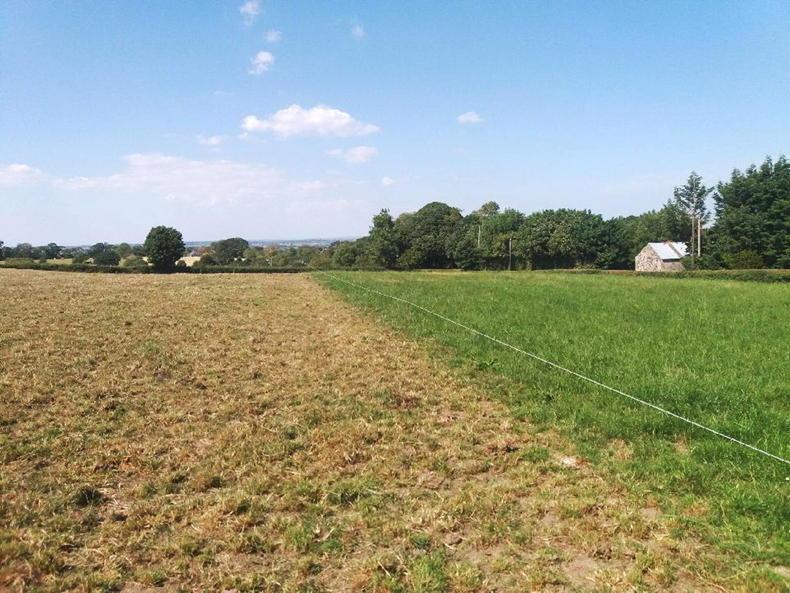
This leaves a large part of the country still facing a situation of negligible grass growth with the greatest SMD in excess of 90mm in the Wicklow region.
Large tracts of lands in surrounding counties in Carlow, Kilkenny and Wexford have an SMD of over 70mm and growing.
Peter Doyle, researcher at the Animal and Grassland Research Centre, Teagasc Grange explains that for soils to get back to a level capable of sustaining optimum growth will require upwards of 25mm to 30mm of rainfall in areas with a SMD of 50mm to 60mm and up to 50mm to 60mm in worst affected areas with a SMD of 80mm to 90mm.
He explains that the SMD does not need to get back to zero with this actually the position of soils being saturated.
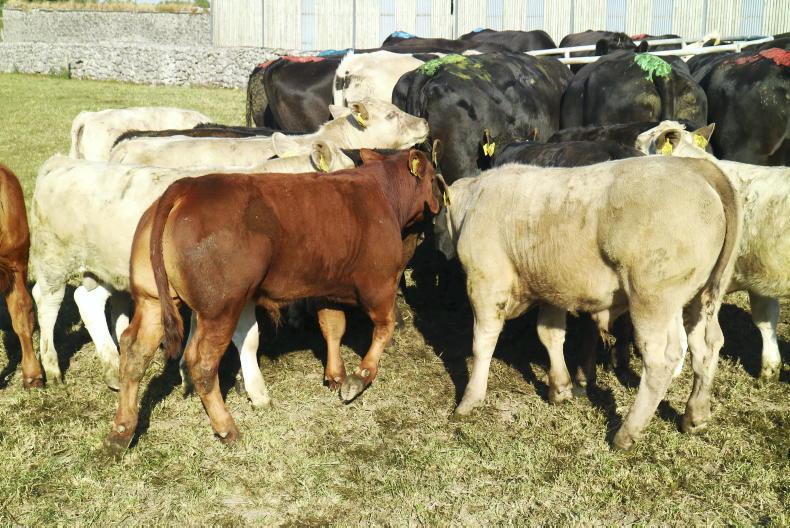
A SMD of 25mm to 30mm on light soils will support high levels of growth with wetter soils capable of sustaining growth at a higher SMD figure. Rainfall also has to be gradual with torrential rainfall that will wash off lands of much lesser value.
There has been some comments relating to any potential benefit in applying water via slurry tankers.
To put the scale of the challenge in perspective, growing 1t of grass dry matter or going from a cover of approximately 500kg grass dry matter per hectare (DM/ha) to 1,500kg DM/ha requires in the region of 25mm of moisture.
An application of 2,500gls of water applied in a slurry tank per acre would provide moisture equivalent to just 2.8mm of rainfall meaning it would take about 10 such tankers of water applied per acre to equate to 25mm of rainfall and not taking account of evapotranspiration.
The starting point for farmers with depleted grass reserves is to get a gauge on winter fodder supplies as this will influence decisions in determining the best course of action.
First cut silage crops were good on many farms and if it is the case that there is surplus forage available then offering silage will in most cases be the best and most straightforward course of action.
The situation gets trickier where forage supplies are tight with the best option here to try and reduce down on the volume of forage being used by utilising concentrate supplementation or purchasing forage.
The question here is what represents better value – purchasing forage or concentrates.
There are a number of variables in determining the value of silage including dry matter digestibility (DMD) and the volume of dry matter in the given bales.
Taking a rough guide, Peter says that a standard weight bale of silage at 65% DMD and costing €40 per bale translates to a cost of approximately €381 per 1,000 UFL. If we look at a beef nut costing €350/t freshweight this is equivalent to a cost of €395/t per 1,000 UFL.
Therefore farmers need to take account of feed quality when assessing value for money and take account of the practicality of feeding and the class of animal being fed.
Teagasc has published technical updates which outline feeding programmes for different classes of stock.
Table 1 is a useful guide displaying the required volume of feed per head, for a given number of animals and how this equates to the number of bales of silage required to be fed daily.
If grass is providing half of the daily feed requirement, the bale requirement will be approximately halved.
Teagasc highlights that supplementation will deliver the best response where it is offered in a steady manner rather than offering an odd bale now and again as this will not deliver any significant reduction in grass demand.
Feeding considerations for different categories of stock are outlined as follows.
Lactating suckler cows have a higher forage demand than dry suckler cows and this should be borne in mind when calculating feed demand.
The optimum scenario is where higher-quality silage of 70% to 75% dry matter digestibility (DMD) is fed to lactating sucklers to support milk yield (typically 7kg/day at this time of year) as lower quality 65% DMD silage or hay fed solely for example will not provide sufficient nutrients.
The challenge is where suckler cows are below target body condition score (BCS). First calvers tend to have a lower BCS at this time of year and such animals, along with any shy eaters that will not compete for feed, should be grouped for preferential treatment.
Peter comments that if lower quality silage is fed to first calves which are likely to be in BCS of 2.5 it will hit milk yield and performance but also have longer term effects on fertility next spring.
Hay is not a suitable feed alternative to grass or high-quality silage for lactating cows due to its lower nutritional value.
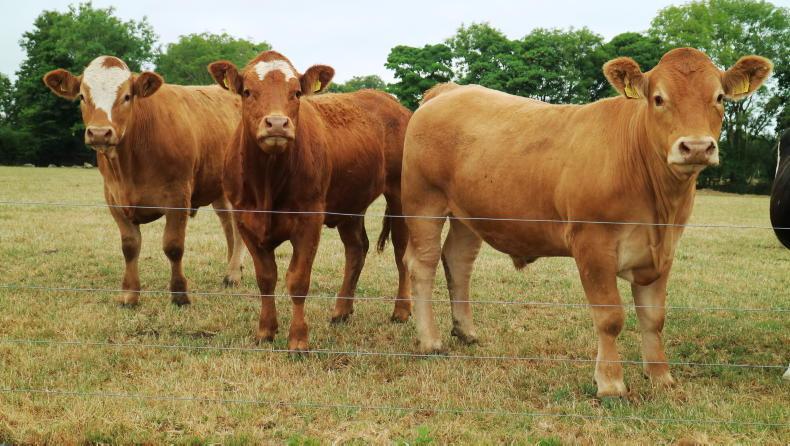
It is however an ideal forage source for autumn calving cows which have not calved yet.
Bales saved from surplus grass taken out of the grazing rotation should in general be in the low to mid 70s for DMD for permanent pasture and upwards of 75% DMD for reseeded or young swards.
Another option with early spring born calves is scanning to identify any empty cows which can be weaned if these are poor milkers along with cows earmarked for culling.
This will not have a major influence on demand but longer term, it may put the farm in a better position to recover and build grass supplies.
Take note if heading down this route to ensure that calves are aged over five months of age at weaning if participating in the Suckler Carbon Efficiency Programme (SCEP).
Allowing calves to creep graze ahead of cows will deliver significant benefits if at all possible. Any grass that is available can be prioritised to them plus it will offer an opportunity to offer creep feed at restricted levels in troughs.
An allocation of 1kg to 2kg concentrates will typically suffice for male weanlings to underpin performance. Higher volumes can be fed to better conformed weanlings that are destined for sale.
Where farms are badly affected and no grass is available, then it will also be beneficial to offer forage to calves where there is limited feeding space available for cows.
Weaning stronger calves is an option as it will facilitate easier management and also significantly reduce feed demand in cows.
Again, if this is the selected route, ensure that management practices comply with SCEP and the National Beef Welfare Scheme.
At this stage of the year spring 2025-born store cattle should have achieved a good thrive in the early part of the season and achieved an average daily gain in the region of 1kg per head since turnout.
Where this is the case with bullocks and heifers and these animals will be carried over until the 2027 before finishing then offering access to good to high-quality silage will typically be sufficient to store animals until grass supplies recover.
Peter notes that if performance dips at this stage but grass supplies recover in the coming weeks or animals are destined to be put on a finishing diet over the winter, then it may develop a situation where animals can avail of compensatory growth once offered a higher energy diet.
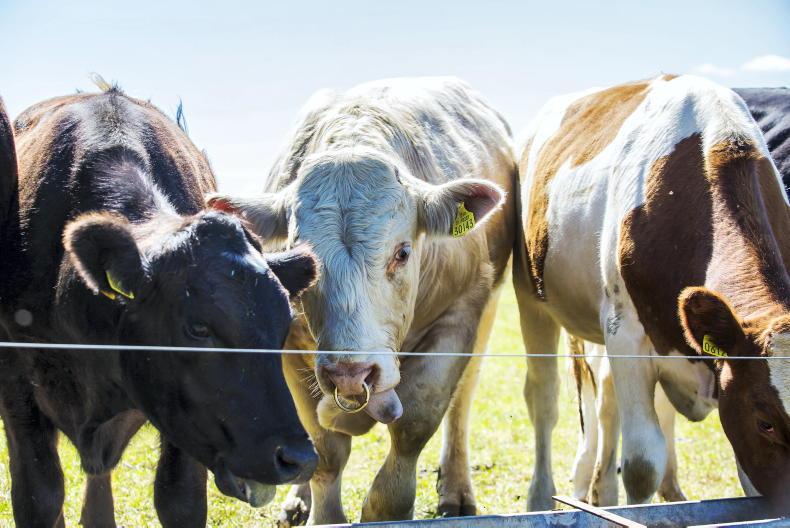
However if animals have under-performed up to now, then it is a different situation and it will be worthwhile to offer concentrate supplementation (1kg to 2kg daily) to underpin performance.
The same may be the case where these animals are destined for selling towards the end of the grazing season. Farmers will need to weigh up their options and take the best option that suits the current situation.
There is little merit in storing spring 2024-born bullocks and heifers that are destined for slaughter in the coming months.
It may be best to select and batch forward animals and transfer these on to a finishing diet or supplement at grass.
The level of supplementation will depend on grass supplies, the type of animal being fed and forage supplies.
There will generally be an economic response from feeding finishing cattle at current concentrate costs to bring them to a marketable stage, but a finishing budget should be carried out taking account of the current live trade in marts for forward stores as an alternative option.
Where no grass is available then the practicality of feeding a finishing diet outdoors may lend itself to housing animals for finishing.
Reducing demand for grass will pay dividends in the longer term in helping to build a bank of grass for grazing later in to the year.
Teagasc advises to hold off applying fertiliser where the SMD is above 60mm and swards are dry and bare. The advice is to hold off applying fertiliser until meaningful rain has arrived for seven to 12 days or until growth reaches 50kg DM/ha/day.
Where there is moisture in the soil and grass is actively growing, then the advice is to continue applying fertiliser to take advantage of what moisture is there and to build grass supplies.
Similar advice pertains to slurry application. Delay applying where there is no meaningful rain in the forecast as dry conditions increase the risk of nitrogen loss through volatilisation and slurry can crust on the soil surface.
Peter comments that post-emergence spraying of weeds in new reseeds should be delayed until grass has come out of the stressed stage.
He adds that it is useful in areas where feed is offered such as around ring feeders should ideally get a run of a tine harrow and have some grass seed applied to ensure grass grows back and to prevent a proliferation of weeds in these areas.
The phrase, it takes grass to grow grass, will be critical where grass growth resumes.
Where the average farm cover is depleted and in the region of 400kg DM/ha to 500kg DM/ha then current practices will need to be continued until covers build to a level capable of meeting demand.





SHARING OPTIONS