



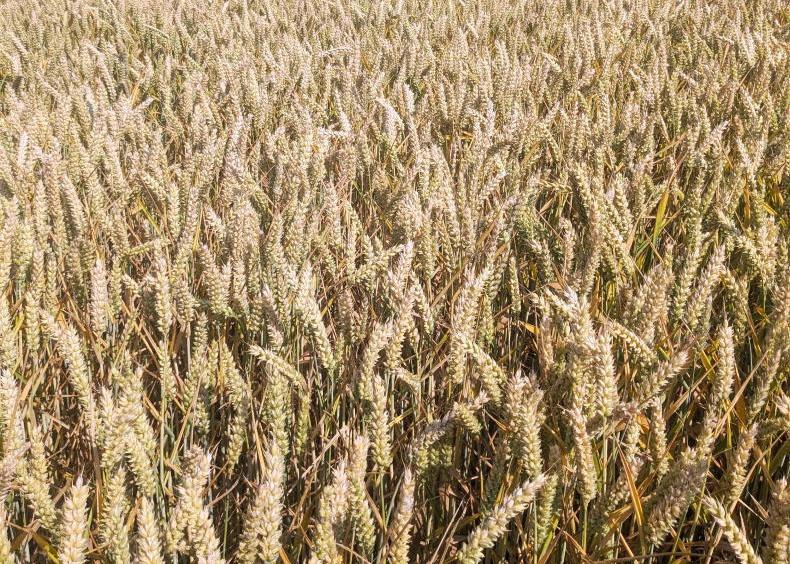
The drought over the summer months had a huge impact on tillage farms right across the country. It may have provided good harvesting conditions but crops that were full of potential in late June burnt up in the hot, dry weather, almost certainly reducing yields significantly in many cases.
Some badly-affected spring bean crops saw their pods abort as a consequence of the drought.
This has become a more regular occurrence over the past 10 years as the climate changes and evolves. Some farms were less affected in 2026.
Some areas got more rain than others and those on heavy soils were somewhat protected from the drought this year and crops performed well.
Of course, they are not immune to the weather extremes but are usually affected by the other end of the spectrum when waterlogging and flooding are in play.
No matter what type of weather you are facing, it pays to sit down and analyse the weather risks and challenges that your farm may face in the future.
There is very little a tillage farmer can do after a drought has hit except wait to see how their yields and margins will be affected.
This begs the question of what actions an Irish tillage farmer can take to combat droughts before they happen? What methods can be used to mitigate the risks involved and make their farm more resilient in the years ahead?
Organic matter
Soils have a pivotal role to play in a farm’s protection to drought.
The soil type of your land will have a large effect on its ability to absorb and hold moisture during dry periods. Sandy soils will dry out much more quickly than clay soils.
However, increasing the organic matter level of the soil improves the overall soil health and its ability to hold onto water in dry conditions.
There are many ways this can be done, from applying organic manures and chopping straw to growing cover crops after harvest.
Maximising payments
Funding is available to help tillage farmers with many of these actions too, including the Straw Incorporation Measure, ACRES and the Farming for Water EIP.
The Protein Aid Scheme can also provide some income protection where beans or peas are grown.
This guarantees a level of income for the crop even if drought massively reduces the yield of the legume.
This year, the payment could be approximately €510/ha based on crop area figures from the Department of Agriculture, Food and the Marine.
Crop rotation
Another break crop, winter oilseed rape, does not receive a direct payment but is increasingly seen as a reliable crop to grow by tillage farmers. Improved genetics have safeguarded the crop from threats such as high winds before harvest.
Furthermore, the relatively early harvest reduces the risk from a July or August drought.
The large tap root of the oilseed rape plants should also be able to access moisture that other crops may struggle to reach.
Growing a number of different crops every year mitigates a farm’s exposure to any one risk. If one crop performs poorly because of drought, another might yield well.
For example, if a crop of spring beans doesn’t yield well because of a July drought, winter barley and oats that were harvested in July may have escaped the yield-robbing effects of the dry period.
Most farmers will be very careful about where they plant each crop too.
Beans and wheat are unlikely to suit very light soils where barley or peas may cope better with an extended dry period.
Q&A with Bank of Ireland
Q. How are tillage farmers faring financially in 2026? The summer drought and the high input cost environment that we’re in at present seem to have had a hugely negative effect on margins and cash flow. Are you seeing these issues affect your tillage customers in Bank of Ireland?
A. While grain markets have improved significantly compared to 2025, some tillage farmers have experienced a challenging year due to prolonged dry weather during key crop development stages.
Lower yields on some farms have offset much of the benefit of stronger grain prices, while input costs for fertiliser and fuel remain elevated.
The impact varies from farm to farm depending on location. Overall, we are not seeing increased pressure on working capital and cash flow.
Harvest has highlighted the importance of maintaining strong cost control and cash flow planning, particularly as growers begin to make decisions around planting and input purchases for the 2027 season.
The positive news is that most tillage businesses remain fundamentally resilient.
Irish tillage farmers have a strong track record of adapting to changing market conditions and managing risk, and the recent improvement in grain markets has helped to support confidence within the sector.
Q. Many farmers saw promising crops fail to deliver because of how the drought conditions during July and August shortened the grain filling period and brought crops to harvest much earlier than expected. Ultimately this reduced the margins of many farmers and will make it challenging for them to purchase essential inputs such as fertiliser next spring.
What options are available to tillage farmers to ease cash flow concerns and to help them put crops in the ground for the coming season?
A. The key message for farmers experiencing cash flow pressure is to engage early with their bank, accountant or adviser.
Bank of Ireland recently launched a Discounted Working Capital Loan to assist farmers. The loan is available over a 24-month period at a discounted variable rate of 4.88% and can be used to pay merchant, co-op, contractor bills or other farm input costs.
Bank of Ireland offers a range of flexible funding solutions to help manage seasonal cash flow challenges including overdraft facilities, working capital loans or structured repayment arrangements designed to match the cash flow profile of the farming business.
Q. Many tillage farmers have already begun to mitigate their exposure to extreme weather events such as drought and improve their sustainability through measures such as reduced tillage, cover cropping and introducing a crop rotation.
Does Bank of Ireland have any measures in place to support these farmers?
A. We understand that all farm systems must adapt in the face of climate change to remain productive and become more resilient.
We also recognise that measures such as reduced cultivation systems, cover crops, improved crop rotations and investments in soil health can help improve resilience to weather volatility while also delivering environmental benefits.
To support tillage farmers who are on that transition to more sustainable farming systems, last year we launched Enviroflex to farmers who are members of the Irish Distillers and Boortmalt sustainability schemes. Through these schemes we provide access to discounted funding for qualifying environmental and sustainability-related investments. Our approach is centred on supporting productive and profitable farming systems and supporting generational renewal within the tillage sector.



SHARING OPTIONS