



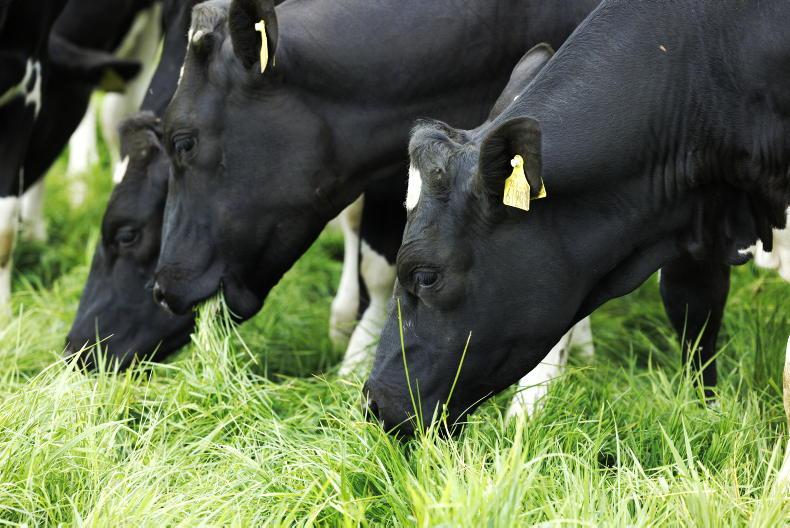
Growth for the majority of farmers has been nothing spectacular for spring 2026 and the early part of the summer appears no better. Saying this, we still see 55% of dairy farmers recording a cover per cow of 190kg DM, so corrective action is needed for these. It’s very much a case of the figures telling a different story to what is being felt on the ground, with farmers stating that growth feels behind where it should be for the time of year. The fear for many is that if we have reached peak growth now, 2026 is set to be a lackluster year for grass growth coming off the back of an excellent 2025.
Tight on grass
For farmers that feel they are tight on grass, it’s critical that both suckler and dairy cows that are in the middle of being bred are not restricted or given poor-quality grass, as this could have a negative effect on conception rates. Where heavier covers do have to be grazed due to a lower-than-ideal farm cover, mixing heavy covers with some more preferential ones (1,100-1,300kg DM/ha) by grazing lighter cover by day and heavier by night, will see farmers through with little negative effect on cow performance or conception, while also helping to hold farm cover.
In current weather conditions, farmers will anecdotally point to watery slurry being a better option. Spreading using LESS on grazing platforms at 2,000-2,500 gallons per acre should work well here, and this can be topped up with a half rate (10 units) of straight chemical N to further bolster growth.
Surplus grass
For farmers on the opposite side of the scale, it’s important on dry farms that cover is not driven too far back through mowing out surplus. Early June can be a pinch point for these farms, with drier conditions seeing a fall off in growth rates, so caution needs to be exercised. Surplus bales are expensive to make this year between fertiliser and contracting costs; it would not be ideal to have to feed these out in the weeks after baling. A similar stand as above would work well here, mixing high-energy, leafy swards with some less-than-ideal grass if drought is a regular issue on your farm. As always, offtakes of P and K need to be replaced, with a typical 1,000 gallons of slurry capable of replacing the offtakes of 4-4.5 bales/acre.




SHARING OPTIONS