



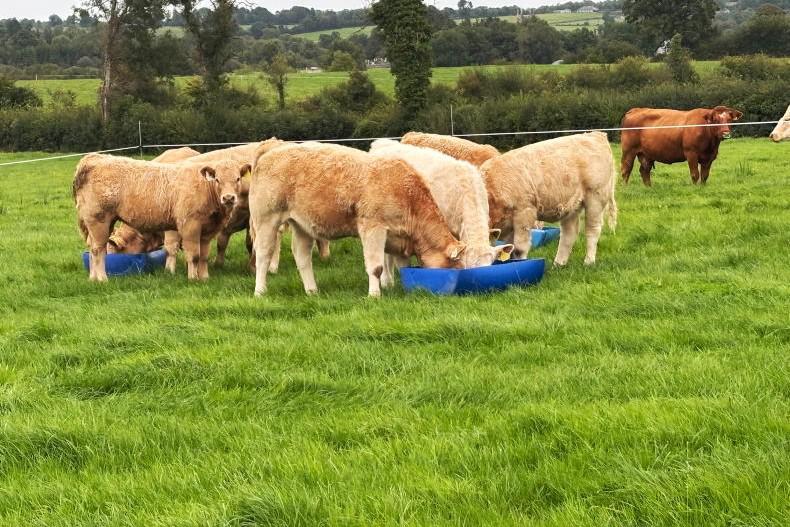
Housing: With housing not far away, now is a good time to take a look at ventilation issues in sheds. Most problems occur shortly after housing and it’s too late amending sheds when an outbreak of pneumonia has already occurred.
It’s very important when cattle are housed that ventilation is correct and there is plenty of air movement in the shed, allowing stale air to be removed.
Warm, moist and stale air is a breeding ground for disease. Signs that the ventilation is not up to scratch is a constant smell of ammonia, temperature too high, cobwebs on the timbers and sheets becoming black with mould.
There are a few points to note. A ridge opening should run along the full length of a roof apex. Wider sheds require wider openings, as follows:
Size of inlets are equally important to allow fresh air to enter the shed, create a stack effect and push the stale air out. Be careful where sheds have been extended that there is sufficient inlet area for the span of the new shed.
Make sure there is nothing impeding inlet airflow outside the shed like trees, or hay or straw stacked up against the inlet area.
A simple smoke bomb test can be undertaken demonstrating where air is moving and if it’s getting out fast enough. It’s important to carry out this test when the cattle are indoors, to get a true reflection of the ventilation in the shed.
Pregnant heifers: Make sure that bulls and heifer have been split up at this stage to avoid any unwanted pregnancies in very young heifers. Weanling heifers that have been gaining weight and in good condition can start coming into heat from eight to nine months of age in some instances, so don’t take any chances.
If in doubt, call in a scanning operator, but remember they will only be able to pick up pregnancies from 28-30 days. I know it’s a big worry for heifer buyers and every year there are problems with heifers having to be returned, along with an argument over price for feeding, etc.
Slurry: With ground conditions deteriorating in parts of the country last week, some farmers have been caught out with slurry tanks not empty. This week’s dry spell will likely be the last window before the closed period commences on 1 October.
It’s important to make sure that all tanks have been emptied well in advance of the closed period and in advance of animals coming into sheds. Where ground conditions are an issue, umbilical systems are a good option to avoid damaging or rutting ground.
Remember, if ground conditions are very wet or if heavy rain is forecast, slurry spreading is prohibited. Farmyard manure must be applied by 31 October 2025.


SHARING OPTIONS