



Silage ground: little to no grazing of silage ground has happened for most beef farms owing to the dreadful spring weather we have had and a decision will have to be made soon on what will be done with it.
We are past the halfway point in March, with fields still in poor condition.
The remainder of the week does look to be drier, meaning that some grazing may happen on more free-draining ground.
A late grazing of silage ground will push silage cutting date back, while failing to graze off old grass will affect quality.
Heavy covers above 1,200-1,300kg DM/ha will prove challenging to graze, and a compromise may be to hold off on grazing these and cut earlier in May to counteract any quality issues that will be caused by the older grasses in the sward.
If this ground hasn’t received slurry earlier in the year, these swards likely won’t receive any now either with the cover of grass on them, so P and K requirements will have to be made up by compound fertiliser.
The below table displays the requirements for each soil index type.
Where slurry is spread, 12 units of P and 80 units of K will be available in a good-quality slurry spread at 2,500 gallons to the acre.
It is important to be mindful where suckler cows are receiving little to no concentrates over the winter months and silage cut off low P and K fields that slurry quality will not reach the above levels, and better-quality slurry or compounds will have to be spread in order to improve soil indexes.
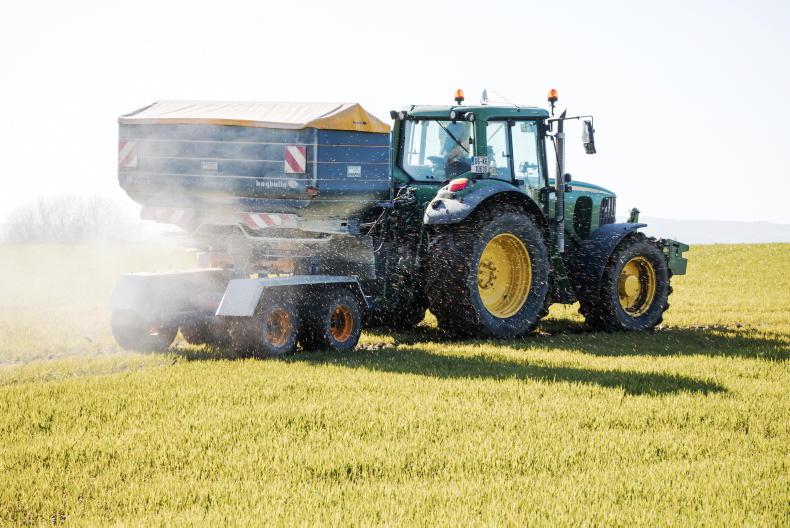
Protected urea is a scarce commodity at the minute, so CAN products may have to be used instead.
There appears to be huge backlogs in deliveries in merchant’s yard, as they battle to get fertiliser out to farmers, so it may be wise to collect yourself where possible.
Hygiene: a delayed turn out is proving a pain and putting huge pressure on indoor housing.
Disinfectant and lime need to continue to be liberally applied to calving pens, and at this stage of the year pens should be fully cleaned out between calvings.
Keeping calves healthy is generally an uphill battle if two things aren’t completed in the first two hours of their life; receiving adequate colostrum and treating navels.
With a drier few days promised, any opportunity to get some stock turned out should be explored to free up space and keep older calves away from younger stock.



SHARING OPTIONS