



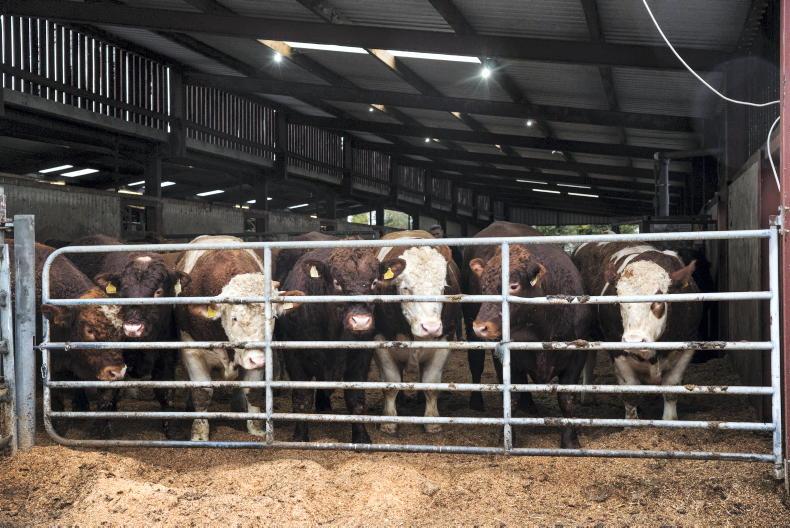
Over 800 farmers passed through the gates of the ICBF Tully Progeny Test Centre last Tuesday, where an open day has taken place for many years.
The research centre switched from performance-testing pedigree bulls to progeny-testing over a decade ago, with traits such as feed and water intake, linear scoring, methane production and meat-eating qualities all now measured on the animals brought in as forward stores and exiting the farm as finished beef.
David Kelly and Clodagh Ryan, ICBF, presented findings from the 455 dairy-beef and 304 suckler-beef animals slaughtered from Tully, with respect to CBV tallying with overall profitability, and data from both showing that the difference in CBV between the top 20% and bottom 20% of both types of animals was closely aligned with overall profitability.
Dairy-beef animals within the top 20% for CBV had a euro rating of €168, with the bottom 20% having a rating of €48, a €120 difference.
Dairy-beef animals in the top 20% for CBV had a carcase 13kg heavier (318kg versus 305kg), graded a similar conformation score (R- vs R+) despite having a reduced growth rate (1.54kg/day vs. 1.65kg/day).
Liveweight of the animals was marginally different, with the top 20% weighing 598kg, while the bottom 20% weighed 601kg.
However, due to the higher carcase weight and despite lower liveweight, the top 20% of animals yielded a killout of 53% in comparison to the bottom 20% at 50.3% killout.
Feed intake for the top 20% was 12.34kg DM/day, with it being 0.7kg higher in the animals ranked in the bottom 20%. The top 20% animals also produced 24g/day less methane (256g/day versus 280g/day).
ICBF calculated feed cost savings of €21/head, with additional carcase revenue calculated at €87 (based on €6.80/kg), to yield a total profit difference of €108/animal, comparable to the €120 difference in CBVs.
Table 1 shows the breakdown of the figures for the suckler animals. Here, the carcase difference is significantly higher, with ICBF showing €287 in additional carcase revenue from cattle in the top 20% (based off €6.80/kg), with €11 saved in feed costs to give an overall profit difference of €298/animal, €66 higher than the difference in the animal CBV.
Information put out only as good as information received
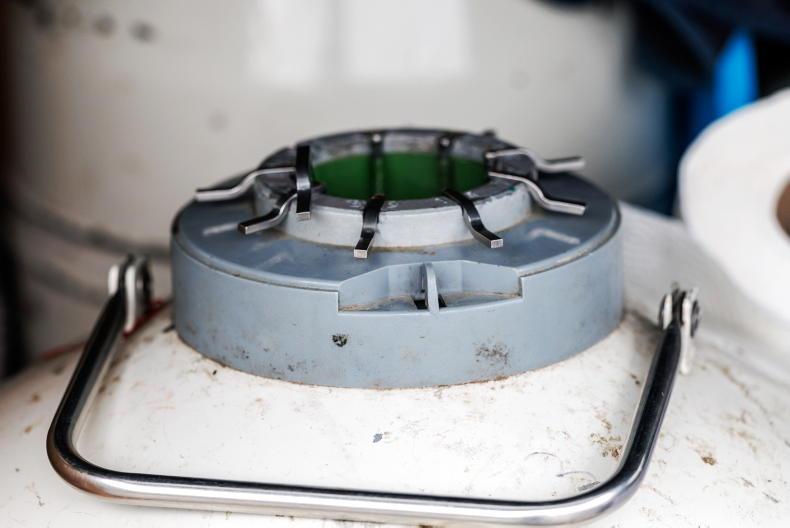
Fifty new bulls enter the GENE Ireland programme each year, with 40 being dairy-beef sires and 10 being suckler-beef sires, with semen from these bulls going to 600 dairy farmers and 300 suckler farmers each year.
Niall Kilrane, ICBF, pointed to the importance of using these new bulls and accurately recording on-farm data.
“Those farmers have a really, really important role in terms of ensuring those bulls come through the system,” he said.
“It’s always been a challenge on the beef side of the house that we’ve had older bulls that have stayed in the system for a very long time, albeit they did a very good job. But if you want to make genetic progress, a bull’s genetics don’t change over time.
“Farmers need to know and understand the importance of recording accurate dates of birth – we can only handle the information that comes in to us.
“If the information that comes into us is a load of rubbish, we’re not going to be able to give back useful information. If you want useful information, you need to give us useful information.”
Calving difficulty was another area on which accurate on-farm recording was cited as critical to improving the accuracy of the data relayed to farmers.
“If it’s hard-calving, call it hard calving. If it’s easy-calving, call it easy calving,” he added.
“The data comes in and we process it and identify which bulls are easy calving or hard calving, and that’s what ye need to know. You don’t want us to give you back information that leads you down the wrong road that you end up maybe using a hard-calving bull on heifers and end up with a poor result.”
Price per kilo
Weights from calves coming through marts and their price per kilo also feeds into the ranking of bulls, while the data coming from factories regarding carcase weights and grades is also critical.
Kilrane noted that all data coming from farmers and other outlets was live data.
“You will see AI bulls stars come up and down as data is constantly fed in.”


SHARING OPTIONS