



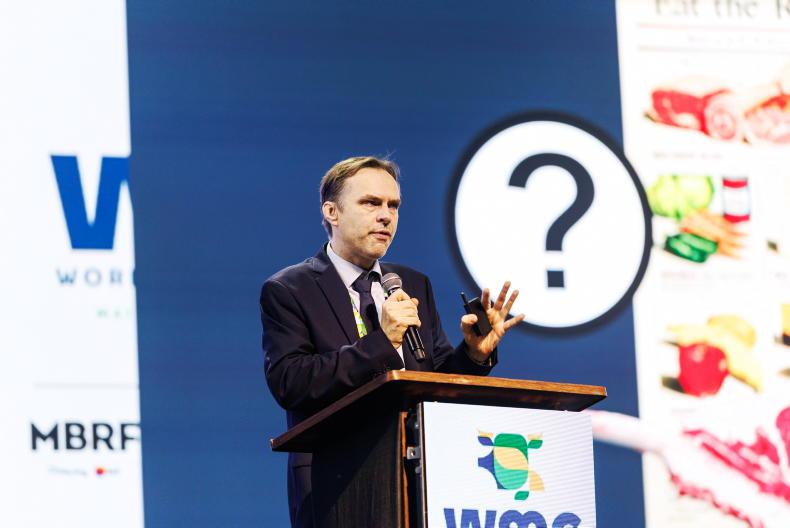
The idea that it is possible to replace meat from livestock farming with lab-grown food is a dangerous ideology, professor Frédéric Leroy has said.
Leroy was speaking at the World Meat Congress in Brazil, where he challenged the recent EAT-Lancet 2 report, which recommends cutting back on red meat consumption.
The report highlights that widespread adoption of the diet would require a two-thirds increase in fruit, vegetable and nut production and allow for a one-third reduction in livestock meat production, compared to 2020 levels.
He presented data showing diets that reduce the consumption of animal protein tend to have severe nutritional deficiencies.
“The safe limit for ensuring good nutrition is about 30% of calories coming from animal-based foods. The idea that it is possible to replace all livestock farming with lab-grown food is a dangerous ideology.
“We need to go back to the common-sense eating habits that our grandparents practised. Fruits, vegetables, dairy products, meat and fish, the same foods that have always sustained humanity continue to be the foundation of healthy and affordable nutrition,” he said.
The report is full of ideology and extremely difficult to implement, Carrie Ruxton, a dietitian and board member of Quality Meat Scotland said. “The diet recommends a total of one small serving of red meat in a week which is neither realistic or practical for many people.
“Many of the recommendations are impossible to implement,” she said.
Impact
Ruxton also warned of the massive impact that the adoption of the recommendations would have on socio-economic areas, including job losses.
The report states estimates “that livestock numbers would decline globally to 1.1 billion ruminant animals, dairy animals to 785m (down 4%) and pigs and poultry to 66bn (down 19%),” Ruxton said.
“They estimate that half of the jobs in the global livestock sector would disappear. They also want to see animal-based foods taxed and that national governments would prioritise plant-based foods in any public procurement process.
“This is a direct threat to millions of farm families and to food security,” she said.



SHARING OPTIONS