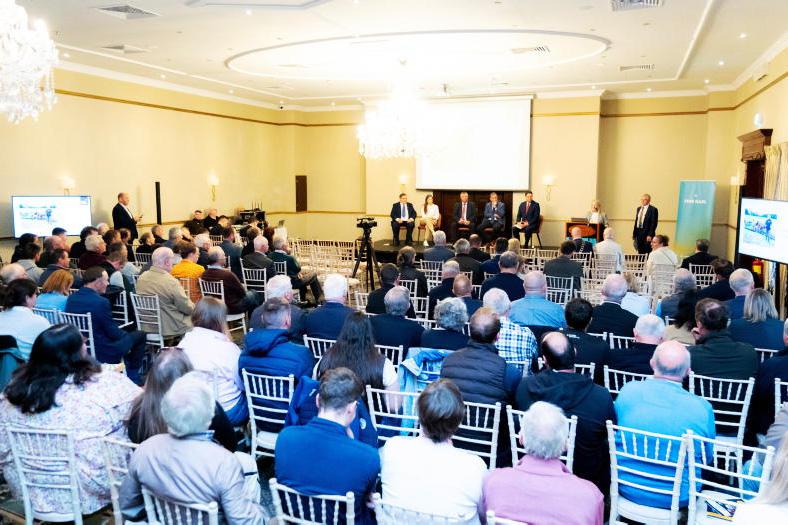
The declining number of suckler calves hitting the ground each year nationwide emerged as a cause for alarm among farm leaders speaking at a conference on the future of farming organised by Joe Cooney TD in Ennis last Friday.
The conference heard that suckler births have been decreasing year on year for around a decade in the Banner County and that dairy births have now started to slip.
Irish Cattle Breeding Federation (ICBF) data at national level puts this year’s number of registered calf births more than 55,000 head behind where it had been at the same stage in 2024.
The figures up to the end of last week report that suckler births are back by 23,676 calves, while dairy births are down 31,885 head.
Figures cited by the head of Teagasc’s animal and grassland research programme Dr Laurence Shalloo laid bare the extent of farm sector’s consolidation in Co Clare over the past three decades.
Farmer numbers
In 1991, there were 7,800 cattle farmers in the county, with this figure dropping by around 2,000 farmers up to 2020, while the number dairying in the Banner County plummeted by 80% over the same timeframe.
Overall cattle numbers in Clare declined from 323,000 to 277,000 between 1991 and 2010, but rebounded somewhat with an increase in dairy cows after the lifting of quotas to reach 296,000 cattle in 2020, Shalloo said, as the county mirrored national trends both in cattle numbers and the split between beef and dairy cows.
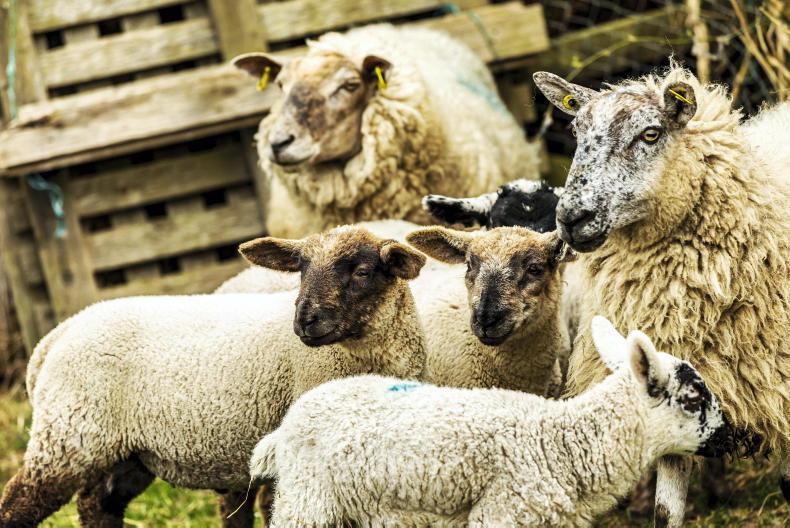
Where the county differs, the researcher stated, was its “out of kilter” decrease in ewe numbers, which plummeted from 58,000 ewes in 1991 to 17,000 in 2020.
Speaking at the meeting, IFA Munster regional chair Conor O’Leary stated that a lack of certainty has hit cattle farmers’ willingness to hold numbers.
The IFA representative mentioned TB breakdowns and the mismatch between some cattle and compensation valuation caps; the loss of schemes like the Burren LIFE agri-environmental scheme to farmers’ incomes; and tightening of red tape as some of the factors feeding into the drop in numbers.
“Uncertainty has been a large driver of the drop that we have seen and what I mean by that is that if you look across Europe, there has been a drop of 7m cows in the last 10 years, this is a trend across all of Europe,” he said.
“It ties into regulation and ties into how much income they need to bring in from outside their farm.
“What has happened here is that the prices have risen.
“The obvious economic decision on lots of cows has been to put them into the factory and if you put cows into the factory, they won’t have calves next year,” he stated.
General secretary of the Irish Cattle and Sheep Framers’ Association (ICSA) Hugh Farrell described as “frightening” the drop in cattle numbers in recent years, although he said that confidence is beginning to return to the suckler sector with strong 2025 beef and cattle prices.
“Just on cow numbers, we are frightened by the way it has gone.
“You just need to travel across any county and see land that is lying empty with nothing on it and not restocked,” Farrell commented.
A three-year restocking plan must be brought forward to support farmers to restock lands, the ICSA head said.
Calls made for more suckler supports
Calls were made by attendees for the total suckler supports available to increase from the current maximum of €225/cow under the annual Beef Welfare Scheme and the Suckler Carbon Efficiency Programme to €300/cow to attempt to stem the decline in suckler cow numbers.
Minister for Agriculture Martin Heydon stated that any rise in payments through these schemes would entail new terms and conditions for farmers, as scheme approval would only be granted if it met the bar set by the cost incurred, income forgone funding model.
“The very conditionality that frustrates farmers with the €225/cow payment would increase if we increased the payment per cow,” the minister said.
“That cost incurred, income forgone model would be really hard to change with the next CAP on a European level.”
The declining number of suckler calves hitting the ground each year nationwide emerged as a cause for alarm among farm leaders speaking at a conference on the future of farming organised by Joe Cooney TD in Ennis last Friday.
The conference heard that suckler births have been decreasing year on year for around a decade in the Banner County and that dairy births have now started to slip.
Irish Cattle Breeding Federation (ICBF) data at national level puts this year’s number of registered calf births more than 55,000 head behind where it had been at the same stage in 2024.
The figures up to the end of last week report that suckler births are back by 23,676 calves, while dairy births are down 31,885 head.
Figures cited by the head of Teagasc’s animal and grassland research programme Dr Laurence Shalloo laid bare the extent of farm sector’s consolidation in Co Clare over the past three decades.
Farmer numbers
In 1991, there were 7,800 cattle farmers in the county, with this figure dropping by around 2,000 farmers up to 2020, while the number dairying in the Banner County plummeted by 80% over the same timeframe.
Overall cattle numbers in Clare declined from 323,000 to 277,000 between 1991 and 2010, but rebounded somewhat with an increase in dairy cows after the lifting of quotas to reach 296,000 cattle in 2020, Shalloo said, as the county mirrored national trends both in cattle numbers and the split between beef and dairy cows.
Where the county differs, the researcher stated, was its “out of kilter” decrease in ewe numbers, which plummeted from 58,000 ewes in 1991 to 17,000 in 2020.
Speaking at the meeting, IFA Munster regional chair Conor O’Leary stated that a lack of certainty has hit cattle farmers’ willingness to hold numbers.
The IFA representative mentioned TB breakdowns and the mismatch between some cattle and compensation valuation caps; the loss of schemes like the Burren LIFE agri-environmental scheme to farmers’ incomes; and tightening of red tape as some of the factors feeding into the drop in numbers.
“Uncertainty has been a large driver of the drop that we have seen and what I mean by that is that if you look across Europe, there has been a drop of 7m cows in the last 10 years, this is a trend across all of Europe,” he said.
“It ties into regulation and ties into how much income they need to bring in from outside their farm.
“What has happened here is that the prices have risen.
“The obvious economic decision on lots of cows has been to put them into the factory and if you put cows into the factory, they won’t have calves next year,” he stated.
General secretary of the Irish Cattle and Sheep Framers’ Association (ICSA) Hugh Farrell described as “frightening” the drop in cattle numbers in recent years, although he said that confidence is beginning to return to the suckler sector with strong 2025 beef and cattle prices.
“Just on cow numbers, we are frightened by the way it has gone.
“You just need to travel across any county and see land that is lying empty with nothing on it and not restocked,” Farrell commented.
A three-year restocking plan must be brought forward to support farmers to restock lands, the ICSA head said.
Calls made for more suckler supports
Calls were made by attendees for the total suckler supports available to increase from the current maximum of €225/cow under the annual Beef Welfare Scheme and the Suckler Carbon Efficiency Programme to €300/cow to attempt to stem the decline in suckler cow numbers.
Minister for Agriculture Martin Heydon stated that any rise in payments through these schemes would entail new terms and conditions for farmers, as scheme approval would only be granted if it met the bar set by the cost incurred, income forgone funding model.
“The very conditionality that frustrates farmers with the €225/cow payment would increase if we increased the payment per cow,” the minister said.
“That cost incurred, income forgone model would be really hard to change with the next CAP on a European level.”







SHARING OPTIONS