The Irish Cattle and Sheep Farmers’ Association (ICSA) has hit out at the Irish Creamery Milk Suppliers’ Association’s (ICMSA) call for the next CAP to require a 1LU/ha minimum stocking rate for those claiming farm payments.
The ICSA’s rural development chair Edmond Phelan warned that setting the CAP’s active farmer threshold at 1LU/ha would result in thousands of drystock farmers losing access to farm payments from 2028 onwards.
“The current CAP threshold is 0.1LU/ha, so increasing it to 1LU/ha would represent a tenfold increase that would effectively leave thousands of suckler, sheep and drystock farmers without any CAP payment whatsoever,” Phelan said.
The ICSA’s remarks come in response to comments from ICMSA president Denis Drennan seeking a 1LU/ha requirement to leave “a higher payment per hectare for farmers producing food and should also mean a freeing-up of land so critical to generational renewal”.
Drennan criticised the current 0.1LU/ha active farmer threshold as having been set a “ridiculously low” level that in his view had been to the detriment of food production.
Carrying capacity
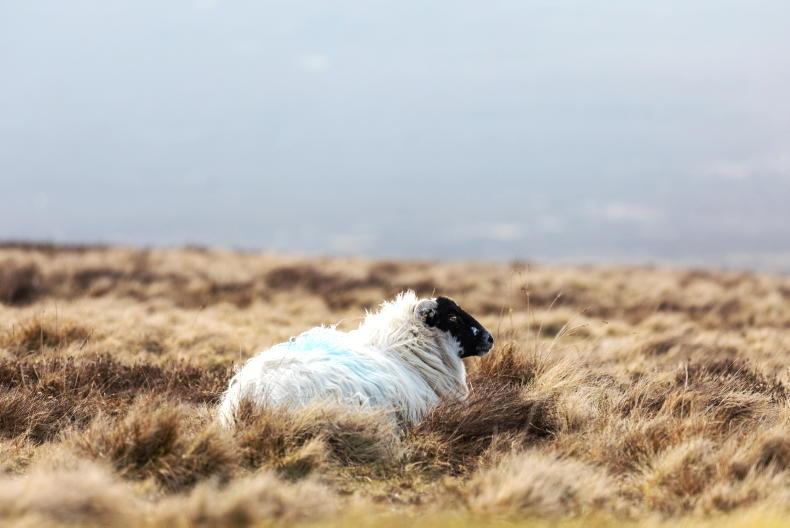
However, the ICSA’s rural development chair responded that many farmers, particularly in the west and on hilly ground, are farming land that “simply cannot sustain that level of stocking intensity”.
“These are genuine food producers operating in some of the most difficult farming conditions in the country,” Phelan continued.
“To suggest they are somehow less deserving of support because they farm extensively is completely wrong.”
The ICSA labelled the ICMSA’s proposal “deeply divisive” and said that it “highlighted the importance of drystock farmers standing together in future CAP negotiations”.
“There is no future in one sector of farming trying to advance itself at the expense of another,” Phelan added.
Hill farmers
The Irish Natura and Hill Farmers’ Association (INHFA) president Pheilim Molloy stated that expecting 1LU/ha from marginal lands was “way out of kilter with the reality on the ground” and could only be met on prime agricultural farmland.
“Where it is at 0.1LU/ha, one ewe per hectare is where it needs to stay,” Molloy told the Irish Farmers Journal.
“This is a level that recognises that sheep farming contributes to employment, that hill farming contributes to economic, environmental and social sustainability in the areas it takes place in.”
Read more
Shots fired in active farmer CAP debate
The Irish Cattle and Sheep Farmers’ Association (ICSA) has hit out at the Irish Creamery Milk Suppliers’ Association’s (ICMSA) call for the next CAP to require a 1LU/ha minimum stocking rate for those claiming farm payments.
The ICSA’s rural development chair Edmond Phelan warned that setting the CAP’s active farmer threshold at 1LU/ha would result in thousands of drystock farmers losing access to farm payments from 2028 onwards.
“The current CAP threshold is 0.1LU/ha, so increasing it to 1LU/ha would represent a tenfold increase that would effectively leave thousands of suckler, sheep and drystock farmers without any CAP payment whatsoever,” Phelan said.
The ICSA’s remarks come in response to comments from ICMSA president Denis Drennan seeking a 1LU/ha requirement to leave “a higher payment per hectare for farmers producing food and should also mean a freeing-up of land so critical to generational renewal”.
Drennan criticised the current 0.1LU/ha active farmer threshold as having been set a “ridiculously low” level that in his view had been to the detriment of food production.
Carrying capacity
However, the ICSA’s rural development chair responded that many farmers, particularly in the west and on hilly ground, are farming land that “simply cannot sustain that level of stocking intensity”.
“These are genuine food producers operating in some of the most difficult farming conditions in the country,” Phelan continued.
“To suggest they are somehow less deserving of support because they farm extensively is completely wrong.”
The ICSA labelled the ICMSA’s proposal “deeply divisive” and said that it “highlighted the importance of drystock farmers standing together in future CAP negotiations”.
“There is no future in one sector of farming trying to advance itself at the expense of another,” Phelan added.
Hill farmers
The Irish Natura and Hill Farmers’ Association (INHFA) president Pheilim Molloy stated that expecting 1LU/ha from marginal lands was “way out of kilter with the reality on the ground” and could only be met on prime agricultural farmland.
“Where it is at 0.1LU/ha, one ewe per hectare is where it needs to stay,” Molloy told the Irish Farmers Journal.
“This is a level that recognises that sheep farming contributes to employment, that hill farming contributes to economic, environmental and social sustainability in the areas it takes place in.”
Read more
Shots fired in active farmer CAP debate





SHARING OPTIONS