



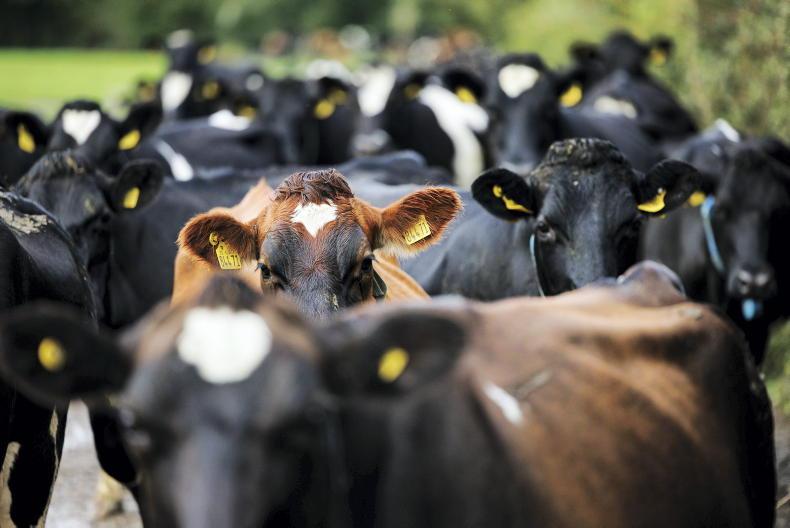
The fact that there are more TB reactors and a lot more herds restricted makes for dismal reading. I’m reminded of my friend that was walking out the gates of vet college in 1971 and told ‘don’t be depending too much on TB’.
The reality is that two generations of vets have built businesses on TB. The stress, the inconvenience, the cost for farmers has been and still is phenomenal.
Undoubtedly tighter restrictions and more severe interpretation of the skin test results are pushing the numbers up. The interpretation of the gold standard skin test result brings subjectivity.
The blood test result brings more noise with potential to pick up more types of TB and a result that is less specific. The last 50 years of testing and the latest five year herd incidence increase makes you wonder where are we going on TB?
Thankfully the first two days of this week allowed for some harvest work to be completed in the drier fields, and Siobhan Walsh reports that farmers are moving into oilseed rape crops ahead of other crops such as oats etc.
It makes perfect sense, because an oilseed crop probably forward sold at €500 per tonne, yielding two tonnes per acre, that is vulnerable to heavy rain needs to be looked after at whatever cost.
Cattle finishers think they play a risky game when they go to the mart with cattle, but try oilseed rape in July with rain clouds all around after months of care and attention.
Managing lying straw remains a problem, and I had one farmer ring me this week stressed that he couldn’t get a contractor to bale up his straw because the contractor was flat out harvesting.
His straw was down seven days and with rain on Wednesday, he said it was inevitable that it was going to be at least over 10 days before he could get baling and then start tilling.
A mixed weather harvest is stressful enough on farmers that want to do the right thing, not to mind a very short turnaround to get tilling again because of nitrates rules.
It is with great sadness we hear of the death of our great friend and former photo editor John Caffrey.
Known by farmers far and wide for his colourful demeanour and engaging chat he lured many a farmer into a photo to capture the essence of the moment. Sporting an impressive moustache and dickie bow in latter years, his distinctive character will be fondly remembered by all farmers.
From developing images in the dark-room to snapping an image on a mobile phone, John did everything he could to portray farming in a great light.
John’s son Jack Caffrey followed in his father’s footsteps as a prodigious talent behind the lens. From all in the Irish Farmers Journal team, to John’s wife Roisin, his son Jack, and the wider Caffrey family we extend our deepest sympathies.
I see researchers from Rothamsted Research centre, Oxford, Cranfield, Edinburgh, Harper Adams, Bristol and AFBI in Northern Ireland have come out backing ‘GWP star’ rather than ‘GWP100’ when assessing greenhouse gases. The researchers go as far as to say that the choice of climate impact assessment has ‘dramatic effects on interpretation’ with GWP100 producing substantially different results.
Professor Myles Allen spoke at our Northern Ireland Climate Summit in 2022 and called for methane from livestock to be classed differently to other methane sources because when herd numbers are stable the net effect on warming is negligible. About two thirds of Irish methane is biogenic methane from livestock but all methane is classed the same. New Zealand has classified biogenic methane separately.



SHARING OPTIONS