


Breeding
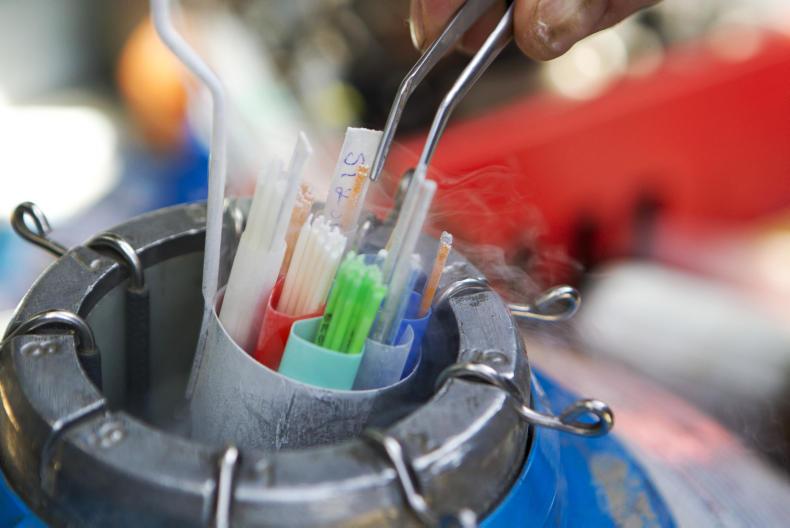
This week’s Focus is on spring AI. All of the AI companies will have younger and higher-EBI bulls available but they won’t be on the list because they don’t have a calving proof. So these bulls shouldn’t be used on heifers and no bull with a calving difficulty of over 2% should be used on heifers. If deciding to pick mostly young, high-EBI bulls, you need to be using a team of at least seven or eight bulls to spread the risk of one of those bulls’ EBI collapsing as progeny data comes in. Most of these bulls are 50% to 60% reliable so there is a considerable margin of error, both up and down. Farmers who refuse to use them, and only use proven bulls with much higher reliability but much lower EBIs, are effectively saying that they’re happy to produce a group of less-profitable heifer calves next spring. There’s more talk of sexed semen this year. From my reading of the trial results, it seems that best results are achieved where the bull is housed close to the sorting lab and where twice-a-day AI is practised. Of course, there’s a cow factor at play too. Best results will be achieved on maiden heifers or second- to fourth-lactation cows that have had a number of heats before service and are in good body condition score.
Fertiliser
As a simple rule of thumb, a heavy crop of first-cut silage will need 100 units/ac of nitrogen, 20 units/ac of phosphorus and 100 units of potash. However, adequate time and good growing conditions are needed to prevent high nitrate and potash levels in the silage at harvest time. Nitrogen is less of an issue than potash because it can be managed by wilting the grass at harvest time. In good growing conditions, around two units/acre/day of nitrogen is used up, so 50 days or seven weeks should lapse between spreading 100 units/ac of nitrogen and harvesting the silage. Potash will need about a week longer to be used up, but because the consequences of high potash levels in the silage are much greater (milk fever), the advice is to only spread three-quarters of the crop requirement at or before closing for silage. So, after this weekend, spreading three bags/ac of 0:7:30 or 3,000gals/ac of slurry on silage ground will be too strong a rate if you plan to cut the silage before 1 June. Reduce the rate and top up the soil with the remainder after cutting the silage. If nitrogen has been spread already and the field was not grazed, then I’d say around 50% of this nitrogen is still available. If the field was grazed, then only around 25% is available. Any P or K spread earlier this year will be available for the silage crop.
Magnesium
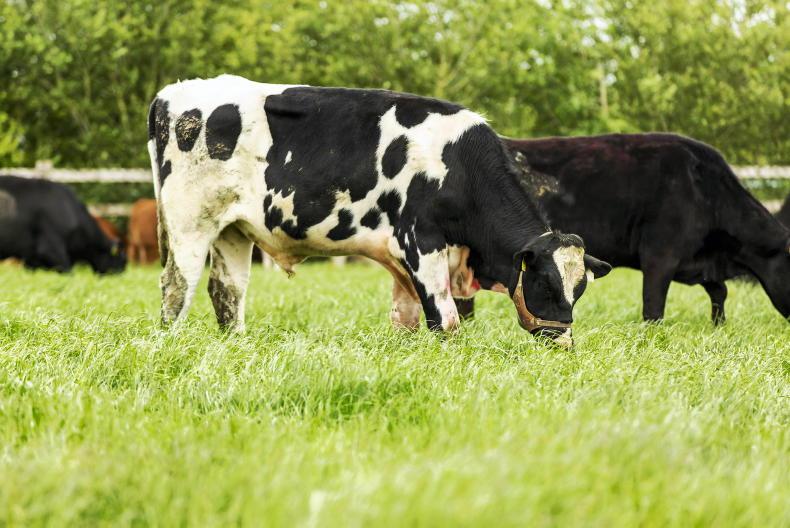
With so much grass available, meal feeding levels should be reduced to the minimum to cover for calmag. Some merchants manufacture nuts that have enough calmag in one kilo of feed. Other options include spreading dusting calmag on the grass or adding minerals to the water. The bottom line is it doesn’t pay to feed high levels of meal when there is so much good-quality grass out there.


SHARING OPTIONS