In many ways, last week’s farm walk on the Ahern farm near Ballyduff in west Waterford was more than just a walk on grassland management. Mike Ahern won the Grass 10 Sustainable Grassland Farmer of the Year award for 2024 and the event was a demonstration of what is possible when dairy farming is done well.
When Mike finished school the Aherns were milking 86 cows. After studying at Clonakilty Agricultural College, Mike went to New Zealand to work on the farm of Kieran and Leonie Guiney before returning home to Ballyduff.
After entering into a farm partnership with his parents, they got access to quota and extra land came on stream and the farm started to expand.
“When I came back from New Zealand I couldn’t understand why we had sheds and why we were making so much silage, Mike said, “so I started to implement the New Zealand system and in fairness my father let me at it, but in the first year we had 20% of the cows empty so I wasn’t long about going back to the Irish way.”
By 2010 they were milking 160 cows and Mike says that in 2013 he went to the Ploughing with the intention of buying a 24-unit milking parlour.
When he came home having signed up for a 40-unit rotary parlour, he says his parents didn’t baulk at the idea. In 2015 they took on their first employee and leased more adjoining land. By 2018, they were milking 260 cows and Cathal Galvin joined the team. In 2020, Cathal and Mike went into partnership on a leased farm, with Cathal running this unit.
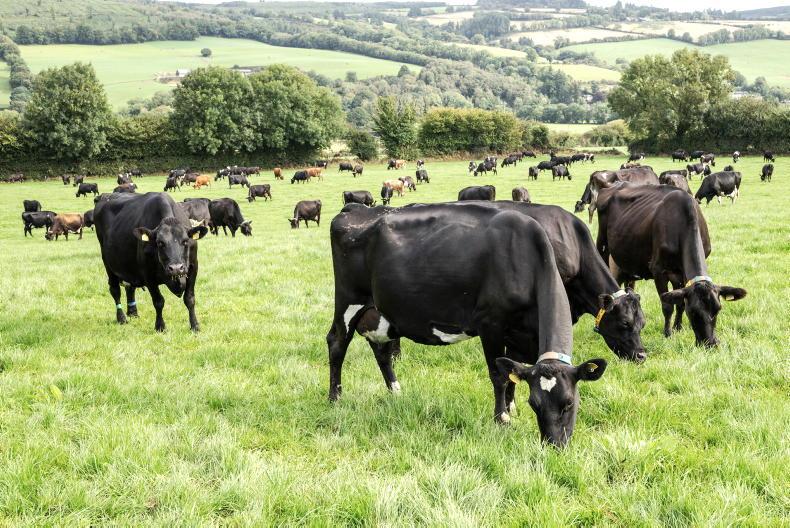
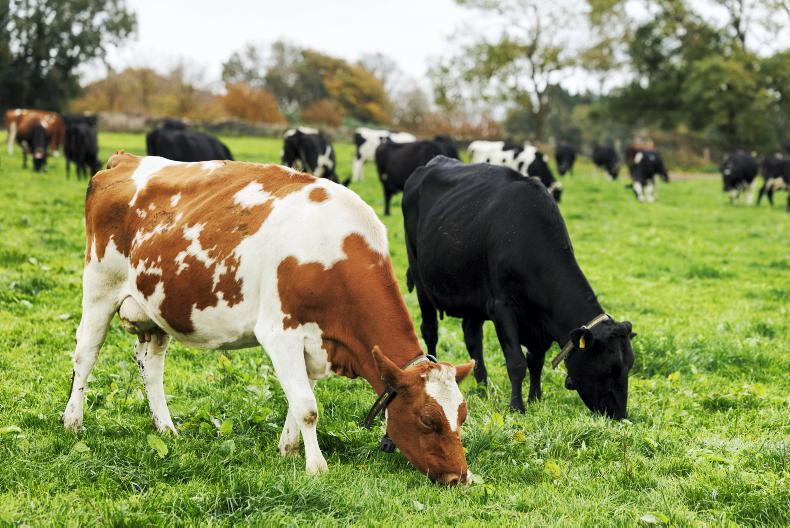
The dairy herd of Michael Ahern in Waterford. \ O'Gorman Photography
Today, the Aherns are milking 285 cows on a long and narrow milking platform straddling the Cork/Waterford border. The milking platform extends to 89ha giving a milking platform a stocking rate of 3.2 cows/ha. With 144ha being farmed in total, the overall stocking rate is 2 cows/ha as the heifers are contract reared.
Last year, a 9.5ha block was leased in order to comply with the reduction in the nitrates derogation. Mike says that this land was previously in tillage. The dark shadow of the future of the derogation wasn’t far from the minds of the few hundred farmers who attended the walk. Mike’s father Padjo was philosophical about the current situation.
“We have to work and live in the times that we’re in,” Padjo said. “It seems to me that we’re heading towards a new quota [if the derogation goes]. We have good research and we have Teagasc, so we just have to keep moving with the times. There’s always been challenges in farming no matter what the generation. There’s no such thing as a free meal.”
On the farming front, performance is impressive, despite a challenging summer for grass growth. The farm is on track to grow just over 12t DM/ha this year. Over the last three years, the farm has grown an average of 14.2t DM/ha.
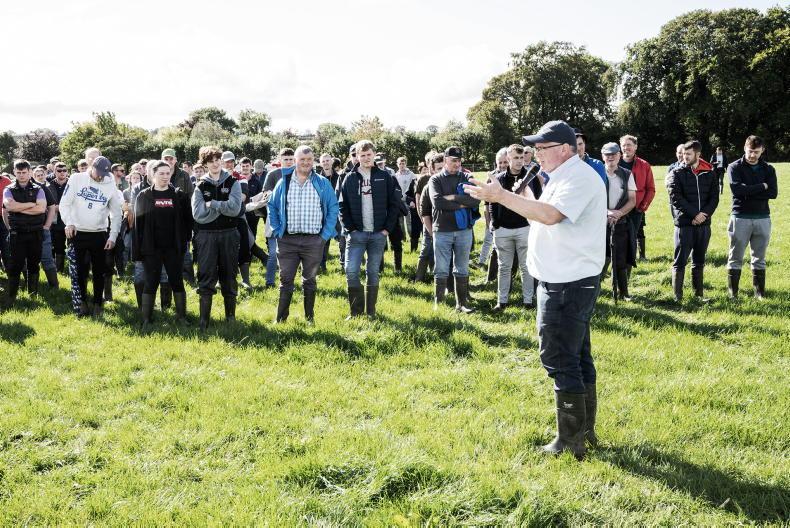
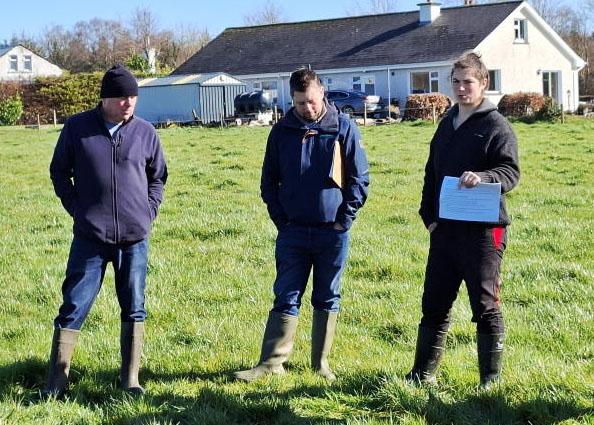
John Maher, Teagasc Grass10 Campaign Manager addresses a group at a farm walk in Ballyduff, Co Waterford on the farm of Michael Ahern, overall winner of the Sustainable Grassland Farmer of the Year. Picture: O'Gorman Photography.
The economic breeding index (EBI) of the Jersey-crossbred herd is €239 with the herd delivering 521kg MS/cow to Tirlán in 2024 with constituents of 5.08% fat and 3.89% protein and an SCC of just 70,000. This year, the six-week calving rate was 86% and the empty rate, after the recent scan was just 7% empty after 11 weeks of breeding.
“I have a policy of not feeding any more than 3kg of meal per cow per day at any stage in the year,” said Mike.
“If they need more feed than this, I’ll usually go in with something else such as silage or zero grazing. Across a 300-day lactation that means that we shouldn’t end up feeding any more than 900kg of meal per cow and during the main grazing season we’d usually feed a lot less than 3kg per day,” he said.
So far this year, as a result of the prolonged dry period this summer, Mike has fed 680kg of meal per cow. Last year, he fed 1.2t of meal per cow – a figure he hopes not to repeat.
On the grass front, Mike measures the farm over 40 times per year and his key focus is to ensure good quality grass in front of the cows at all times.
He has good clover established across the farm and this clover area is allowing for a reduction in applied chemical nitrogen (N), with 185kg N/ha applied in 2025.
Average farm cover is well below target at present, but with heavy feeding to slow cows down (9kg of supplement between meal and zero grazed grass) he hopes to be back on track for grass by the end of this week.
Mike Ahern won the Grass 10 Sustainable Grassland Farmer of the Year award for 2024.The Aherns are milking 285 cows across a 144ha farm on the Cork/Waterford border. The farm is really well set up in terms of grazing infrastructure and the farm is on track to grow over 14t DM/ha in 2025.
In many ways, last week’s farm walk on the Ahern farm near Ballyduff in west Waterford was more than just a walk on grassland management. Mike Ahern won the Grass 10 Sustainable Grassland Farmer of the Year award for 2024 and the event was a demonstration of what is possible when dairy farming is done well.
When Mike finished school the Aherns were milking 86 cows. After studying at Clonakilty Agricultural College, Mike went to New Zealand to work on the farm of Kieran and Leonie Guiney before returning home to Ballyduff.
After entering into a farm partnership with his parents, they got access to quota and extra land came on stream and the farm started to expand.
“When I came back from New Zealand I couldn’t understand why we had sheds and why we were making so much silage, Mike said, “so I started to implement the New Zealand system and in fairness my father let me at it, but in the first year we had 20% of the cows empty so I wasn’t long about going back to the Irish way.”
By 2010 they were milking 160 cows and Mike says that in 2013 he went to the Ploughing with the intention of buying a 24-unit milking parlour.
When he came home having signed up for a 40-unit rotary parlour, he says his parents didn’t baulk at the idea. In 2015 they took on their first employee and leased more adjoining land. By 2018, they were milking 260 cows and Cathal Galvin joined the team. In 2020, Cathal and Mike went into partnership on a leased farm, with Cathal running this unit.
The dairy herd of Michael Ahern in Waterford. \ O'Gorman Photography
Today, the Aherns are milking 285 cows on a long and narrow milking platform straddling the Cork/Waterford border. The milking platform extends to 89ha giving a milking platform a stocking rate of 3.2 cows/ha. With 144ha being farmed in total, the overall stocking rate is 2 cows/ha as the heifers are contract reared.
Last year, a 9.5ha block was leased in order to comply with the reduction in the nitrates derogation. Mike says that this land was previously in tillage. The dark shadow of the future of the derogation wasn’t far from the minds of the few hundred farmers who attended the walk. Mike’s father Padjo was philosophical about the current situation.
“We have to work and live in the times that we’re in,” Padjo said. “It seems to me that we’re heading towards a new quota [if the derogation goes]. We have good research and we have Teagasc, so we just have to keep moving with the times. There’s always been challenges in farming no matter what the generation. There’s no such thing as a free meal.”
On the farming front, performance is impressive, despite a challenging summer for grass growth. The farm is on track to grow just over 12t DM/ha this year. Over the last three years, the farm has grown an average of 14.2t DM/ha.
John Maher, Teagasc Grass10 Campaign Manager addresses a group at a farm walk in Ballyduff, Co Waterford on the farm of Michael Ahern, overall winner of the Sustainable Grassland Farmer of the Year. Picture: O'Gorman Photography.
The economic breeding index (EBI) of the Jersey-crossbred herd is €239 with the herd delivering 521kg MS/cow to Tirlán in 2024 with constituents of 5.08% fat and 3.89% protein and an SCC of just 70,000. This year, the six-week calving rate was 86% and the empty rate, after the recent scan was just 7% empty after 11 weeks of breeding.
“I have a policy of not feeding any more than 3kg of meal per cow per day at any stage in the year,” said Mike.
“If they need more feed than this, I’ll usually go in with something else such as silage or zero grazing. Across a 300-day lactation that means that we shouldn’t end up feeding any more than 900kg of meal per cow and during the main grazing season we’d usually feed a lot less than 3kg per day,” he said.
So far this year, as a result of the prolonged dry period this summer, Mike has fed 680kg of meal per cow. Last year, he fed 1.2t of meal per cow – a figure he hopes not to repeat.
On the grass front, Mike measures the farm over 40 times per year and his key focus is to ensure good quality grass in front of the cows at all times.
He has good clover established across the farm and this clover area is allowing for a reduction in applied chemical nitrogen (N), with 185kg N/ha applied in 2025.
Average farm cover is well below target at present, but with heavy feeding to slow cows down (9kg of supplement between meal and zero grazed grass) he hopes to be back on track for grass by the end of this week.
Mike Ahern won the Grass 10 Sustainable Grassland Farmer of the Year award for 2024.The Aherns are milking 285 cows across a 144ha farm on the Cork/Waterford border. The farm is really well set up in terms of grazing infrastructure and the farm is on track to grow over 14t DM/ha in 2025. 





SHARING OPTIONS