



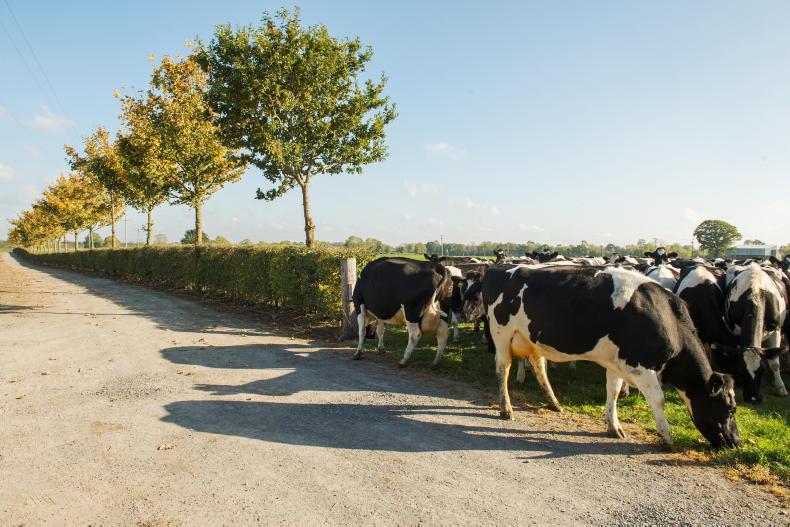
Fertiliser: Grass growth rates are only middling, with northerly and easterly winds holding back the peak of growth. Most farms are in a good position and to be fair, grass is easier to manage when there aren’t huge surpluses to deal with.
There is lots of sunshine and that solar radiation is helping growth a lot, despite the harsh winds. It’s actually more like early summer in New Zealand than the typical damp and humid weather we get in Ireland in May.
Fertiliser wise, everything is a bit delayed this year due to the wet spring but this is the time of year to maximise growth rates and one of the key steps in that process is to ensure land is well fertilised.
Paddocks that received slurry at some stage already should be well covered for P and K, but those that didn’t get any slurry should ideally get P and K in April or May. A lot of farmers have no P allowance so that limits the use of 18:6:12 or similar, which is the product of choice at this time of year.
Just because P is not permitted is no reason to forget about K or indeed sulphur. There are plenty of products available that contain nitrogen along with K and sulphur. Over the course of the season, there should be up to 20 units/acre of S applied, with trial work showing it has a very beneficial impact on growth rates.
Clover: Clover contents seem to have started the year off slow and as we approach mid-May, clover contents on fields that had high clover contents last year are a bit disappointing. It is still early yet and while we often expect clover to take off in April, it can be a temperamental plant. The general advice is to cut back to half rate nitrogen on high clover fields from now on and to use the spared nitrogen to increase the rate on fields that have no clover.
Some farmers go with zero nitrogen on high-clover fields and get on well with it, but there tends to be a yield penalty in early spring when clover is dormant. In terms of rates, the general advice for nitrogen in the summer months is to apply 0.8 units/acre per day on grass only swards. If spreading every three weeks, that’s an application rate of 17 units/acre. For high clover fields, half rate is around nine units/acre. On farms that are not as restricted on nitrogen, spreading up to 21 units/acre on a 21 day round will likely give a higher response.
Silage: It seems as though silage is diverging this year with any fields not grazed coming in early but fields that were grazed once or twice coming in late. Growth rates have been sluggish but crops are growing well now. Realistically, most crops that have been grazed at least once won’t be going to seed until the last days of May, so quality should hold up well until then and it will also maximise quantity.
Things to avoid include letting silage bulk up too long. I’ve heard it mentioned that some are planning to delay cutting until early to mid-June. This might increase yield of the first cut but it will come at the expense of quality and second cut yield/aftergrass.





SHARING OPTIONS