



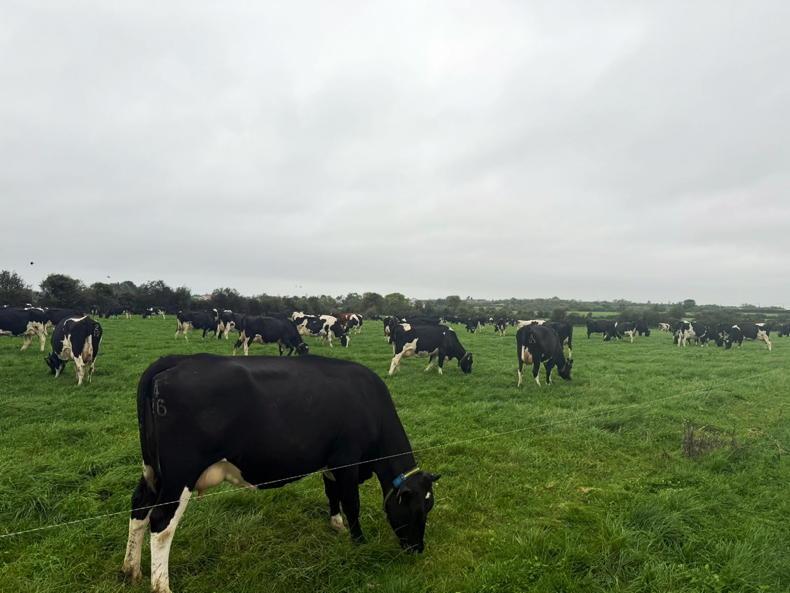
The grass recovery post-drought has been excellent and the majority of farms now have a lot of grass built and aren’t showing many signs of slowing down.
While this has been a big positive and something that was badly needed, setting up the farm for spring is still the most important consideration at this time of year.
Despite some farms still having average farm covers over 1,000kg DM/ha and recovery on grazed paddocks strong, farm area needs to start getting closed up.
As tempting as it might be to extend grazing this year, doing so will cause problems in the spring. To have sufficient covers next February and March, autumn grazing targets need to be hit.
For a dry farm, the target is 60% of farm area closed by the end of October with the remaining 40% closed in early November.
On a heavier farm, the targets can be anywhere from 70% to 80% closed by the end of October with the remaining percentage closed up in November.
Percentages
On the dry farm that means grazing 2% of the farm area per day in October and then closing that area up in order to hit the target of 60% by the end of October.
If only starting to close up in the coming days, it will need to be closer to 2.5% of farm area per day in order to hit the target.
If pre-grazing covers are too high and it’s becoming challenging to hit the targets, skipping a paddock may be necessary. This can be grazed later in November if conditions allow.
Most heavier farms will be already in the process of closing up already. Rainfall is the big challenge for these farms now. Heavy rain over the past week has made grazing more challenging.
A 12-hour strip wire is a minimum requirement now on a wet farm and if rain continues some on/off grazing may also be required.
Order
Planning is needed to close up paddocks in the right order. Farms that are experienced in autumn grazing management will already know which paddocks they want to graze first, in the middle and towards the end of the rotation.
For those who aren’t sure, a good rule of thumb is to split the farm up into three groups.
The first group to graze is some of the bigger paddocks that are reasonably dry. These paddocks will be grazed from the beginning to the middle of March next spring. There will be a good cohort of the herd calved at that stage and they should be grazing well. The cover on those paddocks will be around 1,300kg to 1,400kg DM/ha next March.
The second group of paddocks to graze from the middle to the end of October are the drier fields closer to the yard that are easier to subdivide. Those paddocks will be grazed in early February with small numbers of cows and intakes will be lower. These paddocks will have covers of around 800kg DM/ha next February.
Finally, graze heavier ground, paddocks furthest from the yard or possibly those with poorer infrastructure last as cows won’t be going here until the end of March or early April.
Residuals
Hitting good residuals and cleaning paddocks off well is important in the coming weeks to have high-quality grass back in front of cows next spring.
This is where the strip wire becomes vitally important. Keeping meal feeding levels low will also help to get good cleanouts.
Milk yields are naturally dropping at this time of year and feeding meal to prop up yield is a bad idea. It will lead to poorer cleanouts, cost more money and result in too much grass wasted.



SHARING OPTIONS