



Teagasc has found that Irish farmers produced protein supplies capable of satisfying the nutrient needs of a population of approximately 36m people from grassland-based livestock in 2024.
The net protein production of the country’s dairy, beef, sheep and tillage sectors stood at around 30m people for last year after the human edible portion of rations fed to livestock was deducted from the sector’s protein output.
These figures emerged from the work of Teagasc’s Dr Marie Merlo on adding protein output metrics to the latest sustainability report published annually by the agency as part of its reporting on National Farm Survey data.
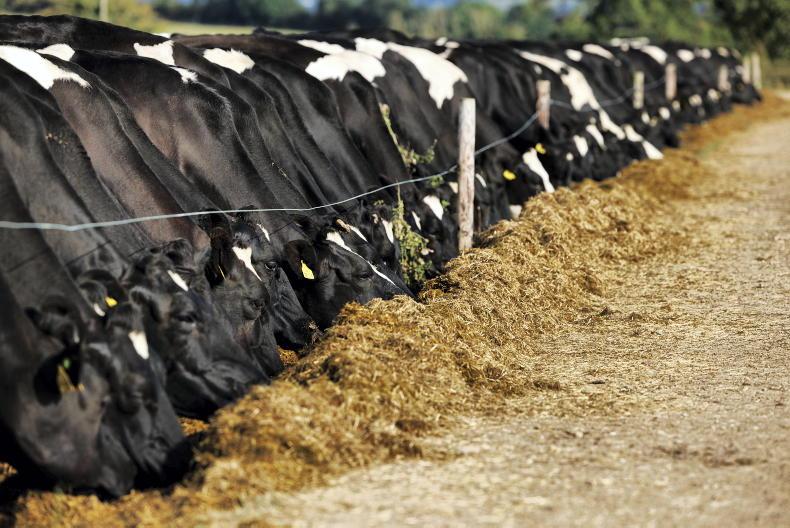
The 2024 report found that dairy was the sector with the greatest ability to produce protein, both in terms of overall sectoral output and output on a per farm basis.
The average dairy farm surveyed produced enough protein to meet the annual requirements of just under 1,100 people last year when adjusted for human edible protein inputs.
“The dairy sector, for example, was able to meet the requirement of 19.8m individuals in gross terms and 16.5m individual in net terms. This is the top performing system,” Merlo stated.
This equated to an average protein production equivalent to feeding 17.2 people per hectare after accounting for the human edible protein included in cows’ rations.
Tillage was reported as the sector with the second highest protein producing capacity on a per farm basis as the average tillage farm recorded a net protein supply capable of feeding 1,075 people.
The respective figures for beef and sheep farms were a respective 114 people and 99 people, equating to satisfying the needs of four people per hectare and three people per hectare respectively.
The head of Teagasc’s rural economy and development programme Kevin Hanrahan suggested this week that surplus protein produced by Ireland’s farming sector is important in the context of discussions on sectoral emissions.
“This is sort of the mirror of the challenge we have in terms of our emissions,” Hanrahan explained when Teagasc unveiled the data.
“Yes, we have a lot of emissions in Ireland relatively speaking but we do produce a lot of proteins to go with those emissions that are demanded by the world.”



SHARING OPTIONS